Maize that looks clean can still carry aflatoxin above safe limits, and maize that looks damaged is not automatically unsafe - appearance is an unreliable guide to aflatoxin contamination, which is produced by Aspergillus fungi that thrive under specific moisture and temperature conditions and cannot be detected without laboratory testing. This guide sets out the control chain - from harvest through drying, sorting, storage, and testing - that determines whether a lot of maize stays within safe, sellable limits.
Direct answer
Reducing maize post-harvest loss and aflatoxin risk requires controlling a chain of decision points in sequence: harvesting at the right time and minimising soil and rain contact, drying promptly to below the regional safe-storage moisture threshold, measuring moisture with a calibrated meter rather than by feel, sorting out damaged and discoloured kernels, shelling and handling to minimise mechanical damage, storing in a clean, dry, pest-free environment (with hermetic storage as one option worth evaluating), and testing representative samples before selling into markets with defined limits. Uganda applies the East African Community's harmonised grain standard for maize (EAS 2), which sets maximum total aflatoxin at 10 micrograms per kilogram (parts per billion) and maximum aflatoxin B1 at 5 micrograms per kilogram, verified directly against the primary standard text; the same primary text sets a maximum moisture content of 13.0% for dried maize grain, though the Uganda National Bureau of Standards' own published guidance cites 13.5% for a later edition of the same standard - both figures are given below with this discrepancy disclosed, and the currently applicable edition and exact figure should be confirmed directly with UNBS before being used for any compliance or rejection decision, since standards are periodically revised.[1][2] Appearance alone cannot confirm safety in either direction, and unsafe maize should not be informally redirected to animal feed or other uses without professional guidance, since aflatoxin also affects livestock health and can pass into animal products.
Who this guide is for
This is written for Ugandan maize growers, farm managers, aggregators, and traders responsible for maize from harvest through storage and sale, and for agricultural professionals advising them.
The problem this guide solves
Two separate problems are often conflated. Physical post-harvest loss - grain damaged by insects, moisture, or poor handling before it reaches a buyer - is a visible, measurable loss. Aflatoxin risk is a food-safety hazard that is largely invisible and driven by fungal growth under specific moisture and temperature conditions, both in the field before harvest and during drying and storage afterward. A control chain that addresses only visible loss (for example, sorting out obviously damaged kernels) does not, by itself, guarantee the remaining grain is safe from aflatoxin, and a chain that addresses only aflatoxin risk without proper handling will still lose value to physical damage. Both need attention together.
The control chain, in sequence
1. Pre-harvest and harvest timing. Aflatoxin risk begins in the field, not in storage. Drought stress and insect damage to the crop before harvest increase the plant's vulnerability to Aspergillus infection, and delaying harvest after physiological maturity increases the time grain is exposed to field moisture and pest damage. Harvesting promptly at maturity, rather than leaving mature maize standing in wet conditions, reduces this pre-harvest exposure window.
2. Minimise soil and rain contact. Grain and cobs that contact bare soil during harvest and initial handling pick up fungal spores and moisture from the ground. Using tarpaulins, raised drying surfaces, or clean hard-standing rather than bare earth for harvesting, threshing, and drying reduces this contamination pathway.
3. Dry promptly and adequately. Grain should be dried as soon as possible after harvest and shelling. The primary East African Standard for maize grain (EAS 2:2011) sets a maximum moisture content of 13.0% for dried maize grain across all grade categories, verified directly against the standard's requirements table.[1] The Uganda National Bureau of Standards' own published guidance cites 13.5% as the applicable figure under a later edition of the same standard (US EAS 2:2017); this article reports both figures rather than asserting one as definitive, and growers and aggregators should confirm the currently applicable edition and exact figure directly with UNBS.[2] Either way, grain above the applicable threshold deteriorates more rapidly in storage. Drying should use a clean surface, adequate depth for even air movement, and regular turning; the specific method (open-air sun drying, raised platforms, or mechanical drying) depends on available infrastructure, weather conditions, and volume, and should be matched to what is practically achievable at your scale rather than assumed from a single recommended method.
4. Measure moisture, don't estimate it. A calibrated moisture meter is the only reliable way to confirm grain has reached a safe storage moisture level; biting, twisting, or visual assessment are unreliable substitutes. Because moisture can vary across a drying batch (grain at the edges or top of a pile dries faster than grain in the centre), take multiple readings from different points in the batch rather than a single spot check, and recognise that a single average reading can mask pockets of higher-moisture grain that remain at risk.
5. Shell and handle carefully. Mechanical damage during shelling - cracked or broken kernels - creates entry points for fungal growth and insect infestation during storage. Shelling equipment should be adjusted to minimise kernel damage, and grain should be handled to avoid unnecessary impact or crushing during transport and bagging.
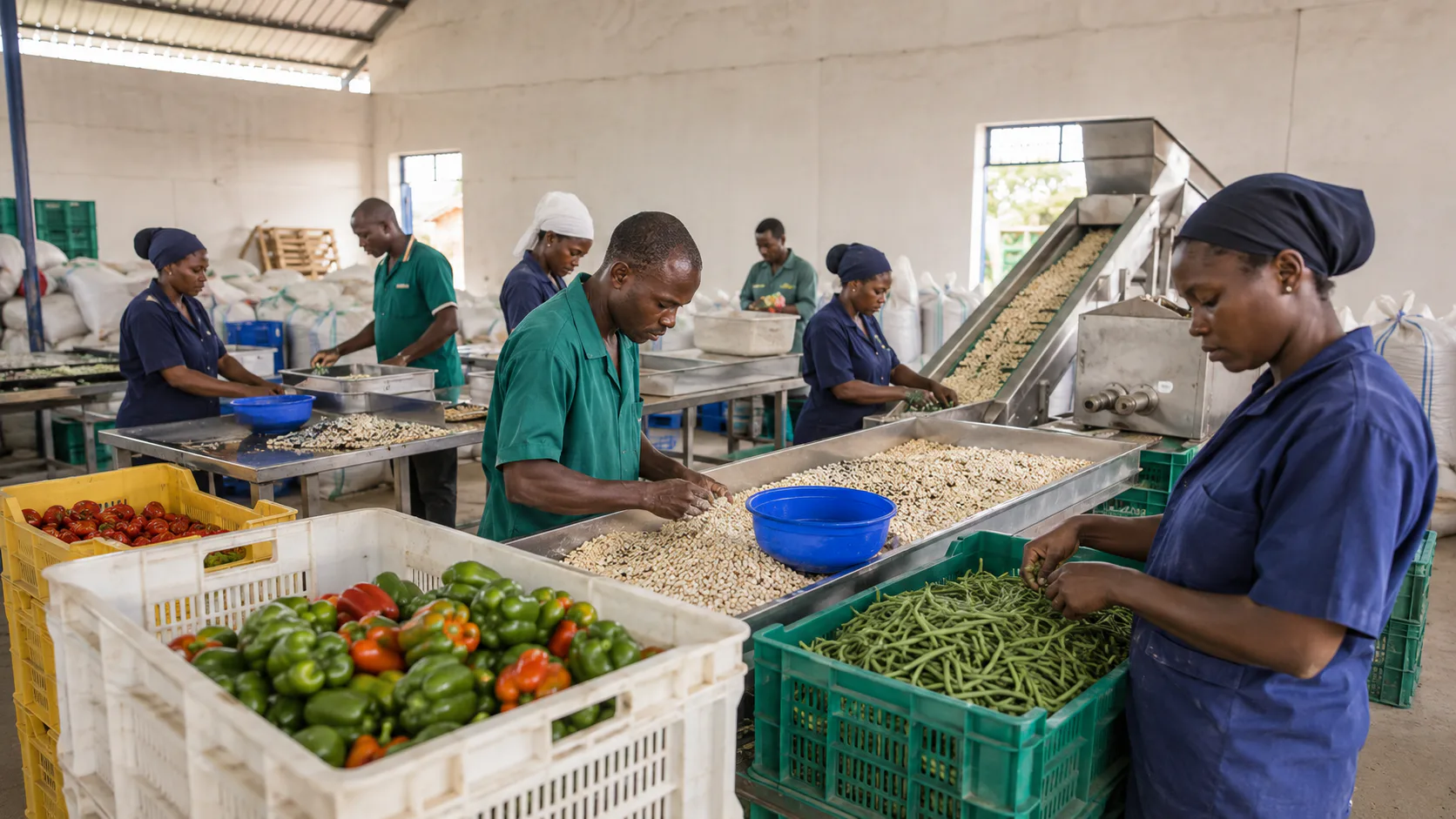
6. Sort before storage. Remove diseased, mouldy, discoloured, insect-damaged, and broken kernels before storage. The Uganda maize grain standard treats mouldy kernels as part of the "diseased grain" category subject to rejection limits, and separately sets limits on insect/vermin-damaged and heat-damaged (discoloured, wrinkled, or blistered) kernels.[2] Sorting reduces the concentration of already-compromised kernels that are more likely to harbour fungal growth, though sorting alone cannot remove invisible contamination from otherwise normal-looking kernels.
7. Store clean, dry, and pest-free. Storage structures and containers (bags, bins, warehouses) should be clean, dry, and free of previous-season grain residue, which can harbour insects and fungal spores. Grain should be kept off bare ground on pallets or raised platforms, and protected from roof leaks and condensation. Hermetic (airtight) storage - for example, Purdue Improved Crop Storage (PICS) triple-layer bags - is one storage option that has been studied for reducing insect damage and moisture loss compared with standard woven bags; a controlled laboratory study conducted at Purdue University in the United States found hermetic bags maintained more stable grain moisture and produced less insect-related quality decline than woven bags over an eight-month storage period, though this was a laboratory trial, not a Ugandan field trial, and results under Ugandan farm storage conditions should be evaluated separately.[3] Hermetic storage addresses insect damage and moisture stability; it is not, by itself, a guarantee against aflatoxin if grain was already contaminated or improperly dried before sealing.
8. Maintain lot identity and traceability. Keep grain from different fields, harvest dates, or drying batches separate where practical, with basic records of source and date. This allows a contamination problem to be traced to a specific batch rather than affecting an entire mixed stock, and supports sale into markets or programmes that require traceability.
9. Test before selling into markets with defined limits. Aflatoxin testing requires a laboratory or a validated rapid test method and cannot be done reliably by visual inspection. Because aflatoxin contamination is often unevenly distributed within a lot, sampling method matters: a small, non-representative sample can significantly under- or over-estimate the actual contamination level of the full lot. Buyers, aggregators, and exporters should confirm the sampling protocol and testing method with their laboratory or buyer before relying on a single sample result.
10. Decide on rejection and disposal carefully. Maize that fails an aflatoxin test should not be assumed safe for informal redirection to animal feed, blending with clean grain, or other uses without professional and, where relevant, regulatory guidance, since aflatoxin affects livestock health (and can transfer into milk as aflatoxin M1) and blending contaminated grain with clean grain to dilute an average reading does not eliminate the hazard and may itself raise legal and food-safety concerns. Current guidance on permitted disposal or alternative-use options for contaminated grain should be obtained directly from the Uganda National Bureau of Standards, the Ministry of Agriculture, Animal Industry and Fisheries, or a food-safety professional, since this guide cannot provide a general rule that applies to every contamination level and end use.
Why appearance cannot prove safety
Aflatoxins are produced by Aspergillus flavus and related fungi and are not visible, detectable by smell, or reliably indicated by kernel appearance; visibly mouldy grain is at higher risk but visibly clean grain is not guaranteed to be free of contamination, and conversely some discoloured or damaged grain may test within acceptable limits.[4] This is precisely why standards bodies rely on laboratory testing against defined numerical limits rather than visual grading alone, even though visual grading (for foreign matter, damaged grains, and moisture) remains part of the overall quality standard for other reasons.
Records to keep
- Harvest date and field/lot source.
- Drying method, duration, and moisture readings (multiple points, dated).
- Sorting outcomes (proportion removed and reason).
- Storage location, container type, and date placed into storage.
- Any test results, including sampling method and laboratory used.
- Buyer or end-use destination for each lot.
Local Ugandan considerations
Drying infrastructure, laboratory access, and storage conditions vary significantly across Uganda. Access to a calibrated moisture meter or a testing laboratory may be more readily available to organised aggregators and larger commercial operations than to individual smallholders in more remote districts, which affects how practically each step in this chain can be implemented at different scales. Rainfall timing relative to the harvest season also varies regionally and by season, affecting how much control a grower has over drying conditions. Subsistence farmers storing maize primarily for household consumption face different risk-management priorities and resource constraints than commercial aggregators supplying regulated markets or export buyers, and the practical starting point in this guide (moisture measurement and clean, dry storage) is achievable at small scale even where full laboratory testing is not.
Common mistakes
- Assuming visibly clean grain is aflatoxin-safe.
- Estimating moisture content by feel rather than measuring it.
- Taking a single moisture or contamination sample and assuming it represents the whole lot.
- Storing grain on bare ground or in structures with prior-season residue.
- Blending suspect grain with clean grain to "average out" a test result.
- Redirecting rejected grain to animal feed without professional guidance.
- Delaying drying after harvest, allowing grain to sit wet.
When professional support is required
- A testing laboratory should be used for any aflatoxin determination relevant to a sale, food-safety decision, or regulatory requirement; ask about their sampling protocol, method (rapid test vs. confirmatory laboratory method), turnaround time, and accreditation status.
- The Uganda National Bureau of Standards should be consulted to confirm the current maize grain and aflatoxin standards before using any figure for compliance decisions.
- MAAIF or a food-safety professional should be consulted on current guidance for handling or disposing of grain that fails testing.
- A postharvest/storage engineer or extension officer should be consulted when designing or upgrading drying and storage infrastructure at a commercial scale.
- A veterinarian should be consulted before feeding any suspect grain to livestock, given aflatoxin's effects on animal health and its potential to transfer into milk.
Limitations of this guide
This guide describes a general control chain; it does not replace laboratory testing, current regulatory guidance, or a site-specific storage and drying assessment. The aflatoxin limits cited here were verified directly against the primary East African Standard text (EAS 2:2011); however, standards are periodically revised, and a later edition (US EAS 2:2017, referenced in UNBS's own published guidance) cites a slightly different moisture figure, which this article discloses rather than resolves - the currently applicable edition and exact figures must be confirmed directly with UNBS before use in any compliance, rejection, or contractual decision. The hermetic storage study cited was conducted under US laboratory conditions, not Ugandan field conditions, and its results should not be assumed to transfer directly without local evaluation.
What to do next
- Install or gain access to a calibrated moisture meter and begin measuring, not estimating, grain moisture at multiple points during drying.
- Review your current harvest, drying, and storage process against the ten-step chain above and identify the weakest control point.
- Identify a testing laboratory and confirm their sampling protocol before you need to rely on a result.
- Confirm current UNBS and EAC standard figures directly with UNBS before using them in any buyer contract or compliance decision.
- If you aggregate or trade maize, establish basic lot-identity records so a contamination issue can be traced to a specific batch rather than affecting your full stock.