Agricultural investment opportunity in Uganda is easy to find described; independent verification of that opportunity is not something most promotional content walks an investor through. This guide sets out what to verify - and which professional to verify it with - before capital is committed, organised as a staged process rather than a single checklist to complete once.
Direct answer
Before committing capital to an agricultural project in Uganda, an investor should independently verify: the value chain and buyer specification the project depends on; land tenure, boundaries, occupants, and registered interests; water availability and any required permits; soil and agronomic suitability; the operating model's labour, input, and logistics assumptions; company registration and tax compliance requirements; environmental and, where relevant, export/food-safety compliance requirements; and the project's downside scenarios under a staged, gated investment approach rather than a single lump-sum commitment. This article identifies the categories of verification and the Ugandan authorities and professionals involved; it does not provide legal, tax, financial, or investment advice, and does not reach a conclusion about any specific project, land parcel, or licence requirement - those require independent Ugandan legal, tax, environmental, and technical advice specific to the transaction.
Who this guide is for
This is written for foreign and local investors, agribusiness companies, and their advisers evaluating a specific or general agricultural investment opportunity in Uganda.
The problem this guide solves
Investment-promotion material naturally emphasises opportunity. It less often sets out, in one place, the specific verification steps that separate a credible project from one carrying undisclosed risk - particularly around Uganda's layered land tenure system, water and environmental permitting, and the gap between a project's paper assumptions and its actual operating requirements. This guide organises that verification process and directs the reader to the right authority or professional for each category, without attempting to substitute for that professional advice itself.
Gate 1: Define the value chain and buyer problem
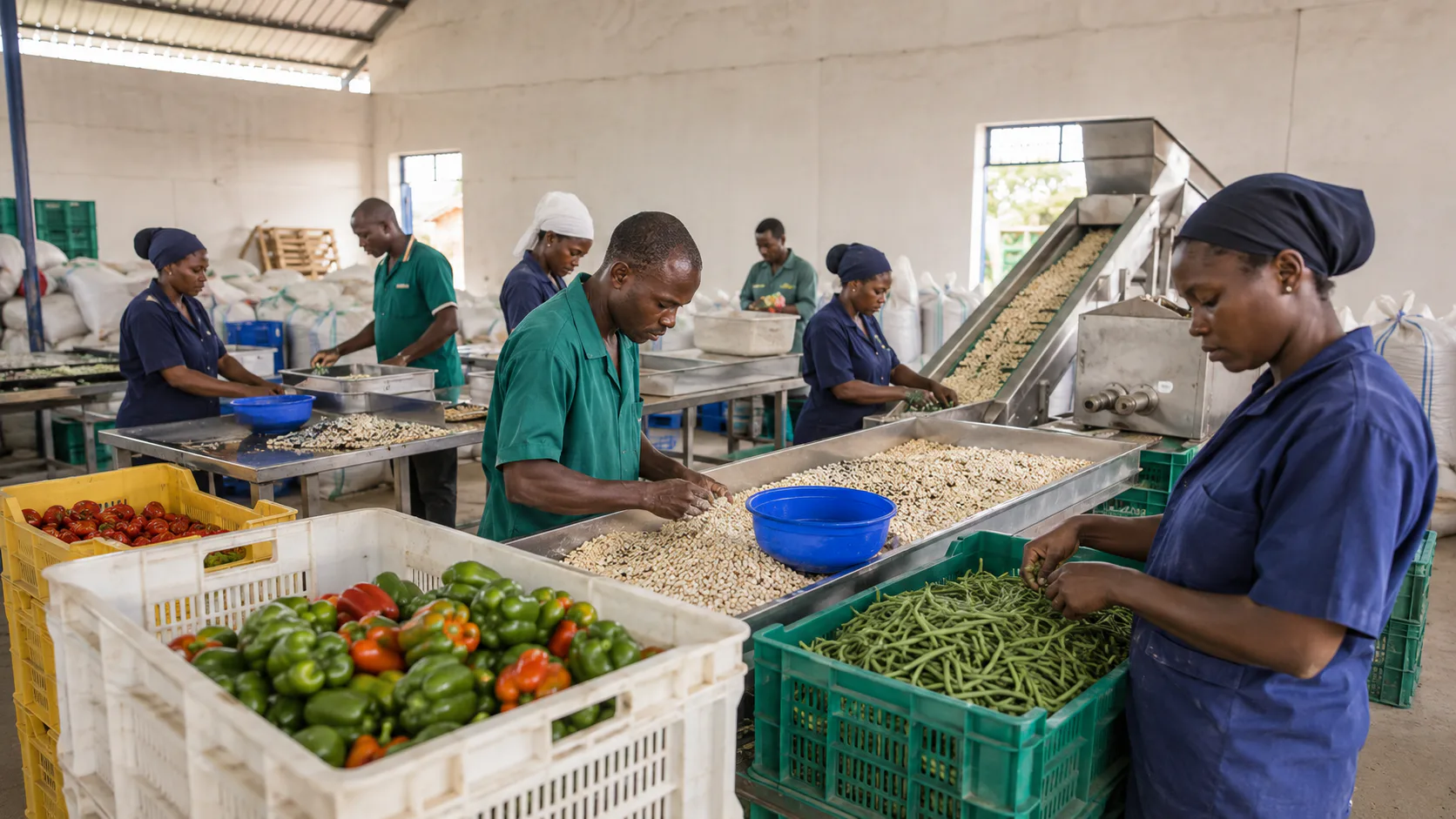
Before evaluating land or infrastructure, confirm what problem the project's product solves for an actual buyer, and verify that buyer relationship independently rather than relying on a business plan's assumptions. This includes: who the buyer is and whether they have been directly contacted and confirmed (not merely identified as a theoretical market); what specification (quality, volume, consistency, timing) the buyer actually requires, which may differ substantially from farm-gate assumptions; and how farm-gate pricing relates to the retail or export price cited in a project's financial projections, since the difference between these two figures often absorbs costs (logistics, processing, rejection, storage) that a promotional projection may understate. Ask a prospective buyer directly: What specification must be met? What is your rejection rate for similar suppliers, and why do rejections happen? What are your payment terms, and what is your payment history with other suppliers?
Gate 2: Land tenure and site diligence
Uganda's Land Act 1998 (Cap 227) establishes four land tenure systems - customary, freehold, mailo, and leasehold - each with different implications for an investor.[1] Customary tenure is defined at Section 3(1) as tenure "applicable to a specific area of land and a specific description or class of persons," held "in perpetuity"; in practice this generally involves community-based use rights rather than the kind of registered title an investor may expect.[1] Freehold tenure is defined at Section 3(2) and confers "full powers of ownership," including the power to transfer the land as a gift during the owner's lifetime or by will. Mailo tenure, defined at Section 3(4), permits "the holding of registered land in perpetuity" and specifically allows "separation of ownership of land from ownership of developments" on it - meaning the registered mailo owner and the person occupying and developing the land can be different people, which is the structural root of the landlord-occupant tension associated with this tenure type. Leasehold tenure, defined at Section 3(5), is "exclusive possession... for a period defined by reference to a specific date," with rent payable as a capital sum, periodic rent, goods, services, or provided free.
Independent due diligence should verify: the specific tenure type and registered interest (through an official land registry search, not a seller's representation alone); boundaries confirmed by a licensed surveyor rather than assumed from informal markers; and the presence of any occupants with legal protection. On this last point, the Land Act itself defines two protected categories: a "lawful occupant" under Section 29(1), covering people occupying under previously repealed tenancy laws, with the owner's consent, or as an undisclosed or uncompensated customary tenant; and a "bona fide occupant" under Section 29(2), covering people who have occupied land unchallenged for twelve or more years before the Constitution's commencement, or who were resettled by government.[1] Critically, Section 32A of the Act restricts eviction of lawful or bona fide occupants except by court order, and only for non-payment of the nominal ground rent such occupants owe - meaning a seller's registered title does not by itself guarantee vacant possession, and this occupancy status should be investigated as a distinct step from the title search itself.[1] Diligence should also cover access and any easements, and any customary or community interests that may not appear on a formal register even where one exists. This tenure summary is now sourced directly to the Land Act's own text, opened and read in full, with exact section references; it remains a starting orientation, not a substitute for an independent land search and legal opinion from a Ugandan lawyer specialising in land matters, since the Act's application to a specific parcel depends on facts (occupancy history, registration status, boundary survey) this guide cannot verify.
Gate 3: Water, soil, and agronomic suitability
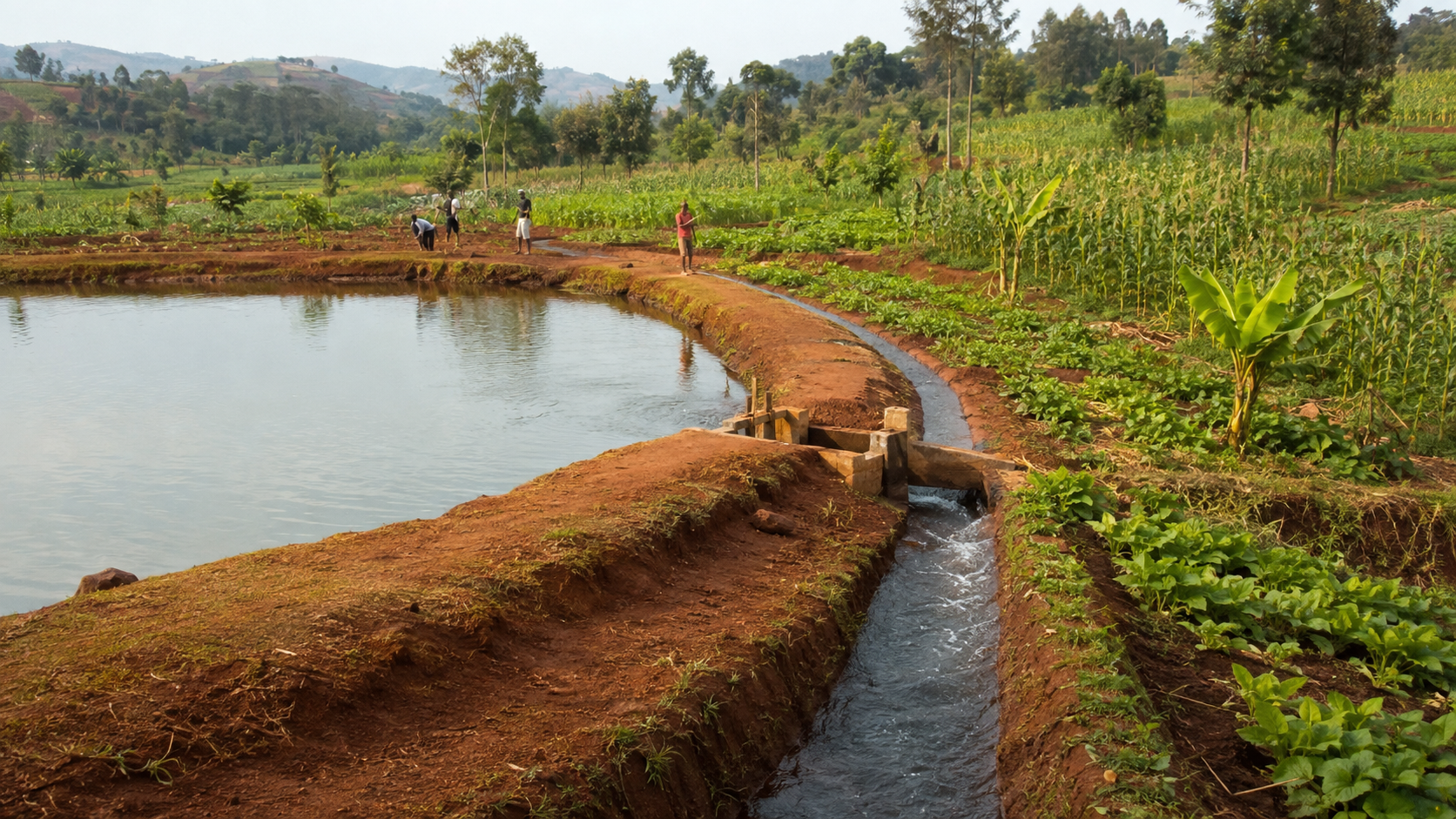
Water availability should be independently assessed against the project's actual water demand, not assumed from general regional rainfall figures (see Small-Scale Irrigation Planning in Uganda for the verification framework, including permitting requirements administered by the Ministry of Water and Environment). Soil suitability should be independently tested rather than assumed from a general regional description (see the existing Soil Testing and Fertility Management in Uganda guide for sampling and interpretation procedure). Drainage and flood risk at the specific site should be assessed, particularly for land near wetlands or rivers, which may also carry additional environmental permitting requirements. Climate suitability for the specific intended crop or livestock system should be verified against the actual site's altitude, rainfall pattern, and seasonal variability rather than a general "Uganda has good climate for agriculture" assumption, since Uganda's agro-ecological conditions vary substantially by district.
Gate 4: Operating-model review
Independently review the assumptions behind the project's operating model: labour availability and cost at the specific location and season (peak-season labour availability can differ substantially from off-peak assumptions); input availability (seed, fertiliser, veterinary products) at the specific location, including realistic lead times, not just theoretical national availability; energy source reliability (grid, fuel, or solar) for any equipment the project depends on; machinery and spare-parts access, including realistic service response times from the specific location; storage and, where relevant, cold-chain infrastructure adequate for the product and volume involved; road conditions and transport time from the site to the intended buyer or market, particularly in wet-season conditions; and packaging requirements specific to the buyer or export market. Ask a prospective agronomist, engineer, or logistics adviser directly: What specific site conditions would change this operating plan? What has caused comparable projects in this area or sector to underperform their plan?
Gate 5: Company registration, tax, and licensing
Confirm the correct registration structure with the Uganda Registration Services Bureau (URSB), which is responsible for registering companies (including foreign companies) and maintains searchable registries that can be used to verify existing registrations and encumbrances before a transaction.[2] Confirm current Uganda Investment Authority (UIA) requirements, since an investment licence process - currently administered through UIA's eBiz Portal under the framework of the Investment Code - may apply depending on the nature and structure of the investment; the specific eligibility criteria, documentation checklist, and any benefits or incentives should be confirmed directly with UIA rather than assumed, since publicly available summaries do not always specify current thresholds.[3] Confirm tax registration and obligations with the Uganda Revenue Authority (URA), including obtaining a Taxpayer Identification Number and understanding applicable filing, record-keeping, and payment obligations for the specific business structure and sector, noting that URA's own general guidance directs sector-specific questions to direct consultation rather than assuming a single generic tax treatment applies to all agribusiness activity.[4]
Gate 6: Environmental, water, and food-safety compliance
Confirm whether the project triggers Environmental and Social Impact Assessment requirements administered by the National Environment Management Authority (NEMA), which classifies projects under schedules ranging from mandatory assessment to exemption; the applicable schedule for a specific project depends on its scale, location, and sector and should be confirmed directly with NEMA or a registered environmental practitioner rather than assumed. Confirm any water abstraction permitting requirements with the Ministry of Water and Environment (see Small-Scale Irrigation Planning in Uganda for the specific framework). For any project involving export or sale into markets with food-safety or phytosanitary requirements, confirm current requirements with the relevant Ugandan authority and, where applicable, the destination market's import requirements, since these can change and vary significantly by product and destination.
Gate 7: Financial downside and staged investment
Rather than committing full planned capital in one step, consider a staged investment structure with defined gates: an initial phase focused on completing the verification steps above without major capital commitment; a pilot production phase (see the crop- and livestock-specific articles in this collection for pilot methodologies relevant to each system) sized to validate the operating model's key assumptions before further capital is committed; and a scale-up phase only after the pilot has demonstrated the assumptions hold under actual site conditions. At each gate, define in advance the specific evidence that would justify proceeding versus pausing or stopping - for example, a pilot that fails to achieve the buyer's quality specification, or a water source that proves less reliable than assumed in the dry season, are the kinds of concrete findings a staged approach is designed to surface before larger capital is at risk. The Food and Agriculture Organization runs a Responsible Agricultural Investment (RAI) programme oriented around this kind of staged, verification-based approach to agricultural investment; its detailed guidance documents were not independently opened and read in full for this article, so this reference is limited to noting the programme's existence and general orientation rather than quoting specific RAI principles as verified content, and it does not substitute for Uganda-specific professional advice.[5]
Questions to ask each professional adviser
- Lawyer: What is the verified tenure status and registered interest in this land? Are there occupant or customary interests that could affect this transaction? What company structure and licensing does this specific investment require?
- Accountant/tax adviser: What tax obligations apply to this specific business structure and sector? What are the record-keeping requirements, and what is the realistic compliance cost?
- Agronomist: Is this site suitable for the intended crop or livestock system given its specific soil, climate, and water conditions? What would a credible pilot look like before scaling?
- Irrigation/water engineer: Is the water source adequate and reliable for the intended scale, and what permitting applies?
- Environmental consultant: Does this project trigger an environmental assessment requirement, and what would that process involve?
- Government authority (UIA, URSB, URA, NEMA, Ministry of Water and Environment): What is the current, specific requirement and process applicable to this investment, and what has changed recently that a general guide might not reflect?
Records to keep
- Buyer contact records and any confirmed specifications or letters of intent.
- Land search results, survey reports, and legal opinions.
- Water source assessment data and any permit applications/approvals.
- Soil test results and agronomic assessments.
- Registration, licensing, and tax filings and correspondence.
- Environmental assessment correspondence and any approvals.
- Pilot-phase results measured against the specific assumptions they were designed to test.
Local Ugandan considerations
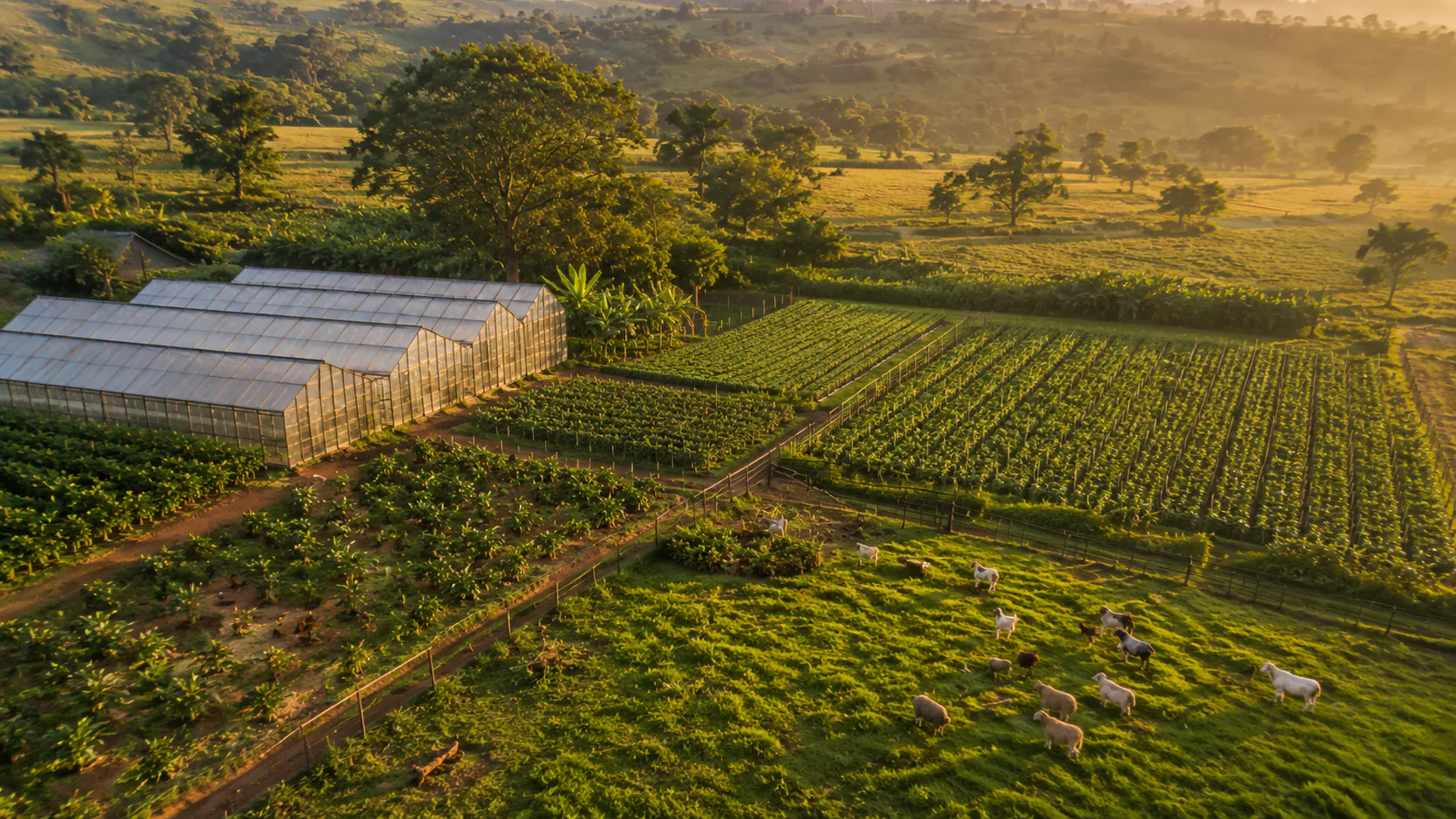
Due diligence requirements and risk profiles differ significantly by region and land type - customary land dominates in many rural areas while mailo land is concentrated in the Buganda region, and each carries different verification steps. Infrastructure (roads, grid power, water, cold chain) varies substantially between, for example, land near Kampala/Wakiso and more remote districts, directly affecting operating-model assumptions. Farm scale changes which gates matter most: a smallholder outgrower arrangement carries different diligence priorities than a large leasehold estate project.
Common mistakes
- Relying on a seller's or promoter's representation of land tenure status without an independent registry search and survey.
- Assuming national-level input, labour, or infrastructure availability applies uniformly at a specific site.
- Committing full capital before completing a pilot phase that tests the operating model's key assumptions.
- Treating a business plan's buyer relationship as confirmed without direct, independent verification.
- Assuming a general "agriculture is a strong sector" narrative substitutes for site-specific and transaction-specific verification.
- Proceeding on environmental, water, or tax matters based on outdated or general information rather than current confirmation from the relevant authority.
When professional support is required
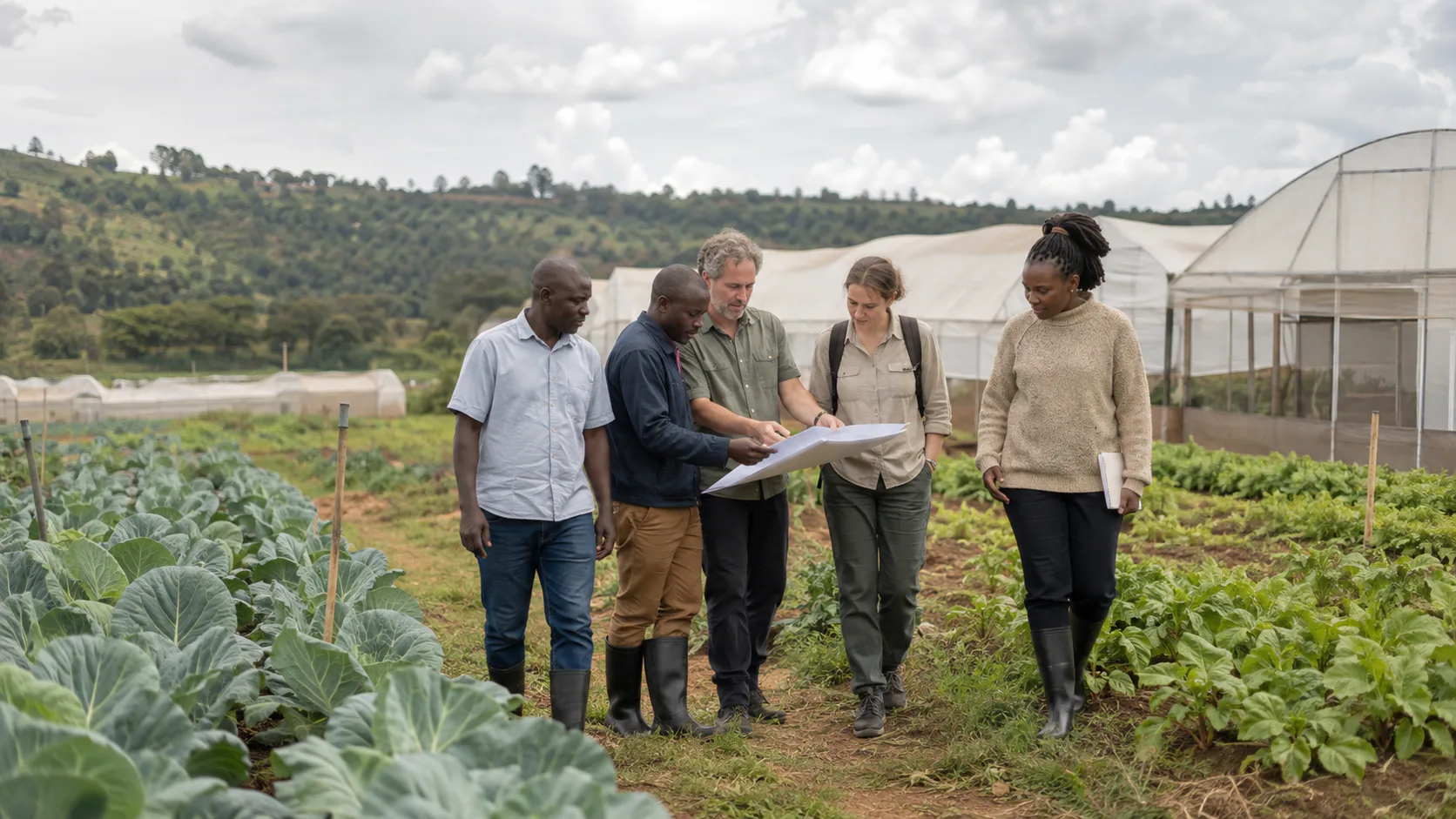
This entire due diligence process depends on qualified professional support, specifically: a Ugandan lawyer for land tenure, company structure, and contract review; an accountant or tax adviser for tax registration and compliance; an agronomist for site and crop/livestock suitability; an irrigation or water engineer for water source and permitting assessment; an environmental consultant for NEMA-related requirements; and the relevant government authorities (UIA, URSB, URA, NEMA, Ministry of Water and Environment) directly, for current procedural confirmation. This article does not substitute for any of this advice and should not be relied upon as a legal, tax, financial, or investment conclusion about any specific transaction.
Limitations of this guide
This article identifies categories of due diligence and the relevant Ugandan authorities; it does not reach legal, tax, or investment conclusions about any specific project, and government procedures, fees, and licensing requirements referenced here are time-sensitive and must be reconfirmed directly with the relevant authority before any capital is committed. Land tenure information is now drawn directly from the Land Act 1998's own text, opened and read in full, but how the Act applies to a specific parcel (its registration history, occupancy status, and boundaries) still requires an independent land search and legal opinion from a Ugandan lawyer - this guide states the legal framework, not the facts of any specific transaction.
What to do next
- Engage a Ugandan lawyer before signing any land agreement, to conduct an independent registry search and tenure verification.
- Directly and independently confirm the buyer relationship and specification the project depends on, rather than relying on a business plan's assumptions.
- Commission independent water and soil assessments for the specific site (see Small-Scale Irrigation Planning in Uganda and the existing Soil Testing and Fertility Management in Uganda guide).
- Confirm current registration, licensing, tax, and environmental requirements directly with URSB, UIA, URA, and NEMA respectively.
- Structure the investment in stages, with a defined pilot phase and pre-agreed evidence thresholds for proceeding to full scale.