A cassava field can look healthy from the roadside and still be carrying a disease that only shows itself when the roots are dug and cut open. That gap between what a leaf tells you and what a root is actually doing is the central difficulty in managing cassava mosaic disease (CMD) and cassava brown streak disease (CBSD) in Uganda, and it is the reason visual inspection alone is not a reliable diagnostic method for either disease, particularly CBSD.
Direct Answer
CMD and CBSD are both viral diseases of cassava spread by the whitefly (Bemisia tabaci) and by planting infected stem cuttings. CMD causes leaf mottling, distortion and stunting and can often be judged from leaf symptoms with reasonable confidence. CBSD is harder: it can cause yellow vein banding and brown stem streaking, but its most damaging symptom, brown corky necrosis inside the storage root, may be present even when the leaves look close to normal. A Ugandan farmer should treat leaf symptoms as an observation, not a confirmed diagnosis, cut open a sample of roots before deciding a field is clean, source planting material from a verifiable clean origin, remove and destroy plants that show a consistent pattern of symptoms, and escalate uncertain or fast-spreading cases to district extension staff or NARO/NaCRRI rather than guessing.
Who this guide is for: Smallholder and mid-scale cassava farmers in Uganda, extension workers advising them, and agriculture students who need a field-usable framework rather than a laboratory manual.
The problem it solves: It gives a structured way to move from "I think my cassava looks sick" to a documented, defensible decision about roguing, planting-material sourcing and when to call for help, instead of relying on a single leaf glance or a seller's claim.
What the reader will be able to decide or do after reading: Distinguish CMD-type from CBSD-type symptom patterns and understand the limits of each; run a simple root-cutting check before condemning or clearing a field; apply a step-by-step roguing decision process; keep a basic field-monitoring log; recognise the warning signs that justify escalation beyond farm-level action; and know what questions to ask before buying planting material described as "resistant" or "clean."
CMD and CBSD: How They Differ, and Why Visual Diagnosis Alone Is Risky
CMD and CBSD are caused by different virus groups but share the same two transmission routes in Uganda: the whitefly vector, which spreads virus between growing plants, and infected stem cuttings, which carry virus directly into a new field the moment they are planted. Understanding both diseases as belonging to the same transmission problem, even though their symptoms differ, is the starting point for management.
CMD: typical leaf-based symptom pattern
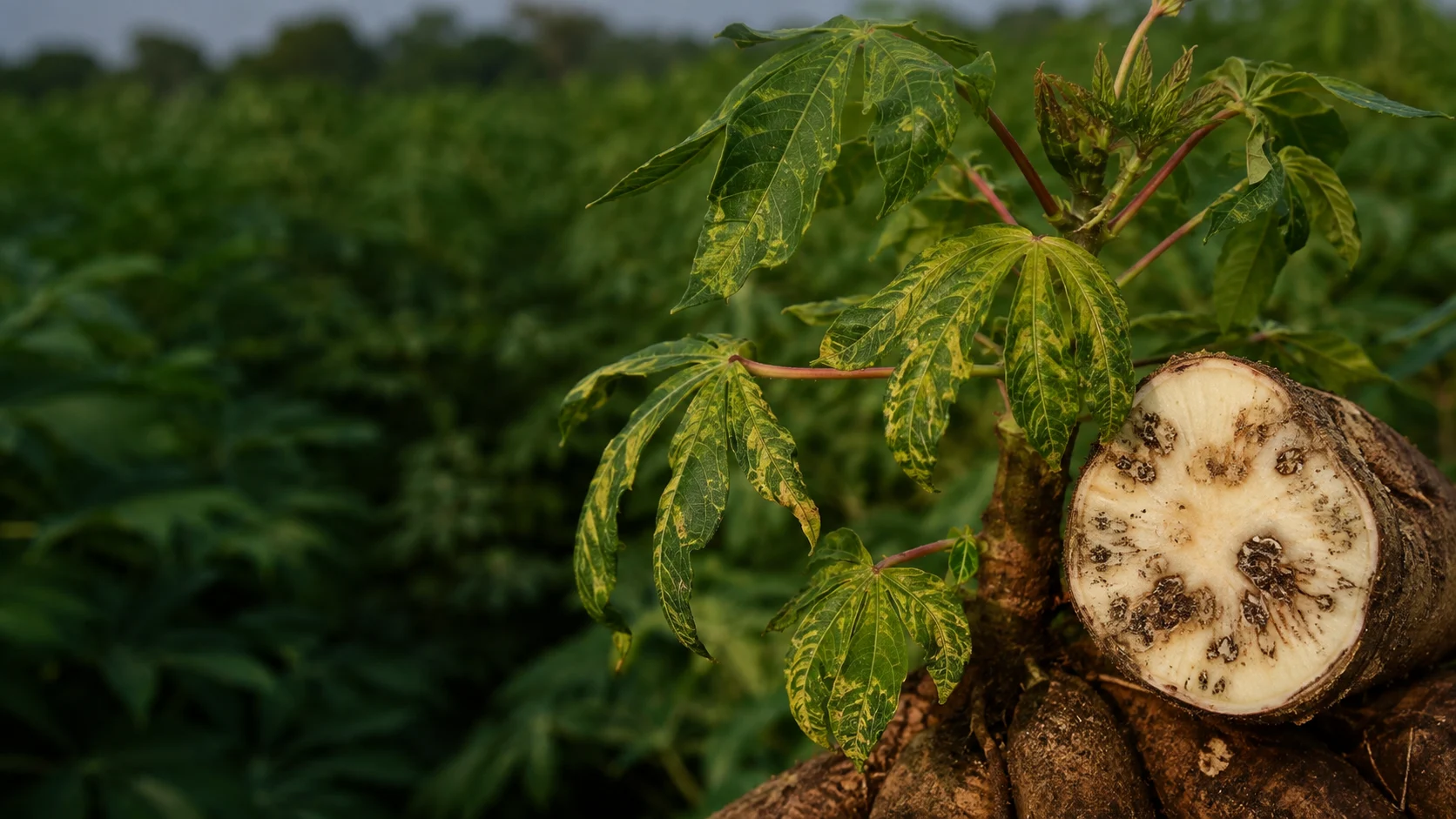
CMD is caused by cassava mosaic begomoviruses, several distinct species of which occur in Uganda and East Africa, including a recombinant strain associated with Uganda's severe 1990s epidemic. The disease produces "mosaic, mottling, misshapen and twisted leaflets, and an overall reduction in size of leaves and plants," with severely affected plants producing few or no usable roots. In practice, a CMD-affected plant typically shows patchy pale-green to yellow leaf mottling, narrowed or twisted leaflets, and stunted growth compared with neighbouring plants of the same age and variety. Because these symptoms are usually present throughout the season once infection is established, leaf-based observation is a reasonably useful, though not perfect, indicator for this disease.
CBSD: symptoms that can hide in the root
CBSD is caused by cassava brown streak viruses and behaves differently. Leaf symptoms, when present, appear as "yellow or necrotic vein banding on the leaf lamina" that may expand into larger chlorotic patches, and brown streaks can appear on young green stems. The symptom that matters most economically, however, is inside the storage root: "dark-brown necrotic areas develop inside the tubers," reducing root size, market value and food quality. This necrosis can be present and severe in plants whose leaves show mild symptoms, and young upper leaves often look unaffected even on an infected plant. A walk-through leaf inspection therefore cannot reliably clear a CBSD-suspect field; the only way to check root status directly is to lift and cut open a sample of roots.
Observation versus confirmed diagnosis
Given the above, this guide treats three levels of certainty as distinct, and recommends the reader keep them distinct too:
- Field observation - what a leaf, stem or dug root looks like on a given day. This can be recorded but should not, by itself, be treated as a confirmed diagnosis, because several other stresses (nutrient deficiency, mite damage, drought stress, herbicide drift) can produce leaf symptoms that superficially resemble CMD or CBSD.
- Pattern-based field judgement - a consistent, repeated symptom pattern across multiple plants, ideally cross-checked with a root cut, combined with knowledge of local disease history. This is enough to justify a roguing decision on most smallholder fields.
- Confirmed diagnosis - laboratory-based virus testing (for example PCR or serological testing), available through NARO/NaCRRI research facilities rather than as a routine farm-level service. This level of certainty is generally reserved for new or unusual outbreaks, variety trials, or disputes over planting-material quality, not for every suspect plant.
A peer-reviewed multi-year survey of CBSD in Uganda (annual sampling of over 7,600 locations between 2004 and 2017) used a standardised severity scale for exactly this reason: surveyors scored each plant for foliar and stem symptoms on a 1 to 5 scale, where 1 indicates no visible symptoms and 5 corresponds to pronounced vein yellowing or chlorotic blotching, severe stem lesions, defoliation and dieback. Adapting a simple version of that scale for farm-level use produces more useful, more comparable records than a binary "sick or healthy" judgement. That survey documented that CBSD, first confirmed near Kampala in 2004, spread rapidly to previously disease-free areas, and later research has traced related virus strains as far as eastern Democratic Republic of Congo, underlining that this is a mobile, cross-border problem rather than a static local risk.
Step-by-Step: From Observation to a Documented Decision
- Walk the field on a fixed schedule, not only when something looks obviously wrong. Weekly or fortnightly checks during the first three to four months after planting are more useful than a single inspection at harvest, since symptoms can develop progressively.
- Score what you see using a simple 1 to 5 scale per plant or per short row section (1 = no visible symptoms, 5 = severe leaf/stem symptoms with dieback), noting separately whether the symptom pattern looks more like CMD-type mottling or CBSD-type vein yellowing and stem streaking.
- Cut open a small sample of roots from any plant scoring 3 or above, and from a random sample of apparently healthy plants in the same field, particularly as the crop approaches maturity. Look for brown, corky, necrotic patches in the root flesh, which indicate CBSD root damage regardless of what the leaves showed.
- Record the result in a field log (see the table format below) rather than relying on memory, including the date, plot location, symptom score, root-cut result and the decision taken.
- Apply the roguing decision framework below to each affected plant or patch.
- Re-check the field at the next scheduled visit to see whether the symptom pattern is stable, spreading, or was a one-off (for example, drought-stress mottling that resolves after rain would not be expected to persist or spread the way a virus infection does).
- Escalate to district extension staff or NARO/NaCRRI when the warning signs described later in this article are present.
The Roguing Decision Framework
Roguing means physically removing and destroying a diseased plant to reduce the source of infection for neighbouring plants and for future cuttings taken from that field. It is a core management tool for both CMD and CBSD, but it needs to be applied with judgement rather than automatically.
Step 1: Confirm the pattern is consistent. A single leaf with an odd mark is not sufficient grounds for roguing. Look for symptoms that are consistent with the CMD or CBSD descriptions above, present on multiple leaves or repeatedly across a growing season, and not better explained by a known local stress (for example a recent dry spell, visible mite colonies, or fertiliser scorch).
Step 2: Check the root where feasible. Especially for CBSD-suspect plants, a root cut gives more decision-relevant information than the leaf alone, because root necrosis is the damage that actually affects yield and marketability.
Step 3: Decide based on growth stage and planting-material use.
- If the plant is young and clearly diseased, remove and destroy it as early as practical, since it will otherwise act as a virus source for whiteflies to spread to neighbouring plants for the rest of the season.
- If the plant is close to harvest and roguing the whole plant is impractical, at minimum do not take cuttings from it for the next planting, and prioritise harvesting and checking it separately from healthy-looking material.
- Never take planting cuttings from a plant that has shown a consistent CMD or CBSD symptom pattern, even if only part of the plant looks affected, since infected cuttings are one of the two main ways these diseases spread in the first place.
Step 4: Destroy rogued material appropriately. Remove diseased plant material from the field rather than leaving it in place, since some symptoms can persist in plant debris and whiteflies can continue to feed on partially removed material. Do not carry rogued material to other fields.
Step 5: Document the decision. Record what was removed, why, and the outcome at the next inspection, so that patterns become visible over multiple seasons rather than being forgotten.
Clean Planting Material and Field Sanitation
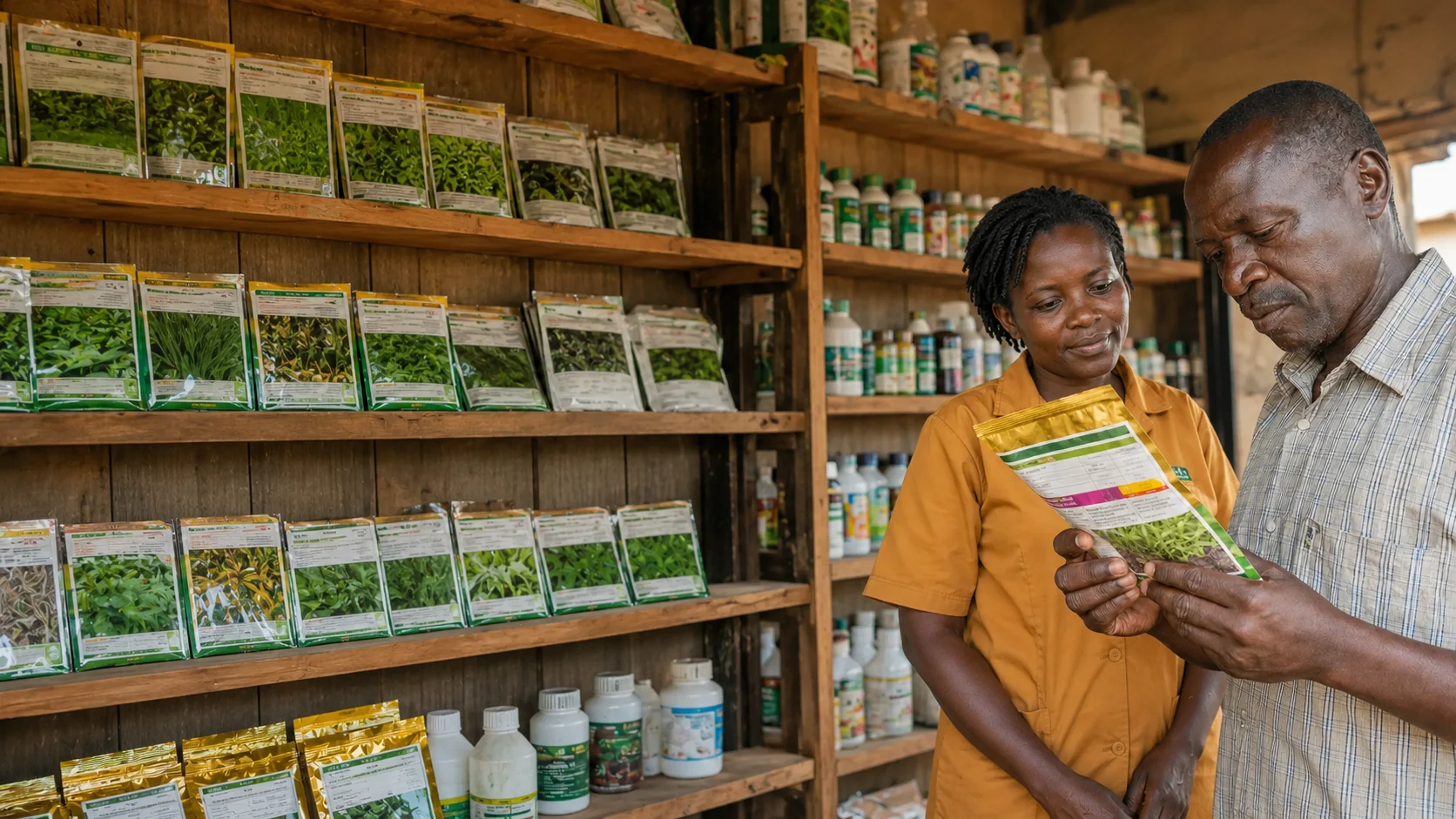
Because both diseases travel in cuttings, the single highest-leverage prevention step available to a Ugandan cassava farmer is starting with planting material that has a verifiable clean history, not simply material that "looks fine" at purchase. In Uganda, planting-material quality assurance for crops including cassava sits within MAAIF's Directorate of Crop Resources, specifically its Department of Crop Inspection and Certification (DCIC), which includes a National Seed Certification Services (NSCS) division and a Quality Declared Seed (QDS) pathway that explicitly covers cassava alongside other roots and tubers. Field-level QDS inspection is typically carried out by District Agricultural Officers, who inspect a sample of fields with a given variety once or twice a season, a lighter but still verifiable regime than full certified-seed inspection.
Practical field sanitation steps that reduce disease pressure from an existing planting include:
- Sourcing initial planting material from a certified or QDS-inspected source where possible, and treating uninspected roadside or informal cutting sales as higher risk until checked.
- Selecting cuttings only from plants that have been observed, ideally over more than one visit, to be free of the leaf, stem and root symptoms described above.
- Keeping a buffer of resistant or less-susceptible varieties, where verified as available through NARO/NaCRRI or district extension, along field margins, since this can help slow the rate at which whiteflies move virus into the main planting, although it does not eliminate the risk.
- Disinfecting cutting tools between plants or between fields, and avoiding the movement of planting material from a known-affected area into a clean one.
- Keeping fields reasonably weed-free, since some alternative host plants and general field disorder can support higher whitefly populations.
For the detailed process of checking seed-class labels, certification tags, lot numbers and counterfeit-detection steps, see Falcon's dedicated guide, [How to Verify Seed and Planting-Material Quality Before Buying in Uganda](https://falconfoundation.co.ug/insights/verify-seed-planting-material-quality-uganda), which covers that process in full rather than repeating it here.
On "resistant" varieties
NARO, through NaCRRI, has released improved cassava varieties described in Ugandan agricultural reporting and research as resistant or tolerant to CMD and/or CBSD, and NaCRRI reports research interventions associated with reduced CMD and CBSD occurrence where applied. However, resistance and tolerance are not complete immunity, resistance can be variety- and strain-specific, and recommended varieties change as NARO releases new material and virus populations evolve. This article does not name a fixed "resistant" variety list as a permanent recommendation. Instead, verify currently recommended varieties for your agro-ecological zone directly with NARO/NaCRRI or district extension staff at planting time, and treat any informal seller's variety claim as unverified until checked against an official source.
Monitoring and a Field-Log Format
A simple, consistently kept log is more valuable than an elaborate one that is abandoned after two weeks. A minimum useful format:
| Date | Plot/row reference | Variety | Symptom type observed (CMD-type / CBSD-type / unclear) | Severity score (1-5) | Root cut checked (Y/N) | Root necrosis present (Y/N/NA) | Decision (monitor / rogue / escalate) | Follow-up date |
|---|---|---|---|---|---|---|---|---|
Keeping this log also supports two things beyond disease management: it creates a defensible record if a planting-material supplier's "clean" or "resistant" claim is later disputed, and it feeds directly into broader farm record-keeping. Falcon's other Uganda content on farm records and gross margin, and on soil testing and fertility management, both benefit from the same discipline of dated, plot-referenced records rather than memory-based judgement; see Soil Testing and Fertility Management in Uganda for how field-level records also support input-decision accuracy.
Warning Signs That Need Immediate Escalation
Escalate to district extension staff, or where the issue is unclear or unusually severe, to NARO/NaCRRI, when any of the following apply:
- A symptom pattern appears in a field or area that has no history of CMD or CBSD, particularly if it appears suddenly and across multiple plants at once, since this can indicate a new introduction worth documenting for wider surveillance.
- Root necrosis consistent with CBSD is found in a field where the planting material was purchased as certified or QDS-labelled clean stock, since this may indicate a certification-chain problem worth reporting.
- Disease severity or spread rate appears markedly faster than in previous seasons on the same land, which historical Ugandan surveillance work has shown can happen as epidemics expand into previously unaffected areas.
- You are uncertain whether a symptom is viral disease or another cause (nutrient deficiency, mite damage, herbicide drift) and the uncertainty affects a planting-material or roguing decision with significant cost implications.
- You are asked to accept or reject a batch of planting material based on a resistance or "disease-free" claim you cannot independently verify.
Common Mistakes
- Judging CBSD status from leaves alone. As explained above, root necrosis can be present with mild or absent leaf symptoms, so a "the leaves look fine" conclusion is not sufficient for CBSD.
- Taking cuttings from the best-looking part of a partially symptomatic plant. If any consistent part of the plant shows CMD or CBSD symptoms, the whole plant should be treated as unsuitable for cuttings.
- Treating a single odd leaf as confirmed disease and roguing healthy plants unnecessarily, which wastes planting material without addressing the actual risk.
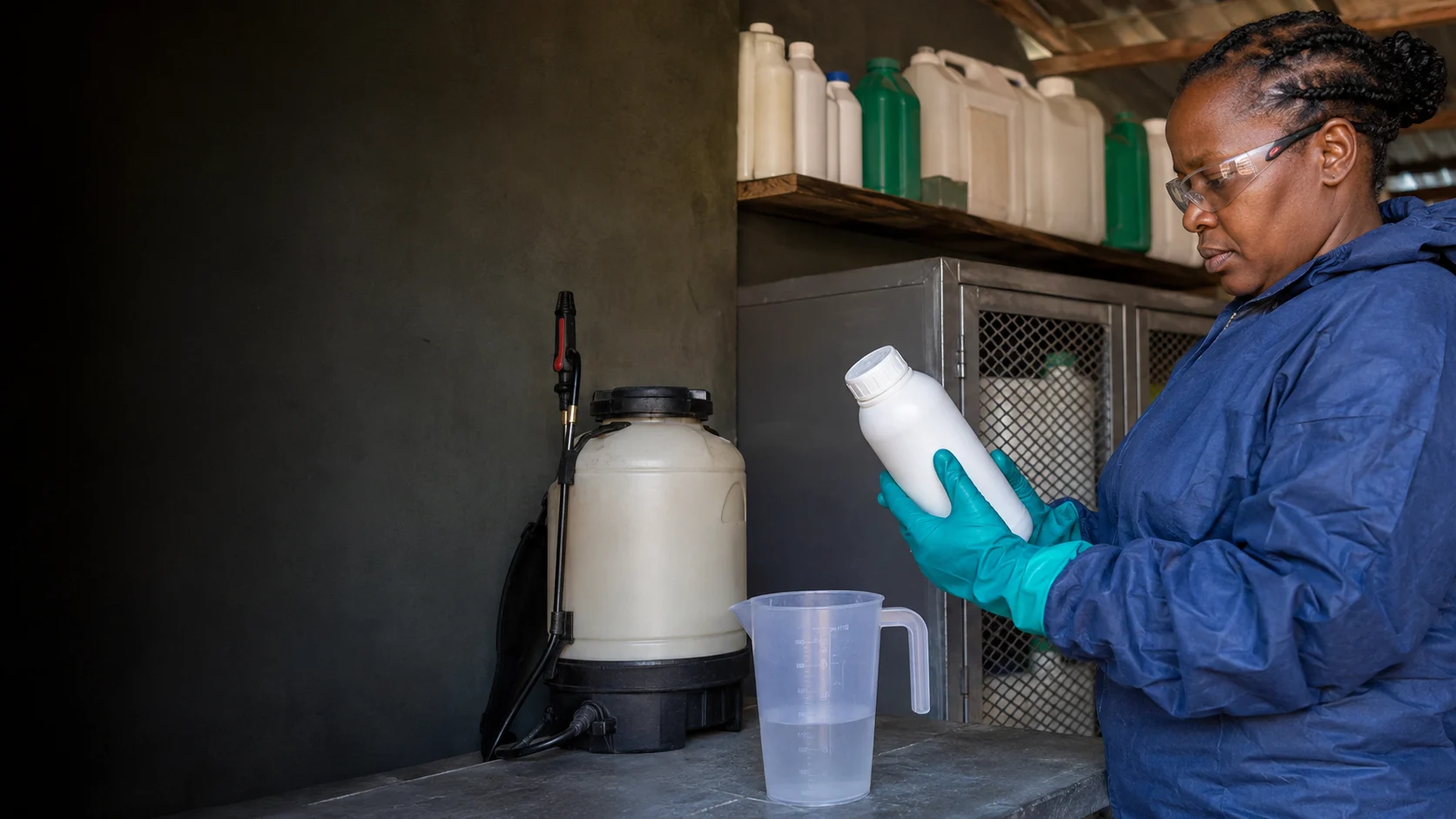
- Assuming a pesticide or insecticide product will cure an already-infected plant. CMD and CBSD are viral diseases; there is no curative chemical treatment for an infected plant. Vector (whitefly) management can be one part of a broader prevention strategy, but detailed product selection, mixing and application should follow Falcon's Safe Pesticide Selection, Mixing, Application and Record-Keeping in Uganda guide rather than being improvised.
- Buying planting material based only on a seller's verbal claim of "resistant" or "clean." Verify against an official source before relying on the claim for a significant planting decision.
- Not recording anything, which makes it impossible to tell whether a problem is worsening, stable, or resolved from one season to the next.
When These Methods Work, and When They Do Not
Symptom-based observation, root-cutting checks and roguing work reasonably well for reducing CMD/CBSD spread and impact within a given field over time, particularly combined with verified clean planting material. They do not eliminate risk entirely: whitefly-transmitted spread from neighbouring, unmanaged fields can reintroduce disease regardless of one farmer's own practice, and CBSD root necrosis can still cause loss even after diligent leaf-based monitoring, because virus load and root damage are not always visible before harvest. These methods also depend on the observer being able to distinguish disease symptoms from other stresses with reasonable consistency, which improves with practice and, where uncertainty remains, escalation rather than guesswork.
Alternatives and What They Add
- Laboratory virus testing (PCR/serological testing) through NARO/NaCRRI research facilities gives a higher level of certainty than field observation, but is not a routine, farm-accessible service for every suspect plant; it is most relevant for unusual outbreaks, variety verification disputes, or research purposes.
- Community-level surveillance and reporting, coordinated through district extension or NARO, can catch new introductions earlier than a single farmer's field checks by aggregating observations across a wider area.
- Buffer planting with less-susceptible varieties at field margins, where verified as suitable through official sources, can help slow vector-driven spread into the main crop, though it reduces rather than eliminates risk.
Cost Categories to Plan For
Without stating specific prices, budget for these cost categories and verify current figures locally: certified or QDS-inspected planting material (generally priced above uncertified cuttings, reflecting the inspection process); labour for regular field monitoring and record-keeping; labour and disposal costs for roguing and destroying infected material; the cost of root-cutting checks (mainly labour and lost saleable roots from the sample cut); and, where whitefly vector management forms part of a broader plan, the input costs covered separately in Falcon's pesticide-safety article rather than duplicated here.
Questions to Ask Extension, NARO/NaCRRI or a Seed Source
- Which cassava varieties are currently recommended for this specific agro-ecological zone, and on what basis (recent trial data, current strain prevalence) is the resistance or tolerance claim made?
- Is the planting material being offered QDS-inspected or certified, and can the seller show the relevant label, registration or inspection record?
- Has CBSD or CMD been confirmed in this district or a neighbouring one in the current or recent season, and is there a known local severity trend?
- What is the recommended re-inspection interval for a field planted with this material, and who should be contacted if symptoms appear?
- If root necrosis is found in material purchased as certified, what is the process for reporting this back through the certification chain?
A Low-Risk Pilot or Validation Method
Rather than converting an entire planting to a new variety or source in one step, plant a small, clearly marked trial section (a single row or block) with the new material alongside the existing planting, using the same monitoring schedule and field-log format for both. Compare symptom scores and root-cut results over at least one full season before expanding the change to the rest of the field. This limits exposure if a "resistant" or "clean" claim does not hold up locally, while still generating farm-specific evidence for a wider decision.
Clear Next Actions
- Start or restart a simple field-log using the format above, even if only for the plants you are already concerned about.
- Before your next planting, verify your intended cutting source against the certification and QDS information in Falcon's seed-verification guide.
- Schedule your first root-cutting check for any plant currently scoring 3 or above on the symptom scale.
- Identify the district extension contact or NARO/NaCRRI contact point relevant to your area before you need it, so escalation is not delayed by not knowing who to call.
- If vector (whitefly) management is part of your plan, move to Falcon's pesticide-safety article for product selection, mixing and record-keeping rather than improvising.
Limitations, Risks and When to Seek Professional Support
This article is an educational guide and does not replace a confirmed laboratory diagnosis, an official variety recommendation, or district-level extension advice specific to your field and season. Symptom descriptions here summarise patterns reported in the cited research and extension sources; individual plants can present atypically, and other stresses can mimic viral symptoms. Do not rely on this article alone for a high-value decision, such as clearing an entire field for cutting propagation or rejecting a purchased batch of planting material, without cross-checking with district extension staff, NARO/NaCRRI, or laboratory testing where available. Seek professional support when: a new disease pattern appears in a previously unaffected area; you are in a dispute over certified or QDS-labelled planting-material quality; a suspected outbreak threatens household food security or a significant commercial planting; or you need a decision on whitefly vector-control products, which should go through Falcon's pesticide-safety guide and, for product-specific questions, a licensed agro-input dealer or MAAIF's Agro-chemicals Control Division rather than general guidance. Variety resistance information changes over time; always verify current recommendations before relying on them for a costly planting decision.