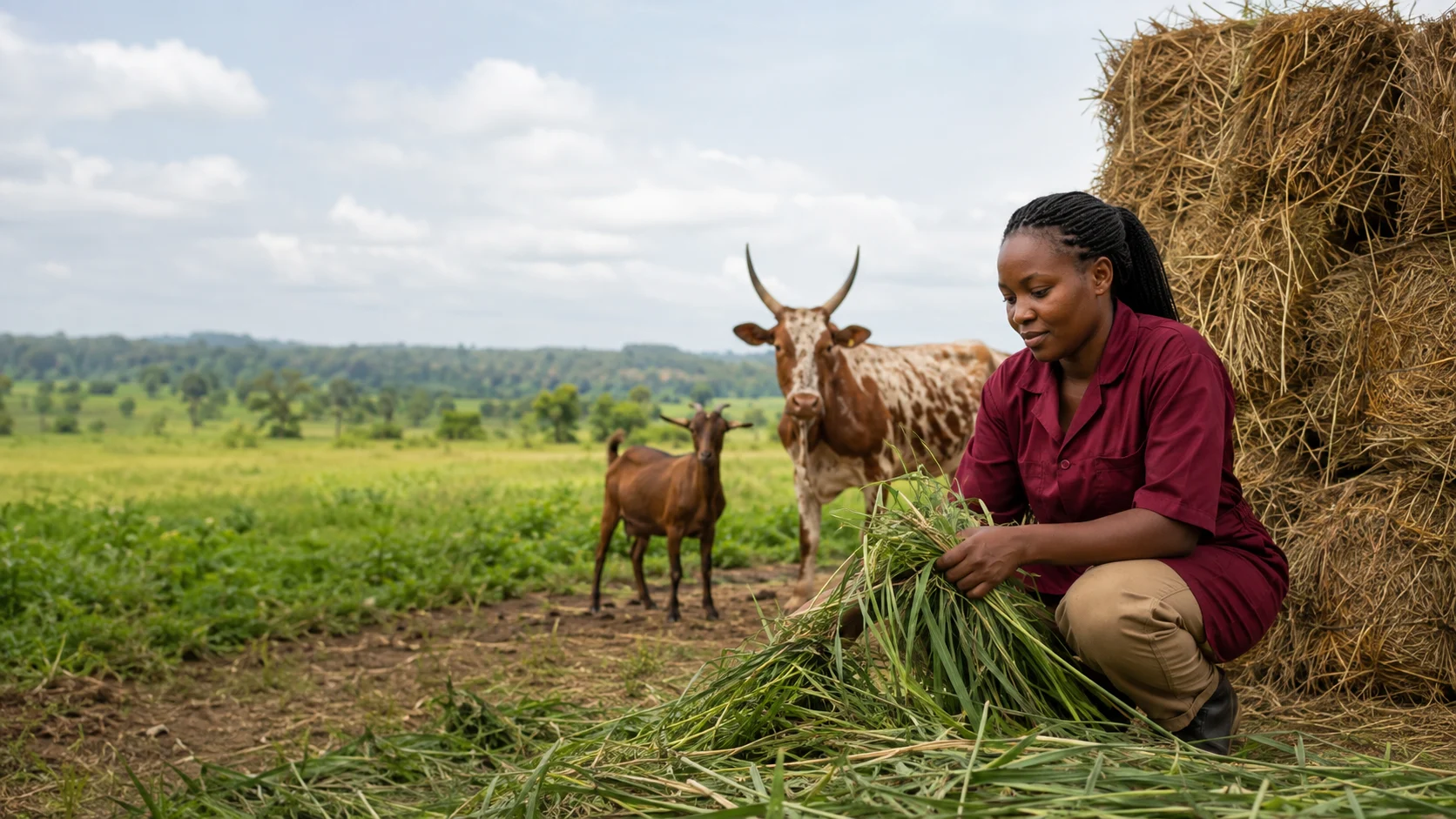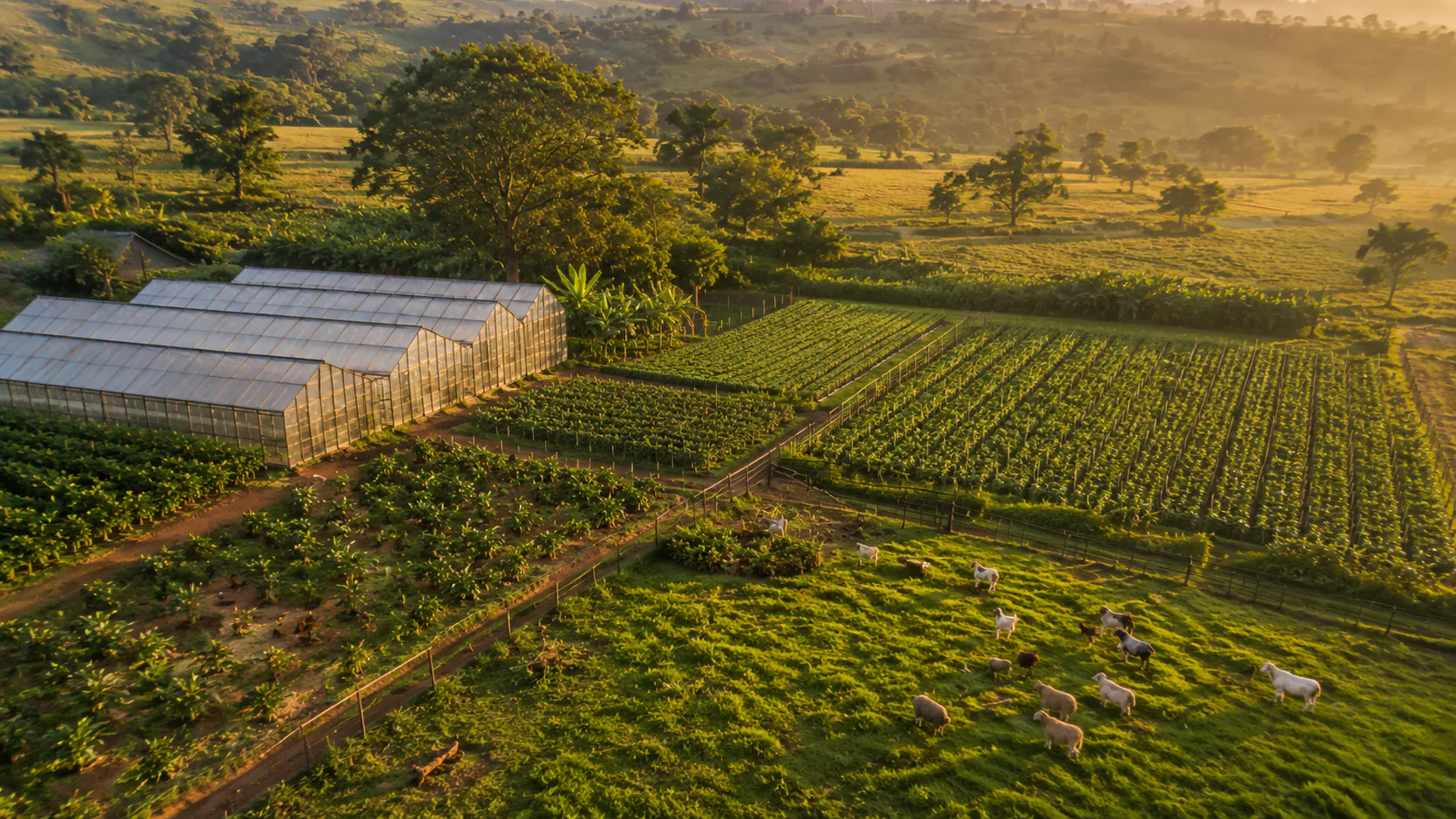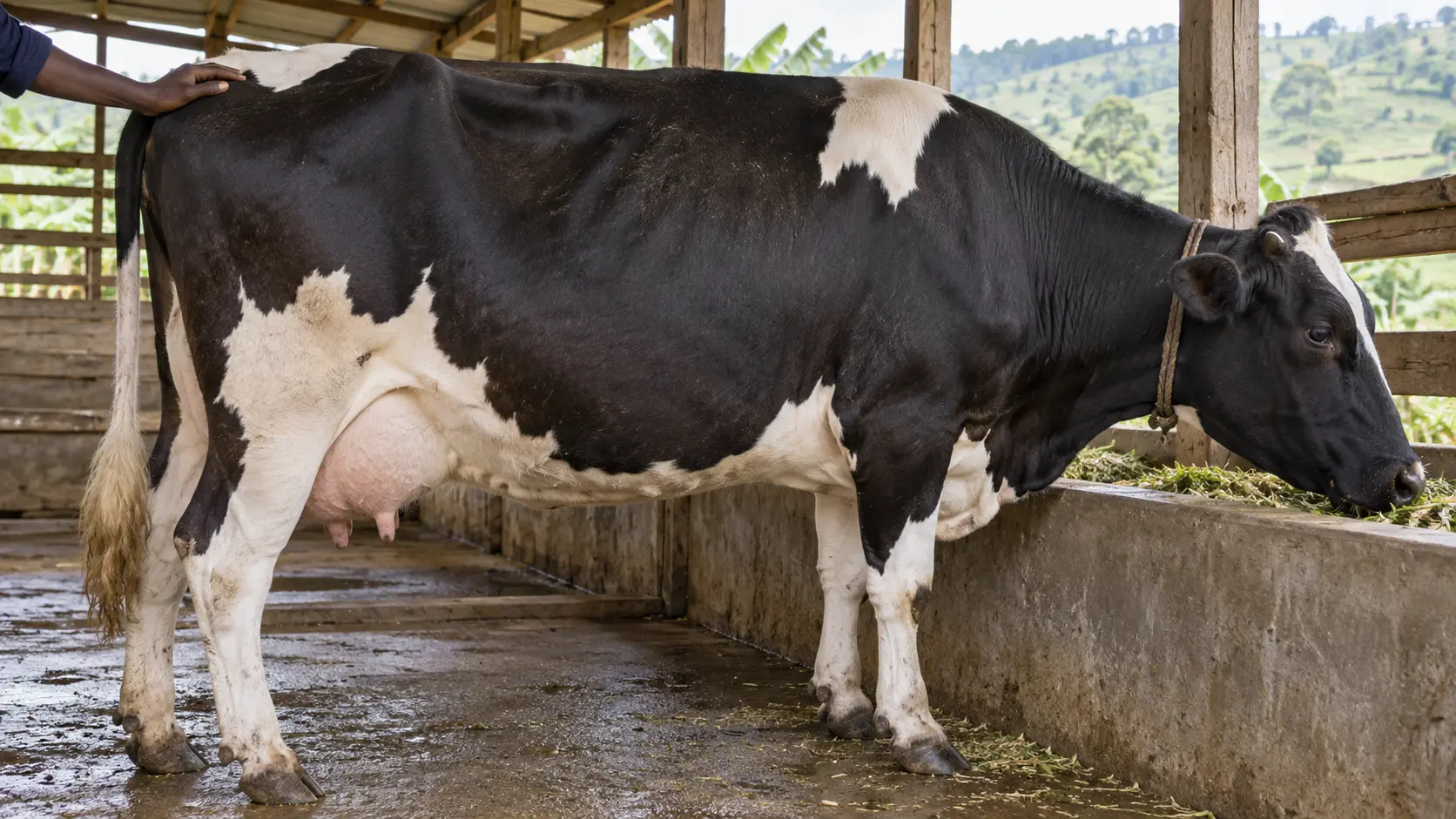
Somebody shows you a photograph of a large black and white cow standing in front of a full milk churn. You are told she gives thirty litres. You borrow money, you buy her, and within a year she is thin, she is sick, she has failed to conceive, or she is dead.
This is the most expensive mistake in Ugandan dairy, and it is not caused by bad luck. It is caused by buying an animal whose requirements the farm cannot meet.
A cow's genetics do not create milk. They set the ceiling on how much milk she can produce if she is fed, watered, cooled, housed and managed to that level. Genetics also set the floor on what she needs simply to stay alive. Buying high genetic potential onto a low input farm buys you the requirement without the return.
What this guide helps you decide
This guide helps you answer one question: what level of exotic dairy genetics can my farm actually support?
It gives you a scorecard for your own farm first, then explains what each level of crossbreeding demands and offers, and finishes with the physical checks to carry out on any animal before you pay for her.
It does not cover heat detection or the choice between artificial insemination and a bull, which is a separate guide. It does not cover milking hygiene, calf rearing or ration formulation. It does not give cow prices, and we explain why below.
What Ugandan dairy genetics actually look like now
A 2025 genomic study of crossbred dairy cattle in central Uganda found the sampled animals averaged 48.6 per cent Holstein ancestry, 19.9 per cent Jersey, 18.5 per cent Ankole and 10.1 per cent zebu [1]. In other words, the typical improved Ugandan dairy cow is already a mixture, and a fairly recent one. The study noted that the admixture has not yet stabilised.
The same study contains a finding every prospective buyer should understand. Among the animals sampled, a higher proportion of exotic genome was associated with lower odds of testing positive for East Coast fever and lumpy skin disease. That sounds like good news for exotic blood until you read the authors' own caution: they attribute this to survivor bias, because animals with more exotic ancestry are believed to die at higher rates before reaching the age at which they could be sampled [1].
The cows with high exotic content that you meet are the ones that made it. The ones that did not are not in anybody's herd, and not in the photograph.
Indigenous cattle remain the backbone of the national herd. Ankole, East African Shorthorn Zebu and their crosses make up around 93.3 per cent of Uganda's cattle, and indigenous cattle support the food, income and social wealth of roughly 26.1 per cent of Ugandan families [2].
What each level of genetics actually offers
Indigenous cattle
Uganda's indigenous breeds include Ankole, Karamojong, Nganda, Nkedi and Ntuuku. Genomic work describes African indigenous cattle as showing notable adaptability to tropical diseases, heat stress and limited forage quality, with East Coast fever, trypanosomiasis and helminth infections named among the pressures they have adapted to [3].
ILRI describes Ankole cattle as drought-resistant and gentle, valued for both milk and meat, and under replacement pressure from higher-yielding Holstein-Friesians to the point where the breed's survival is a genuine concern [4].
Indigenous cattle produce less milk. They also survive conditions that kill exotic animals, need less purchased feed, and are worth real money for beef.
Crossbreds
A crossbred sits between the two, and where it sits depends on the proportion of exotic blood.
A study by Makerere University and Cirad compared daily milk yields across Holstein-Friesian, crossbred and indigenous cattle on the farms it surveyed. Holstein-Friesian cows produced the most, crossbreds sat between the two, and indigenous cattle produced the least. Critically, yields fell sharply in the dry season where cattle were fed on pasture alone [5].
We are deliberately not reproducing those daily litre figures. They come from specific farms in a study published in 2007, they are not current national averages, and quoted out of context they become a promise. What they establish is the shape of the relationship: the ranking holds, and the gap between the genetic types narrows when feeding is poor. A high-potential cow that is underfed does not deliver high-potential output.
High-grade exotic
Holstein-Friesian in particular carries a well-documented heat penalty. A 2023 review covering tropical and subtropical dairy found that raising ambient temperature from 18 to 30 degrees Celsius caused roughly a 15 per cent milk yield drop and a 39.7 per cent decline in milk fat in Holsteins, and that Jersey cattle are more heat tolerant than Holstein on the basis of milk production decline under heat stress [6].
That same review reaches a conclusion directly relevant to a Ugandan smallholder: for low-input tropical systems, crossbreeding heat-adapted indicine breeds with Holstein or Jersey is more cost-effective than investing in cooling infrastructure to keep pure exotics comfortable [6].
Where you farm changes the answer
Uganda's cattle corridor runs diagonally from the south-west to the north-east, covers roughly one third of the country's land area, and holds about 60 per cent of the national cattle and small ruminant herd. Dry season scarcity of pasture and water between January and March drives heavy trading and movement of animals [7].
The corridor is described as semi-arid, with unpredictable rainfall and periodic drought, and traditional pastoral mobility is being restricted as rangeland is privatised [8].
A farm in that zone faces a fundamentally different feed and water situation from a farm in the banana and coffee belt. The same genetics will not perform the same way in both. Choose for where you actually are.
Score your farm before you choose the cow
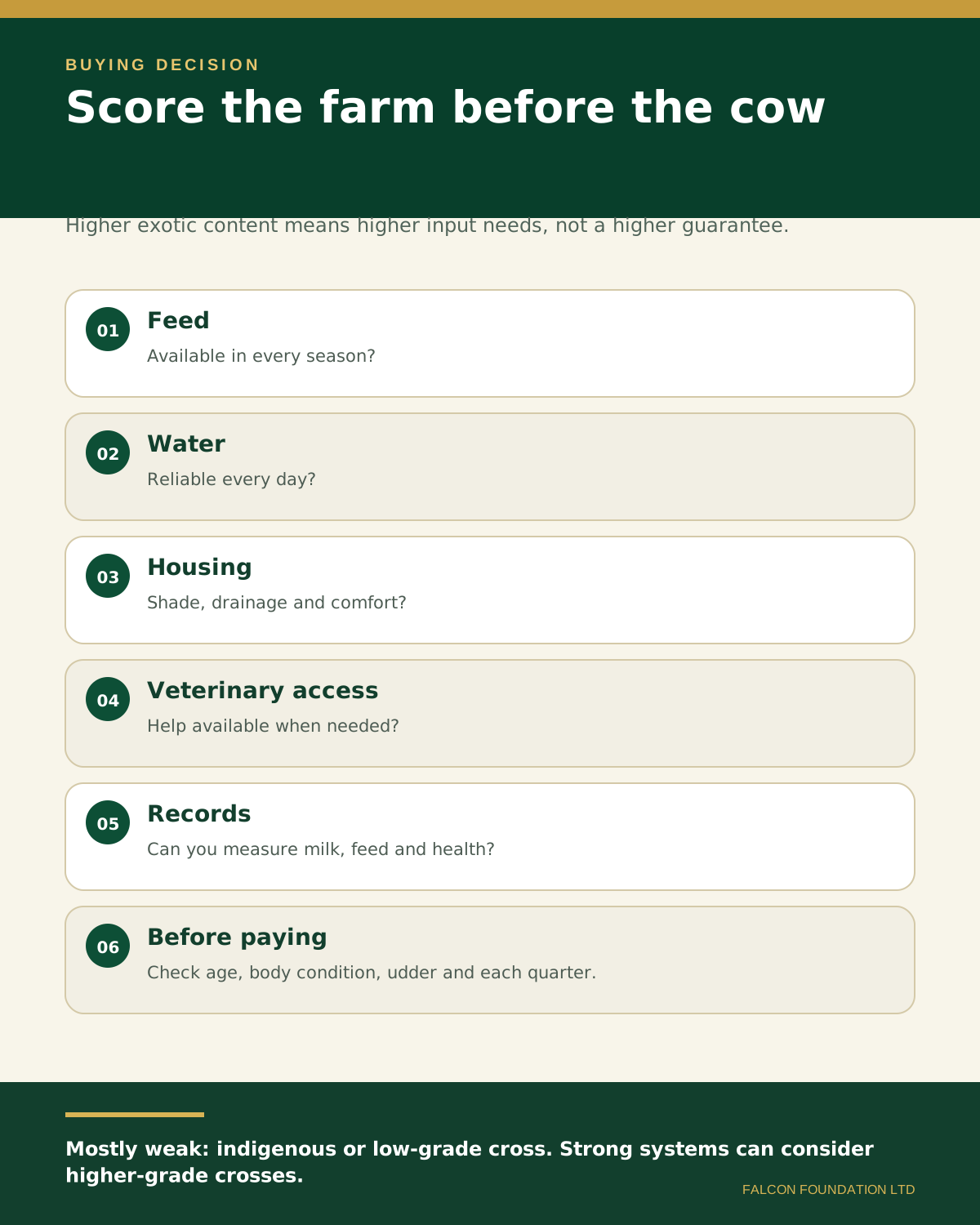
Answer these honestly. Weak, adequate or strong.
| Capability | What strong looks like |
|---|---|
| Year-round feed | Conserved feed or planted fodder carries you through the dry season |
| Year-round water | Reliable source within reach, no seasonal failure |
| Shade and housing | Animals are out of direct midday sun and out of mud |
| Veterinary access | A qualified person can reach you within a day |
| Records | You already write down calvings, services and treatments |
If most answers are weak, choose indigenous stock or a low-grade cross. That is not a lesser choice, it is the correct choice, and the animals will live.
If most are adequate, a low to medium grade cross is a reasonable target.
If most are strong, and only then, a higher grade cross becomes sensible.
Fix the feed base before you upgrade the genetics. Our guide to building a twelve-month fodder calendar covers how to close the dry-season gap, and choosing a farm enterprise covers whether dairy is the right enterprise for your holding at all.
Where to get genetics you can verify
Uganda's National Animal Genetic Resources Centre and Data Bank operates under the Animal Breeding Act of 2001 as a semi-autonomous body under the Ministry of Agriculture, Animal Industry and Fisheries. It runs what it describes as the only nationally accredited bull stud in the country, together with a semen production, packaging, storage and distribution unit, and it reports having trained 200 artificial insemination technicians as of July 2026 [9].
Its published services include semen, embryos, oocytes, cryopreservation and liquid nitrogen, artificial insemination services, breeding soundness and semen evaluation, and embryo transfer [10].
It also publishes a bull catalogue. The 2023 edition lists bulls by breed, five Friesian, three Ayrshire, two Jersey, one Guernsey, four Boran and four Sahiwal. Each entry gives the bull's origin, birth date, breeder and pedigree, together with the dam's production record including lactation number, days in milk and milk yield in kilogrammes. Dairy entries add fifteen conformation and functional traits scored on a linear scale, and the catalogue notes that the bulls are bred and selected under tropical conditions [11].
That matters because it means the information exists. You can look up what a bull's mother actually produced instead of relying on a description. Ask for the catalogue reference of any semen you are offered, and be cautious of semen sold without it.
On the market and processing side, the position changed recently and it matters when you are planning where milk will go. The Dairy Development Authority, for many years the semi-autonomous dairy regulator, was abolished by the Dairy Industry (Amendment) Bill passed in October 2024, and its functions were transferred to the Ministry of Agriculture, Animal Industry and Fisheries under the government's rationalisation of public agencies [12] [13]. Any older guidance that directs you to a standing dairy authority should be treated as out of date. Before you build a herd, confirm with the ministry where dairy licensing and inspection now sit, and confirm there is a functioning milk collection point within reach of your farm.
Three checks before you pay
Whatever the seller tells you, do these yourself.
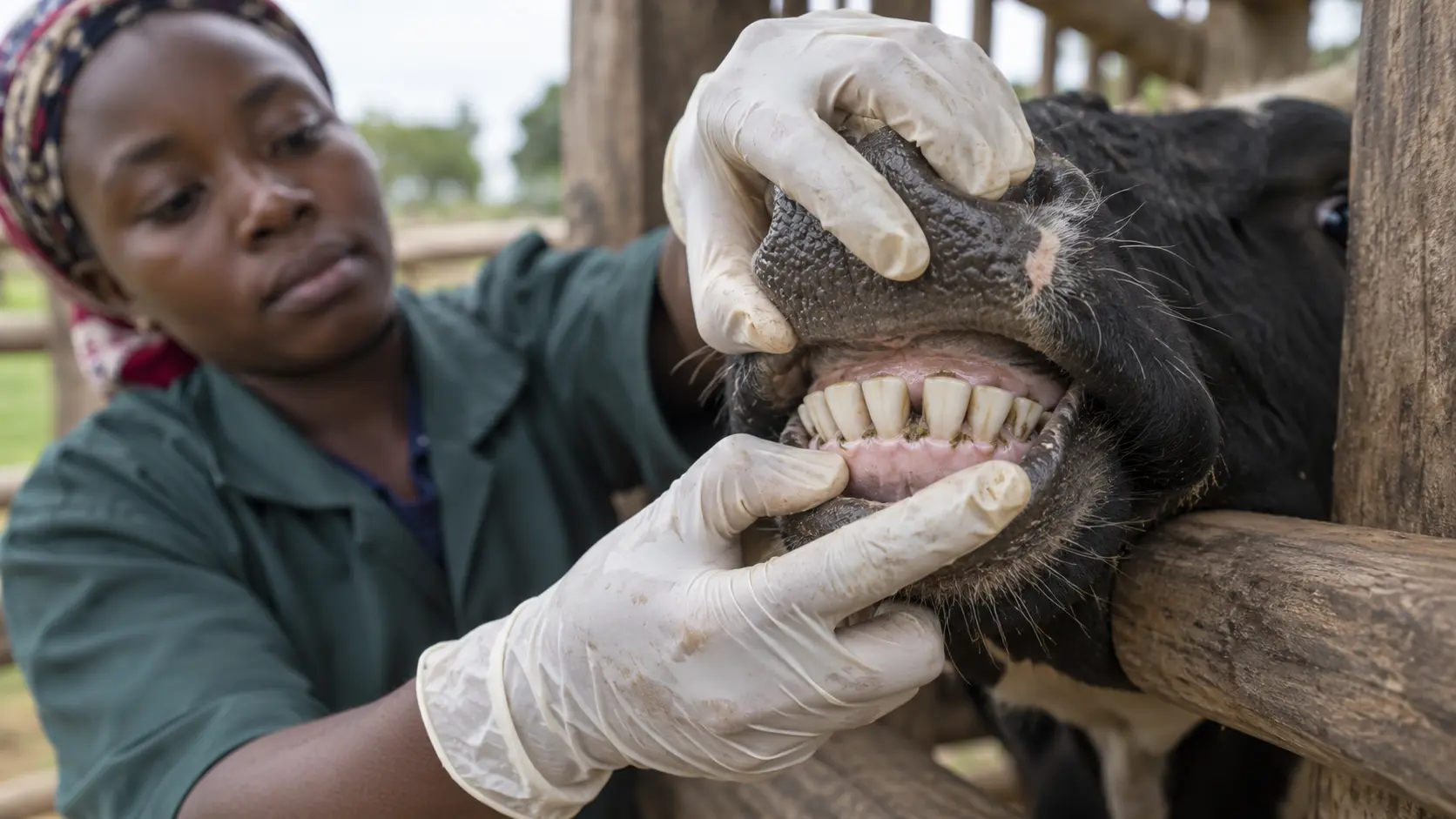
Check her age from her teeth. Cattle age is estimated from the eruption of the permanent lower incisors. Extension guidance gives approximate milestones of 18 to 24 months for the first pair, 24 to 30 months for the second, around 36 months for the third and 42 to 48 months for the fourth [14]. Beyond about five years, ageing by wear becomes unreliable and varies with diet, genetics and geography [14] [15]. Use this to check the seller's claim, not to establish an exact birthday.
Score her body condition. Dairy body condition is scored on a one to five scale, where one is severely thin and five is obese. Extension guidance gives an ideal lactation range of 2.5 to 3.0, and links a loss of more than one full point after calving to delayed ovulation and lower conception rates [16]. A cow well outside that range is telling you something about how she has been kept.
Examine the udder, quarter by quarter. In the unified dairy scorecard that judges use, the udder carries 40 per cent of the total score for a cow, dairy strength 25 per cent, rear feet and legs 20 per cent and frame 15 per cent. Teats should sit squarely and centrally beneath each quarter [17]. Feel each quarter separately. A hard, shrunken or absent quarter is a permanent loss of a quarter of her output.
Watch her walk. Feet and legs are judged on foot angle, pastern strength and whether the legs are set squarely beneath the body, and they are a longevity trait rather than a cosmetic one [17].
Why we do not give prices or expected yields
We could not verify any current Ugandan price for a dairy cow, an in-calf heifer or a straw of semen from any institutional or peer-reviewed source. We could not verify a current breed-specific national average milk yield for Uganda either. The only comparative yield figures we found are from farm-level work published in 2007 and are cited above with that caveat attached [5].
Publishing an invented figure would be worse than publishing none. Get prices from at least three sellers in your own district, in the same week, and ask each one what the animal has actually produced, with records.
Limitations and when to get help
This guide is about matching genetics to a farm. It is not a substitute for a veterinary pre-purchase examination. Before any significant purchase, have a qualified veterinary officer examine the animal, and ask about disease status, vaccination history and any movement or quarantine requirements that apply in your district.
Do not buy an animal you have not seen milked.
What to do next
- Score your farm on the five capabilities above and write the answers down.
- If feed or water is weak, fix that first and postpone the purchase.
- Decide your target level of exotic content from your score, not from a photograph.
- If using artificial insemination, ask for the bull catalogue entry and check the dam's records.
- When viewing an animal, check teeth, body condition and each udder quarter yourself.
- Watch her being milked before you agree a price.
- Arrange a veterinary examination before payment.
Read next: heat detection and the bull or insemination decision, milking hygiene and mastitis prevention, and rearing the replacement heifer.