The direct answer
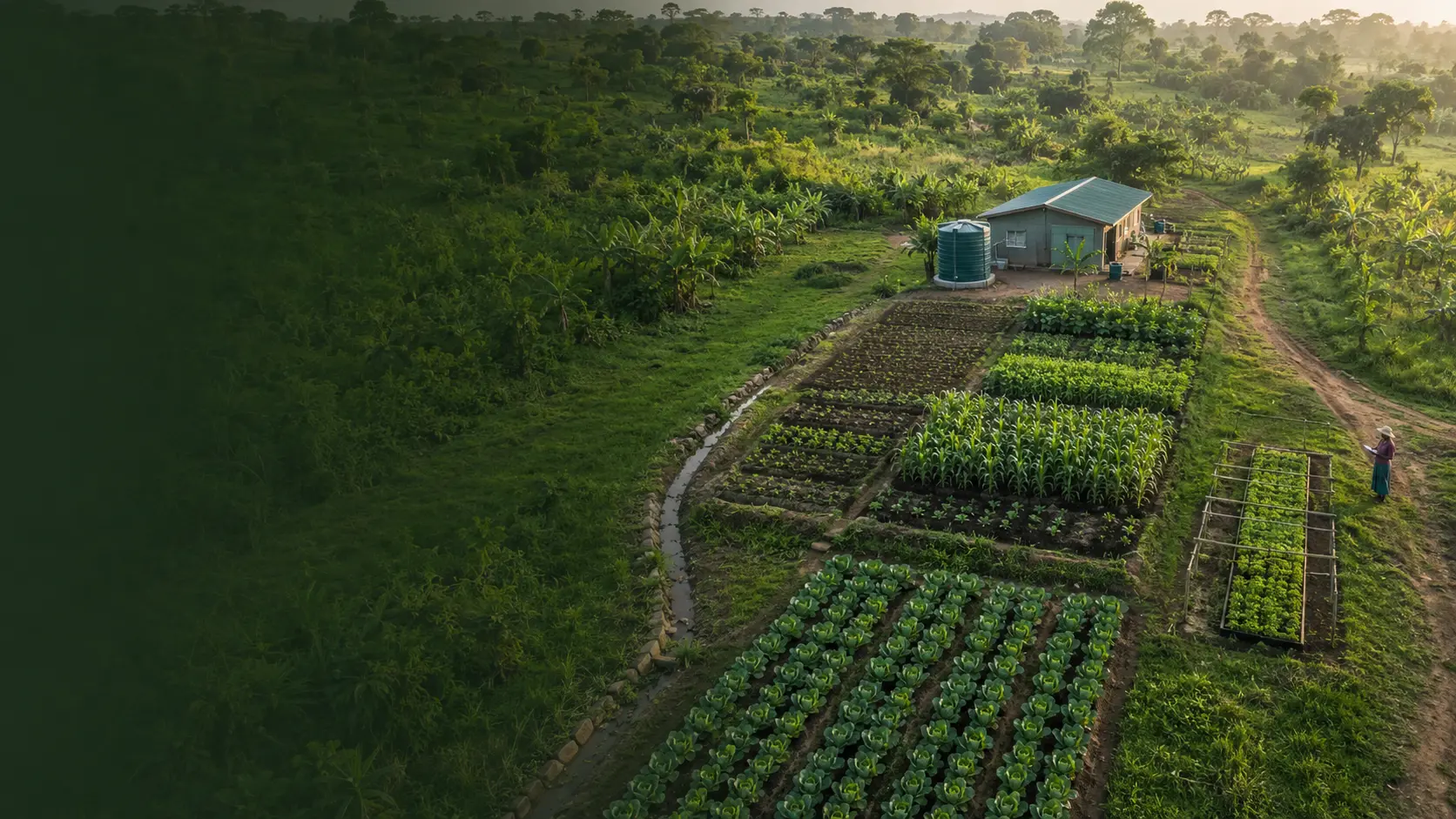
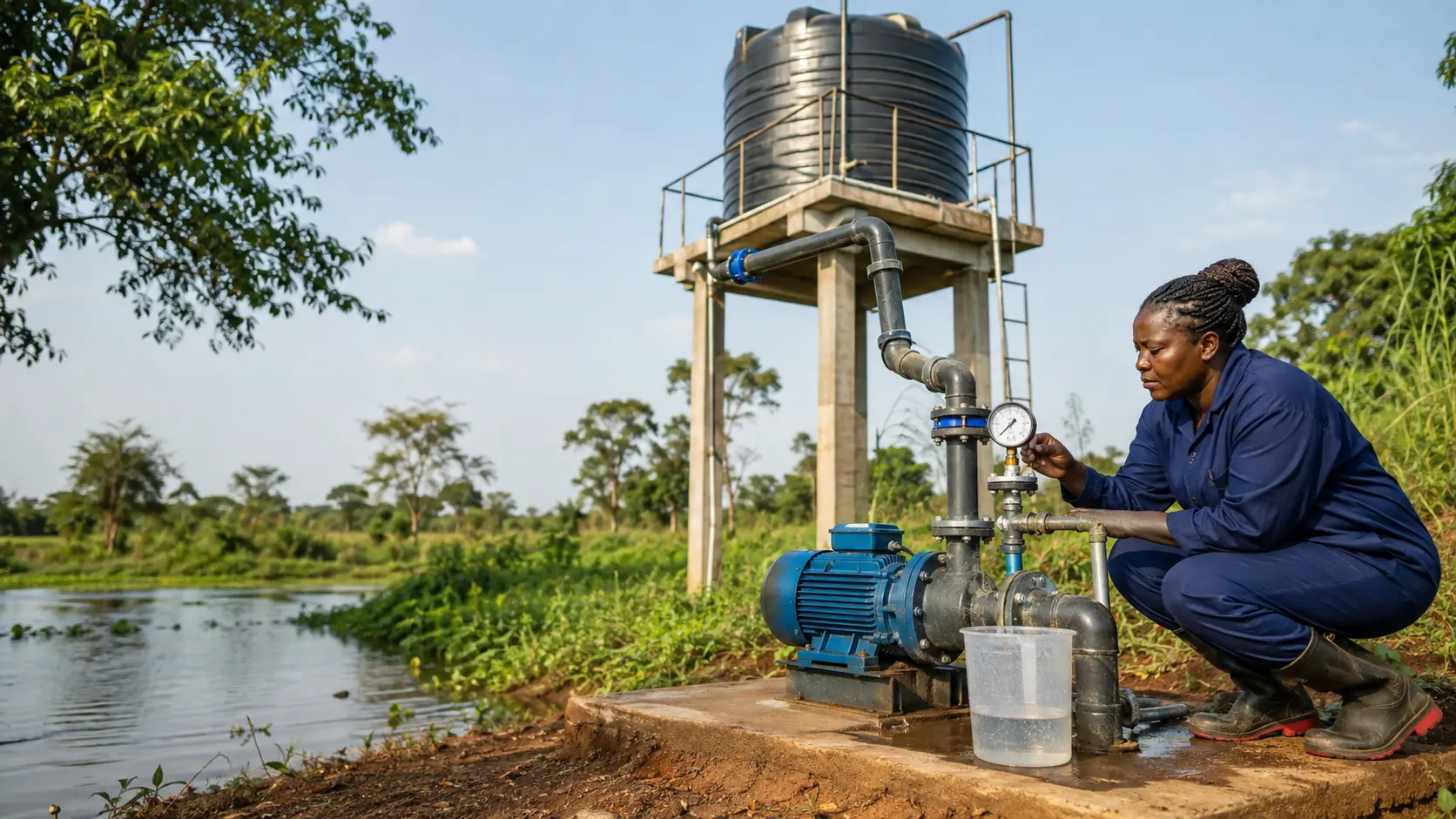
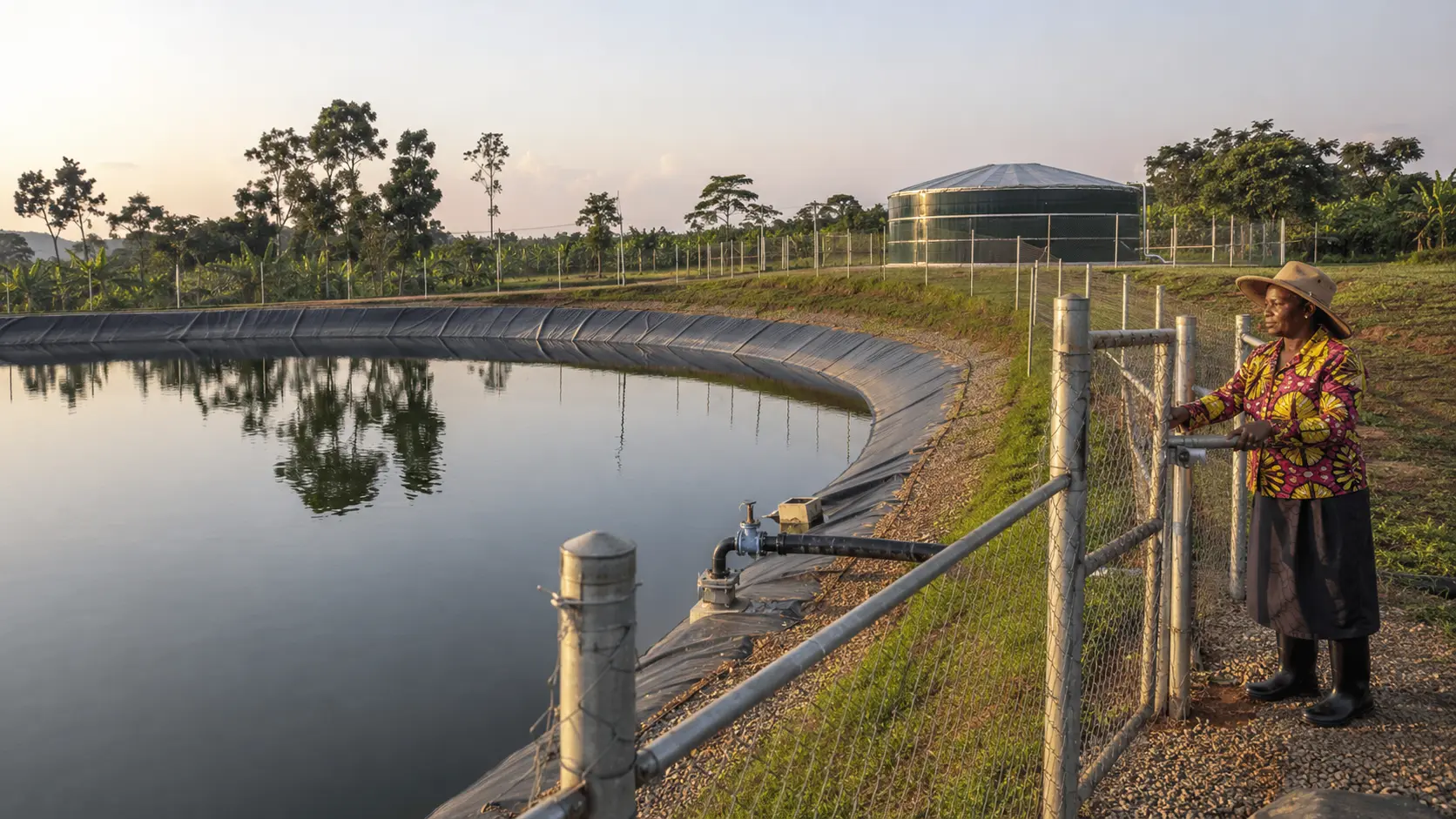
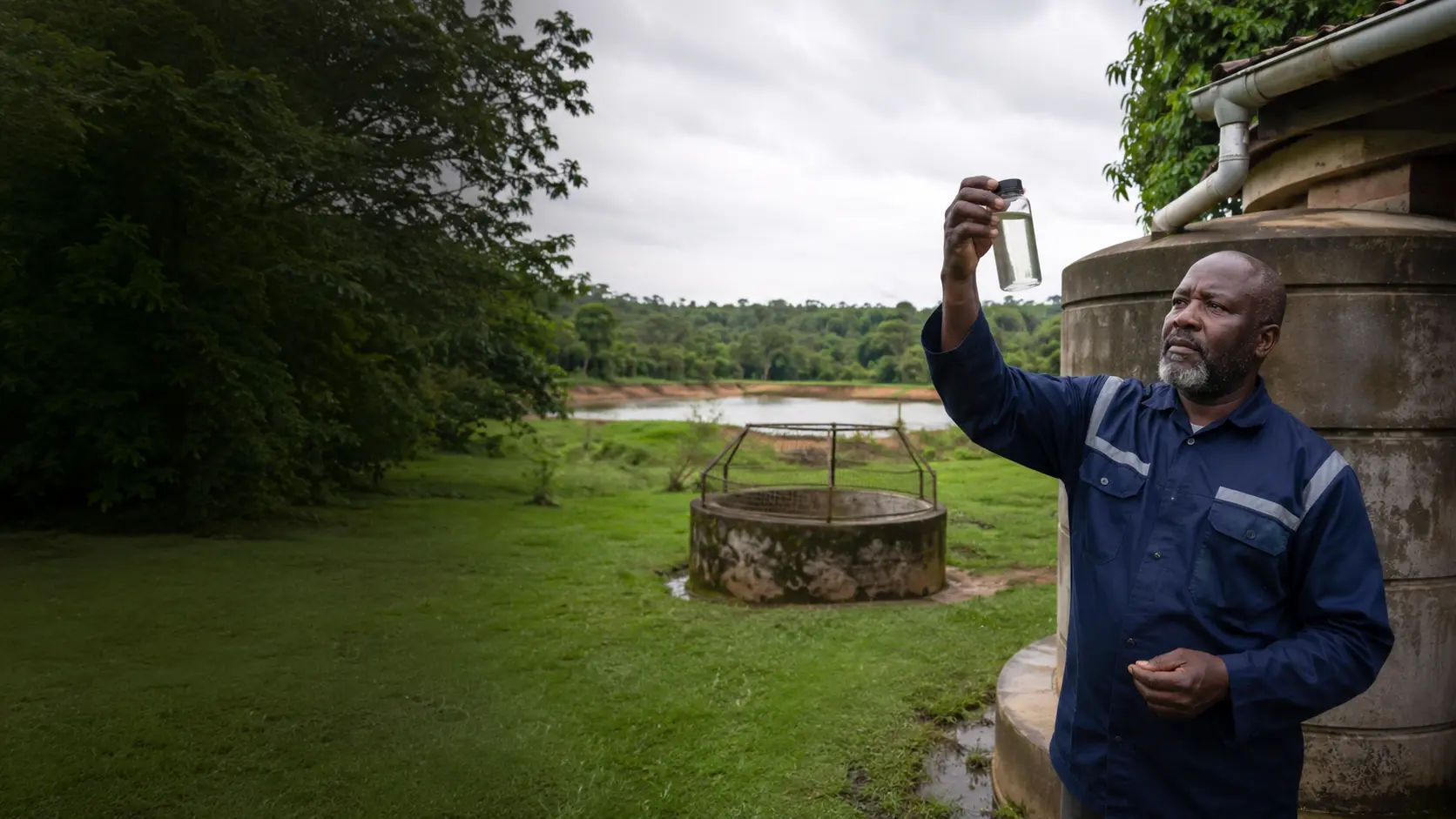
There are four realistic water sources for a Ugandan farm, and the right answer for most farms is two of them, not one.
- Rainwater harvesting is the cheapest to start, requires no permit for the collection itself, and fails exactly when you need it most, in the dry season, unless storage is large.
- A shallow well is cheap and quick where the water table is high, but it is the source most likely to dry up, and the most exposed to contamination from the surface.
- A borehole is the most reliable and the most expensive, and it is the one with the clearest legal requirements attached, including a permitted driller.
- Surface water, a stream, river, lake or spring, is often free-flowing and cheap to reach, and it is the most seasonal, the most contested with neighbours, and the most regulated in terms of where you may build.
The decision is not "which is best". It is: which source can carry my dry-season demand, which second source covers it when the first fails, and can I lawfully abstract from either?
That last clause is the one most Ugandan farm plans skip. Under the Water Act, no person may construct or operate works, or extract water, without authorisation, with narrow exceptions for domestic use, firefighting and a subsistence garden. Those exceptions expressly do not authorise constructing works. If you are irrigating a commercial block or watering a commercial herd, you are outside them.
This article helps you choose the source. It does not size a pump, design an irrigation system, build a pond or state any cost, fee or borehole yield for your site.
Who this article is for
Farmers and farm managers deciding how their farm will get water, at the stage before any equipment is bought. Investors assessing whether a site's water assumptions are realistic. Extension officers advising on the same question.
You will get most from this if you already know, roughly, what you intend to produce and on what area, because water demand follows from that. If you do not, Falcon's article on choosing a farm enterprise comes first.
The problem this solves
Ugandan farms lose money on water in three predictable ways.
They build for the wet season. A stream that runs strongly in April is not a water source; it is a wet-season convenience. The question is always what happens in the driest eight weeks.
They buy the source before checking the law. Drilling first and asking about permits later is common, and it puts capital into an asset whose lawful operation has not been established.
They rely on one source. A single point of failure in the input that no crop and no animal can do without.
Behind all three sits a national picture worth knowing. Uganda's National Irrigation Policy, published by MAAIF and the Ministry of Water and Environment in November 2017, states that "The Ugandan irrigation potential is 3.03 million hectare (NELSAP 2012)" and that "Currently, the ratio of cultivated area under irrigation to the irrigation potential is only 0.5%". A World Bank account of the Micro-scale Irrigation Program puts it similarly: "Currently, less than 2% of the irrigation potential is utilized, with only 77,000 ha of irrigated land on record." Water is not scarce in Uganda in the aggregate. It is scarce on farms, in the dry season, at the point of use, and that is a source and storage problem.
The decision you are making
You are choosing, for a specific farm:
- A primary source that will meet routine demand.
- A backup source that will carry the farm through the primary's failure mode.
- The permit path each of those requires.
- The cost category you are accepting, and who bears the risk of a dry hole.
Write those four down. That is the output.
Uganda-specific context: the law, stated accurately
This is the part that contractor websites do not cover, so read it before you commit.
Extraction and works both require authorisation
The Water Act, in the copy published as Chapter 152, states at section 8(2) that "No person shall extract water unless authorised under this Part of the Act", and at section 8(3) that "Water shall be deemed to have been extracted if there exists on the land in question any pipe, channel, tank or other means of extracting water."
Section 18(1) states that "No person shall construct or operate any works unless authorised to do so under this Part of the Act", and section 18(2) provides that a person wishing to construct works or to take and use water "may apply to the director in the prescribed form for a permit to do so."
The Act defines "works" very widely, including "any works, excavations or boreholes ... where water or waste may be used, extracted, collected, diverted, stored, conducted, regulated, controlled, supplied, discharged, treated or measured". A borehole, a diversion, a tank and an abstraction point are all works.
The exception, and its limit
Section 7(1) allows a person, "being the occupier of or a resident on any land, where there is a natural source of water", to use that water "for domestic use, fighting fire or irrigating a subsistence garden."
Read section 7(3) next, because it is the sentence that catches people: "The rights under subsections (1) and (2) do not per se authorise a person to construct any works."
The Act's interpretation section defines "domestic use" to include "watering not more than thirty livestock units", "irrigating a subsistence garden" and "watering a subsistence fish pond".
So the exception is narrow. It covers household use, firefighting, a subsistence garden, a subsistence fish pond and a limited number of livestock units. It does not cover commercial irrigation, and it does not on its own permit you to build anything.
What the Regulations add
The Water Resources Regulations, made under the Act, set out the permit machinery. Regulation 3(1) describes who may apply for a water permit, including a person who wishes to construct, own, occupy or control works on land where "there is a motorised water pump which, whether temporarily or permanently, pumps water from a borehole or waterway", or where there is a "weir, dam, tank or other work capable of diverting or impounding an inflow of more than 400 cubic meters in any period of twenty-four hours".
Regulation 3(2) requires the application to be on the prescribed form, "Form A ... for surface water permits" and "Form B ... for ground water permits", accompanied by the prescribed fee, and, for groundwater, "a borehole completion report". For all other applications it must be made "before any works ... are constructed."
One warning about the 400 cubic metre figure. It appears in the Regulations as part of the description of the works for which a permit is sought. It is not stated anywhere as a threshold below which no permit is needed. Falcon found no daily-volume exemption in the instruments it opened, and does not state one. Do not plan on the basis that a smaller abstraction is automatically exempt.
Your driller must be permitted
Regulation 15(1) states that "A person who wishes to engage in the business of constructing boreholes to enable people to obtain water shall apply to the director for a drilling permit". Regulation 15(2) provides that a person wishing to engage such a driller to construct a borehole on their land, for using water, recharging an aquifer or fitting a motorised pump, "may apply to the director for a construction permit".
Regulation 17(2) sets out what the Director considers before approving a drilling permit, including "whether the applicant has adequate equipment which is in good condition", "whether the applicant has at least two employees on a permanent basis who possess technical qualifications", "the previous experience of the applicant", and "the professional reputation of the applicant". Regulation 18(1) provides that the permit runs "for a period of one year", and 18(5) that it "may be renewed annually".
The practical consequence is the single most useful line in this article: ask your driller to show you a current drilling permit, and note its expiry date. A permit valid one year, renewable annually, is the state's own quality filter on equipment, qualified staff and track record. It costs you nothing to ask for it and it is the cheapest due diligence available on the largest single water investment most farms make.
Which office
The Ministry of Water and Environment's water resource planning and regulation department states that its work includes "Assessing applications and issuance of water permits for groundwater abstraction, surface water abstraction, waste water discharge, borehole drilling, hydraulic works construction" and "Enforcing compliance to the water Act and water permit conditions". The Ministry's structures page names three directorates, including the Directorate of Water Resources Management.
Separately, the Ministry operates a Water for Production department whose mandate is the "Provision and effective utilization of water for multipurpose uses including storage, irrigation, livestock, and aquaculture; rural industries, wildlife and tourism and flood control", covering facility types including irrigation schemes, earth dams, valley tanks, deep boreholes and bulk water supply systems. That is the programme side; the permit side is water resources regulation.
If your source is near a lake, river or wetland
NEMA states that a lakeshore is "the land not more than 100 metres adjacent to or bordering a lake" and a river bank is "the rising ground, not more than 100 metres long, bordering, or adjacent to the natural course of a river". Under the National Environment (Wetlands, River Banks and Lake Shores Management) Regulations, 2000, regulation 29 provides that scheduled rivers "shall have a protection zone of one hundred metres from the highest water mark", other rivers "a protected zone of thirty metres from the highest water mark", and that "No activity shall be permitted within protected zones without the written authority of the Executive Director". Regulation 30 sets equivalent lake shore zones of two hundred metres for scheduled lakes and one hundred metres for others. Regulation 12(1) provides that "a person shall not carry out any activity in a wetland without a permit issued by the Executive Director."
If your intended intake, pond or pump house is inside one of those zones, you need written authority. Establish that before you spend.
The four sources compared
Rainwater harvesting
What it is. Collecting runoff from roofs, and in some designs from ground surfaces, into storage.
Reliability. Directly tied to rainfall. In bimodal Uganda that means two productive periods and two lean ones; in the unimodal north, one. Reliability is a function of storage volume, not of catchment area, once the catchment is reasonably sized.
Legal position. Collecting rain from your own roof is not abstraction from a natural source. However, the storage structure itself may be "works" under the Act's wide definition, and the position depends on scale. Confirm with the Ministry if your storage is substantial.
Best used as. A dry-season buffer, a livestock water supply, a nursery and seedling supply, and a clean-water source for spraying, where turbidity matters.
Honest limitation. Rainwater alone will not irrigate a commercial block through a Ugandan dry season unless storage is very large, and large storage brings its own evaporation and seepage losses. Falcon's article on water storage and farm ponds covers those losses in detail.
Shallow wells
What it is. A hand-dug or hand-drilled well reaching the shallow water table.
Reliability. The least reliable of the four. Shallow wells draw from the upper weathered layer, which responds fastest to dry weather and to nearby abstraction.
Water quality. The highest contamination risk, because the water is close to the surface and to whatever is on it. Site any shallow well upslope of animal housing, latrines and the compost area, never downslope.
Legal position. A well is a "borehole" under the Act's definition, which covers "a borehole, well, excavation or other opening in the ground". Treat it as within the permitting framework and ask the Ministry.
Best used as. A backup, a livestock water point, or a primary source only on sites where the water table is demonstrably high and stable across seasons and neighbours confirm it.
Boreholes
What it is. A drilled well reaching the deeper weathered regolith or the fractured bedrock beneath it.
What the geology actually is. The British Geological Survey's Africa Groundwater Atlas states that Uganda's groundwater occurs "within the unconsolidated weathered regolith (saprolite), or underlying fissured bedrock (saprock)", that "The bedrock permeability is greatest close to the saprock-saprolite interface and decreases with depth", that "Boreholes are generally drilled to depths of 45-70 m", that "Most boreholes are less than 80 m deep but they can be as deep as 200 m", and that "Yields in the basement complex vary between 0.5 and 12 m³/hour, with higher yields generally found in the fissured granites and gneiss", while "Yields of more than 50 m³/hour are possible in the unconsolidated fluvial aquifers."
Read that yield range carefully. 0.5 to 12 cubic metres per hour is a very wide range, and where your site falls in it is not known until the hole is drilled. That is the commercial risk in a borehole, and it is the reason the next paragraph matters.
Legal position. The clearest of the four. A drilling permit for the contractor and a construction permit process for the works, both under the Water Resources Regulations, with a borehole completion report required as part of a groundwater permit application.
Best used as. The primary source where dry-season demand is real and continuous, and where the budget can absorb the risk of a low-yielding hole.
Honest limitation. Nobody can promise you a yield before drilling. Falcon found no verified Ugandan borehole success or failure rate and does not state one. Treat any contractor who guarantees a yield in advance with caution, and ask instead what happens contractually if the hole is dry or low-yielding. Get that in writing before work starts.
Surface water
What it is. A stream, river, lake, spring or existing pond.
Reliability. Highly seasonal for most streams. Springs vary. Lakes are reliable but are usually far from the point of use and are the most regulated.
Water quality. Turbidity and biological load are the operational issues, and they matter enormously if you intend to use drip irrigation. Falcon's article comparing irrigation methods covers the clogging thresholds.
Legal position. Abstraction requires authorisation under section 8, and works require authorisation under section 18. The intake itself may sit inside a NEMA protection zone, which requires written authority from the Executive Director.
Best used as. A primary source where the flow is genuinely perennial and the abstraction is permitted, or as a wet-season source that fills storage for dry-season use.
Honest limitation. Surface sources are shared. Upstream abstraction, upstream pollution and neighbour disputes are outside your control, and none of them is a technical problem you can engineer away.
Decision framework
Work through this in order. Do not skip to step 5.
Step 1: Calculate dry-season demand, not average demand. Add up what the farm needs per day in the driest month: crop water requirement for the area you actually intend to irrigate, livestock drinking water, spraying, washing, and household. The crop side of this calculation is covered in Falcon's article on pump selection and sizing, which sets out how demand converts into a duty point.
Step 2: List every source physically available on or adjacent to the site. Include neighbours' sources you might lawfully share, and include the roof area you already have.
Step 3: Test each source against the dry season, not the wet. Visit the stream in the driest week of the year. Ask three neighbours with shallow wells what happens in January or in July, depending on your zone.
Step 4: Establish the permit position for each shortlisted source, in writing. Contact the Ministry of Water and Environment's water resources function and your district water officer. Ask specifically: what authorisation does this abstraction and these works require, and what is the process.
Step 5: Choose a primary and a backup with different failure modes. A borehole plus rainwater storage is a strong pairing because the failure modes are unrelated. A shallow well plus a stream is a weak pairing, because a dry season takes both.
Step 6: Only now, specify equipment. Pump selection follows the source, the water level and the demand, in that order.
Selection table
| If your situation is | Primary source to investigate first | Backup | The thing that will catch you out |
|---|---|---|---|
| Small holding, livestock and a kitchen garden, high water table | Shallow well | Rainwater storage | The well dropping in the dry season and contamination from upslope |
| Commercial irrigated block, no perennial surface water | Borehole | Rainwater or a lined pond filled in the wet season | Yield risk before drilling, and permitting |
| Perennial stream or river crossing or bordering the site | Surface abstraction | Rainwater or a shallow well | Protection zones, abstraction authorisation and upstream users |
| Large roof area, modest irrigated area, distinct dry season | Rainwater into substantial storage | Shallow well or borehole | Storage volume, and evaporation and seepage from open storage |
| Livestock only, no irrigation | Rainwater plus a valley tank or pond | Shallow well | Water quality, and safety around open water |
| Site near a lake, river or wetland edge | Nothing until the protection zone is confirmed | Building inside a protected zone without written authority |
Field record: water source assessment sheet
One sheet per candidate source. Complete all of it before you commit to any of them.
| Item | Entry |
|---|---|
| Source type and exact location on the farm plan | |
| Distance and elevation difference to the point of use | |
| Observed condition in the wettest month, with date | |
| Observed condition in the driest month, with date | |
| Neighbours consulted, and what they reported about seasonal behaviour | |
| Water appearance: clear, turbid, coloured, iron staining | |
| Any laboratory test done, by whom, and the date | |
| Who else abstracts from this source | |
| Authorisation required, as advised by the authority, in writing | |
| Reference and date of that written advice | |
| Inside a NEMA protection zone? Confirmed by whom, and when | |
| For a borehole: driller's permit number and expiry date, sighted on | |
| Contractual position if the hole is dry or low-yielding | |
| Decision: primary, backup, or rejected, and why |
The two rows that most often stay blank are the driest-month observation and the written authorisation advice. Those are the two that cost money later.
Costs
Falcon publishes no drilling price, permit fee, pump price or tank price, because no current verified Ugandan figure was obtained for this article. Budget by category and obtain at least three written quotations for anything drilled or constructed.
| Cost category | What sits inside it | Who to ask |
|---|---|---|
| Investigation | Site walk, neighbour enquiry, any hydrogeological siting survey, water testing | Hydrogeologist, laboratory |
| Authorisation | Application fees and any professional help preparing forms | Ministry of Water and Environment, district water officer |
| Source development | Drilling and casing, well digging and lining, intake construction, spring protection | Permitted driller or contractor, three quotations |
| Conveyance | Pipework, fittings, trenching | Installer |
| Lifting | Pump and power. Covered in FF-604 and FF-605 | Installer |
| Storage | Tanks, pond, lining. Covered in FF-607 | Contractor |
| Recurrent | Energy, maintenance, water testing, permit renewals | |
| Risk provision | The dry or low-yielding hole | Yourself. Do not set it at zero |
Common mistakes
- Assessing a source in the wet season only. The wet season tells you nothing you need to know.
- Assuming a small abstraction is exempt. Falcon found no daily-volume exemption in the instruments it opened. The narrow section 7 rights cover domestic use, firefighting, a subsistence garden and a subsistence fish pond, and expressly do not authorise constructing works.
- Drilling before checking the driller's permit. Regulation 15(1) requires it, it runs one year, and it is renewable annually. Ask to see it.
- Accepting a verbal yield promise. No one knows the yield before drilling. Get the dry-hole position in writing.
- Siting a shallow well downslope of animal housing, a latrine or the compost area. The contamination path is downhill.
- Relying on one source. Two sources with the same failure mode are one source.
- Building an intake or pump house inside a protection zone. Written authority from the Executive Director is required.
- Ignoring water quality until the drip lines block. Iron and suspended solids decide whether drip is viable at all.
- Sizing the source to the area you hope to irrigate one day rather than the area you will irrigate next season.
- Not recording who else uses the source. Shared sources become disputes at exactly the moment water is short.
Warning signs and escalation points
| Warning sign | What it means | What to do |
|---|---|---|
| A contractor offers to drill without mentioning permits | Either they hold no permit or they are not telling you the legal position | Ask for the drilling permit and its expiry date. Do not proceed without sighting it |
| A yield is guaranteed before drilling | Not knowable. The BGS range for the basement complex alone is 0.5 to 12 cubic metres per hour | Ask instead what happens if the hole is dry, and get it in writing |
| Neighbours' shallow wells go dry in the dry season | Your shallow well will too | Do not make a shallow well the primary source |
| The stream you are relying on is a wet-season stream | Your primary source disappears when you need it | Treat it as a filling source for storage, not as a supply |
| Water is visibly turbid, or stains fittings orange | Suspended solids or iron. Both are drip irrigation problems | Test before specifying any pressurised system. See FF-606 |
| The intake, pond or pump house falls near a river, lake or wetland | You may be inside a protected zone requiring written authority | Stop and get NEMA or the district environment officer to confirm the boundary |
| Water levels in your own source fall year on year | Possible over-abstraction, locally or by you | Reduce abstraction and consult the Ministry. Do not simply deepen and pump harder |
| Anyone downstream complains of reduced flow | A shared-resource dispute with a legal dimension | Stop, document, and consult the district water officer |
When each source works and when it does not
Rainwater works where roof area is large, dry seasons are short and demand is modest or storable. It does not work as a sole source for commercial irrigation through a long dry season.
A shallow well works where the water table is demonstrably high and stable, contamination can be controlled by siting, and demand is small. It does not work where neighbours report seasonal failure, or where the only available position is downslope of animals or sanitation.
A borehole works where dry-season demand is continuous and commercially important, and where the budget can absorb yield risk. It does not work where the capital is not there, and it does not work as a way of avoiding the permitting conversation.
Surface water works where flow is genuinely perennial, abstraction is authorised, the intake is outside protection zones and water quality suits the intended use. It does not work where the flow is seasonal, the source is contested, or the intake would sit inside a protected zone.
A low-risk pilot
Water source decisions are large and mostly irreversible. Stage them.
- Spend one dry season observing before spending anything. Photograph and date every source in the driest week.
- Take a water sample from your shortlisted source and have it tested before you specify anything pressurised. A test is a fraction of the cost of a blocked drip system.
- Put the permitting question in writing to the authority and keep the written reply. This costs a letter.
- Prove your demand estimate on a small area first. Irrigate a fraction of the intended block from a temporary arrangement for one season and measure what you actually used.
- For a borehole, commission the siting survey separately from the drilling contract, so that the party recommending where to drill is not the same party paid to drill.
- Build storage before you build capacity. Storage lets a modest source serve a peak demand and is easier to expand than a borehole is to deepen.
Limitations and professional-support triggers
What this article does not do. It states no drilling cost, permit fee, pump price, borehole depth or yield for any specific site. It does not state a borehole success rate, because none was verified. It does not size pumps, design irrigation, or design storage. It does not tell you whether your specific abstraction needs a permit, which only the authority can do.
Two legal-currency notes you must carry forward. First, the Water Act text quoted here is from a copy stating Chapter 152; Uganda has since issued a revised edition of its principal laws, and chapter numbering can differ between editions. Second, Falcon found two hosted copies of the Water Resources Regulations numbering the same provisions differently, and cites the consolidated numbering. Confirm current citations with the Ministry or an advocate before relying on a section number.
Bring in a professional when:
- The Ministry of Water and Environment and your district water officer, before any abstraction or works, to establish the authorisation required.
- A hydrogeologist, before drilling, and independently of the drilling contractor.
- A permitted drilling contractor, with the permit sighted and its expiry noted.
- An accredited water testing laboratory, before specifying any pressurised irrigation.
- NEMA or the district environment officer, if any works fall near a wetland, river or lakeshore.
- An advocate registered in Uganda, for the drilling contract and for any dispute over a shared source.
Clear next actions
- Estimate dry-season daily demand for the area you will actually irrigate next season.
- List every source on or adjacent to the site and mark them on your farm layout drawing.
- Visit each one in the driest week of the year and photograph it with the date.
- Ask three neighbours what each source does in the dry season, and write down what they say.
- Write to the Ministry of Water and Environment or your district water officer setting out your intended abstraction and works, and ask what authorisation is required. Keep the reply.
- Have a sample from your preferred source tested.
- Choose a primary and a backup with unrelated failure modes, and record the reasoning on the assessment sheet.
- Only then move to pump specification.