The direct answer
Climate-smart agriculture is defined by FAO as "an approach for transforming and reorienting agricultural production systems and food value chains so that they support sustainable development and can ensure food security under climate change." It has three stated objectives: to "sustainably increase agricultural productivity and incomes"; to "adapt and build resilience to climate change"; and to "reduce and/or remove greenhouse gas emissions, where possible".
Read the third objective's last two words. FAO itself hedges it: "where possible". That hedge is the honest heart of the concept, and it is the part that policy summaries usually drop.
CGIAR, which co-developed and promotes the framework, is blunter. Its climate-smart agriculture guide states: "But often it is not possible to achieve all three. In implementing CSA, trade-offs often pop-up between these goals." It sets the working bar accordingly: practices and technologies "are deployed if they help deliver on at least two of the three outcomes."
So the honest answer to what climate-smart agriculture requires of your farm is this. It is not a category of approved practices and it is not a certification. It is a way of asking one question about a practice you were considering anyway: does this raise output, does it make the farm more able to withstand a bad season, and does it reduce emissions, and where those pull against each other, which do you choose?
For a Ugandan farm, the second objective is usually the one that matters most, because the risk that ends farms here is a bad season followed by another one. This article translates the policy language into the farm decision, keeps national targets clearly labelled as targets, and points to the articles that own each practice.
Read the drought preparedness article first. The trigger and response planning in it is the practical core of resilience, and this article assumes it.
Who this article is for
You farm in Uganda and you keep encountering the phrase climate-smart agriculture, in extension messages, in project work, in funding conditions, or in a training. You want to know what it actually means, what if anything you should change, and how to tell a genuine practice from a label.
This is also for you if you work in extension or in a project and need to explain the concept honestly, including its limits.
The problem this article solves
The label problem. Climate-smart agriculture is used to describe almost any agricultural practice. When a term covers everything, it guides nothing.
The trade-off problem. The framework is usually presented as three objectives that reinforce each other. Its own custodians state that they often conflict. A farmer who is not told that will assume that a practice raising resilience must also raise output, and that is not reliably true.
The policy-to-farm problem. National documents contain targets, and targets read like descriptions of the world if you are not careful. Uganda's adaptation targets in its updated Nationally Determined Contribution are exactly that: targets, some of them explicitly marked as estimates in the document itself. Nothing on your farm follows from a national target.
The adoption problem. Some practices get adopted and abandoned; others get adopted and kept for years. Ugandan research tells us which, and that is more useful than any list of recommended practices.
The decision you are making
- Which practices you will adopt on this farm, and in what order.
- Which of the three objectives each practice actually serves for you, and which it costs you.
- What you will not adopt, and why.
- How you will know whether it worked, on your own farm.
You are not deciding to contribute to a national target. National targets are the state's business. Your business is whether your farm still works after a bad season.
Uganda-specific context
What the policy documents actually say, and what they are
This section is deliberately careful, because policy language and farm reality are routinely confused.
Uganda's updated Nationally Determined Contribution, submitted in September 2022, states the headline mitigation intention as follows: "Uganda intends to implement policies and measures...that will result in a 24.7% reduction of national GHG emissions below the BAU trajectory in 2030, to 112.1 MtCO2e", against a 2015 baseline of 90.1 MtCO2e. That reduction is split into "5.9% (unconditional target)", to be domestically resourced, and "18.8% (conditional target)", requiring international support. The document states that "82.7% of the mitigation impact will come from the AFOLU sector", meaning agriculture, forestry and other land use.
On adaptation in agriculture the same document sets out indicators with a baseline, a 2025 target and a 2030 figure. The proportion of farmers practising sustainable land management practices is given as a baseline of 31.7 per cent, a 2025 target of 51.2 per cent and a 2030 figure of "70.7 (Est.)". Area under irrigation is given as a baseline of 19,776 hectares, a 2025 target of 28,934 hectares and a 2030 figure of "152,622 (Est.)". Share of post-harvest losses is given as a baseline of 37 per cent, a 2025 target of 12 per cent and a 2030 figure of "3 (Est.)". Livestock subsector numeric targets are marked as to be determined.
Every one of those forward figures is a target or an estimate, not a measurement. The document itself marks the 2030 figures with "(Est.)". The only backward-looking numbers are the baselines. Nothing in that list is a reported achievement, and this article does not present any of it as one.
Uganda's National Adaptation Plan for the Agricultural Sector, published by MAAIF in November 2018, states its overall goal as "to increase resilience of the Agricultural Sector to the impacts of climate change, through coordinated interventions that enhance sustainable agriculture, food and nutritional security, livelihood improvement and sustainable development." That is a goal statement, which is a different kind of sentence again: it describes an intention, not a state of affairs.
A currency caution on both. A successor to the 2018 sector adaptation plan appears to exist, dated 2025, which Falcon identified but did not open. Falcon also did not establish whether Uganda has submitted a Nationally Determined Contribution after the September 2022 version. Treat both documents quoted here as the versions Falcon verified, not as confirmed current versions, and check with MAAIF or the Ministry of Water and Environment before relying on either for anything consequential.
The Uganda Climate Smart Agricultural Transformation Project is the operational vehicle most likely to touch a farm directly. MAAIF states its project development objective as "increasing productivity, market access and resilience of select value chains in the project area and to respond promptly and effectively to an eligible crisis or emergency", implemented by "The Ministry of Agriculture Animal Industry and Fisheries and its agencies: the National Agricultural Research Organization (NARO); the National Animal Genetics Resources Centre and Data Bank (NAGRC &DB) and Uganda National Meteorological Authority (UNMA)." Its components as published are "Strengthening Climate-Smart Agricultural Research, Seed and Agro-Climatic Information Systems"; "Promoting Adoption of Climate-Smart Agriculture Technologies and Practices"; "Market Development and Linkages for Selected Value Chains"; "Contingency Emergency Response Component"; and "Project Management, Coordination, and Implementation", over six years.
The World Bank project appraisal document for the same project, project identifier P173296 and dated 30 November 2022, gives the objective in the same terms and states a total project cost of 354.70 million United States dollars with IDA financing of 350.00 million dollars, comprising a 325 million dollar credit and a 25 million dollar grant, with an expected closing date of 31 December 2028.
Note carefully what a project appraisal figure is. It is money committed to a programme, not money delivered to farms, and not a result. The two practical questions for you are whether the project operates in your area and in your value chain, and what it actually offers. Ask your district production office, and see the reliable advice article referenced at the end for how to check what a programme really provides.
Which practices Ugandan farmers actually keep using
This is the most useful evidence in this article, because it is Ugandan, recent, and about continuation rather than initial adoption.
A 2025 study in the central Uganda cattle corridor, covering Luwero and Nakasongola districts, surveyed 364 households with six focus group discussions and twelve key informant interviews, with data collected in July 2023, looking at climate-smart agriculture interventions promoted between 2012 and 2023.
It found high continuity in a small set of practices: "legumes in rotation (98% continuity), manuring (95%) and shade-tree planting (95%) showing use durations of 6-10 years". Reported adoption and continuity figures at practice level were legume rotation at 64 per cent adoption with 98.5 per cent continuity, manuring at 51.5 per cent with 95.4 per cent continuity, shade trees at 68.5 per cent with 95 per cent continuity, and planting in lines at 62.1 per cent with 93.1 per cent continuity.
Its two most important findings are qualitative. "Resource-rich typologies tended to maintain a broader and more integrated set of CSA practices...while resource-constrained groups focus on simpler, cost-effective options." And: "Continuity was highest where CSA was embedded into existing farm systems and supported by complementary assets, e.g., access to extension or community networks."
Read that as a practical instruction. The practices Ugandan farmers keep are the ones that fit into what they were already doing and do not require sustained outside input: legumes in the rotation, manure, shade trees, planting in lines. These are, not coincidentally, the practices that are cheap and that also improve the ordinary agronomy of the farm.
Those figures are for two districts in the central cattle corridor, from data collected in July 2023. They are not national.
On the wider picture, a 2025 review of Uganda's climate-smart agriculture multistakeholder platform notes that "The uptake of CSA technologies and practices is relatively low in most sub-Saharan African (SSA) Countries due to limited awareness and capacity of end users, low investment, lack of necessary policy frameworks and systemic barriers", and describes the platform's own objective as to "enhance reporting and coordination of the scattered CSA initiatives while fostering an enabling environment for realization of CSA objectives in the NAP-Ag."
One programme document Falcon could not verify. Uganda's climate-smart agriculture country programme covering 2015 to 2025 was identified but its full text could not be opened, so nothing from it is quoted here.
Policy objectives are not farm results, and here is how to tell them apart
This distinction deserves its own section because it is the most common error in writing about climate-smart agriculture, and because getting it wrong leads farmers to believe something has been achieved that has not.
| Kind of statement | What it is | Example from the documents quoted here | What follows for your farm |
|---|---|---|---|
| A definition | A description of an approach | FAO's definition of climate-smart agriculture | Nothing directly. It tells you how to think, not what to do |
| An objective or pillar | A stated aim of a framework | The three CSA objectives, with the third hedged as "where possible" | A test to apply to a practice you are considering |
| A national goal | An intention of the state | The 2018 sector adaptation plan's overall goal | Nothing directly. It shapes what programmes exist |
| A target with a year | A number the state intends to reach | The 2025 targets in the updated NDC | Nothing directly. It is not a measurement of anything |
| An estimate | A projected figure, marked as such | The 2030 figures marked "(Est.)" in the updated NDC | Less than a target. It is a projection of a projection |
| A baseline | A measured or assumed starting point | The 2015 emissions baseline, and the adaptation baselines | The only backward-looking figures in the set |
| A project commitment | Money committed to a programme | The 354.70 million dollar total project cost | Nothing until the programme reaches your area and your value chain |
| A research finding with conditions | Evidence about actual farms | 98 per cent continuity for legumes in rotation in two cattle corridor districts, July 2023 | The most useful of all, if the conditions resemble yours |
| Your own farm record | Evidence about your farm | Your own before and after comparison | The only thing that settles the question for your field |
Nothing in this article describes a policy objective as an achieved result. When you read other material about climate-smart agriculture in Uganda, run each number through this table before you believe it means what it appears to mean.
Step by step: decide what your farm adopts
Step 1: read the drought preparedness work first
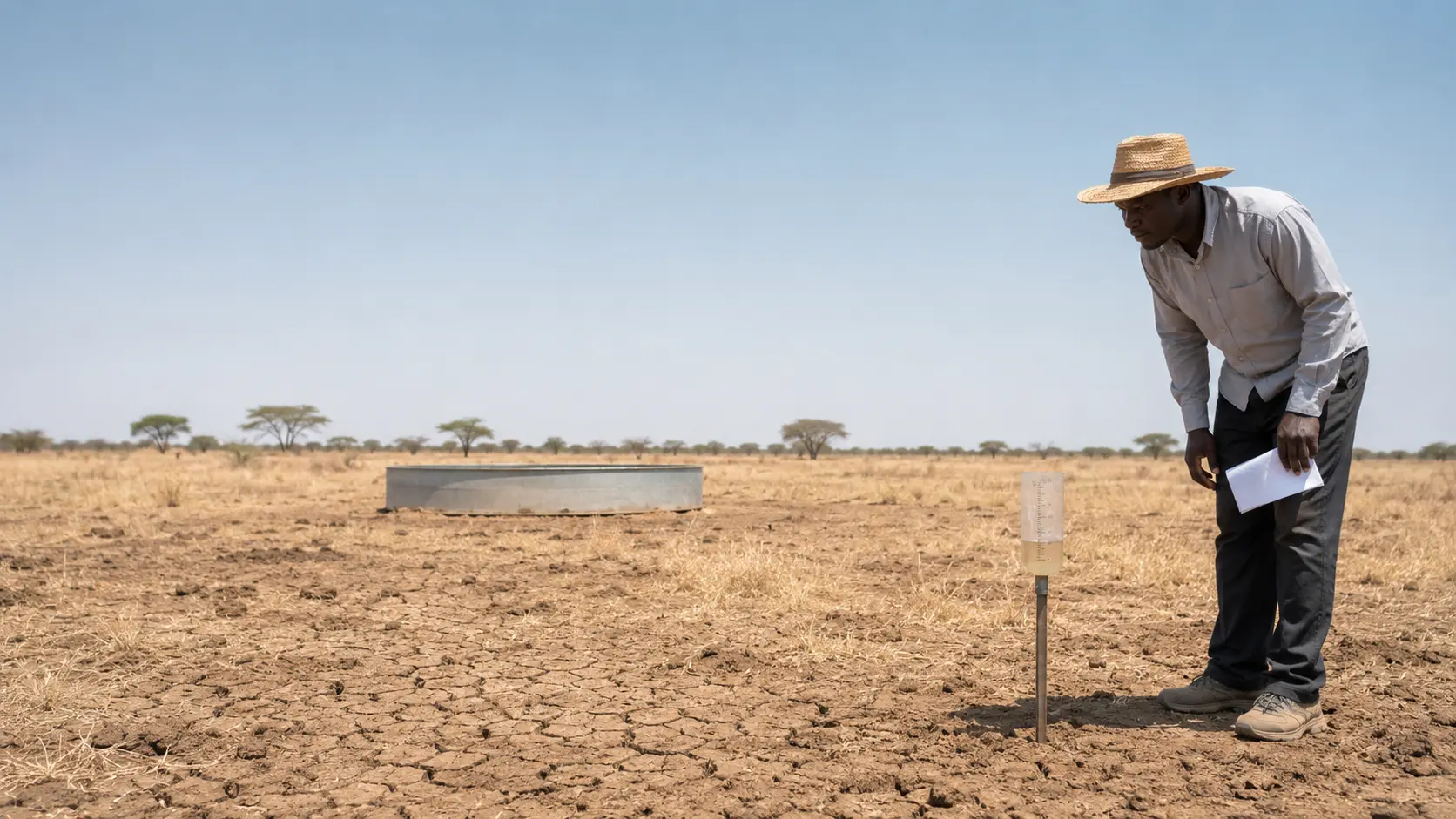
Resilience is not a practice. It is a plan with triggers and pre-agreed responses, and the drought preparedness article referenced at the end owns it. If you have not set triggers for your own farm, do that before anything else here, because it is the highest-value resilience work available and it costs almost nothing.
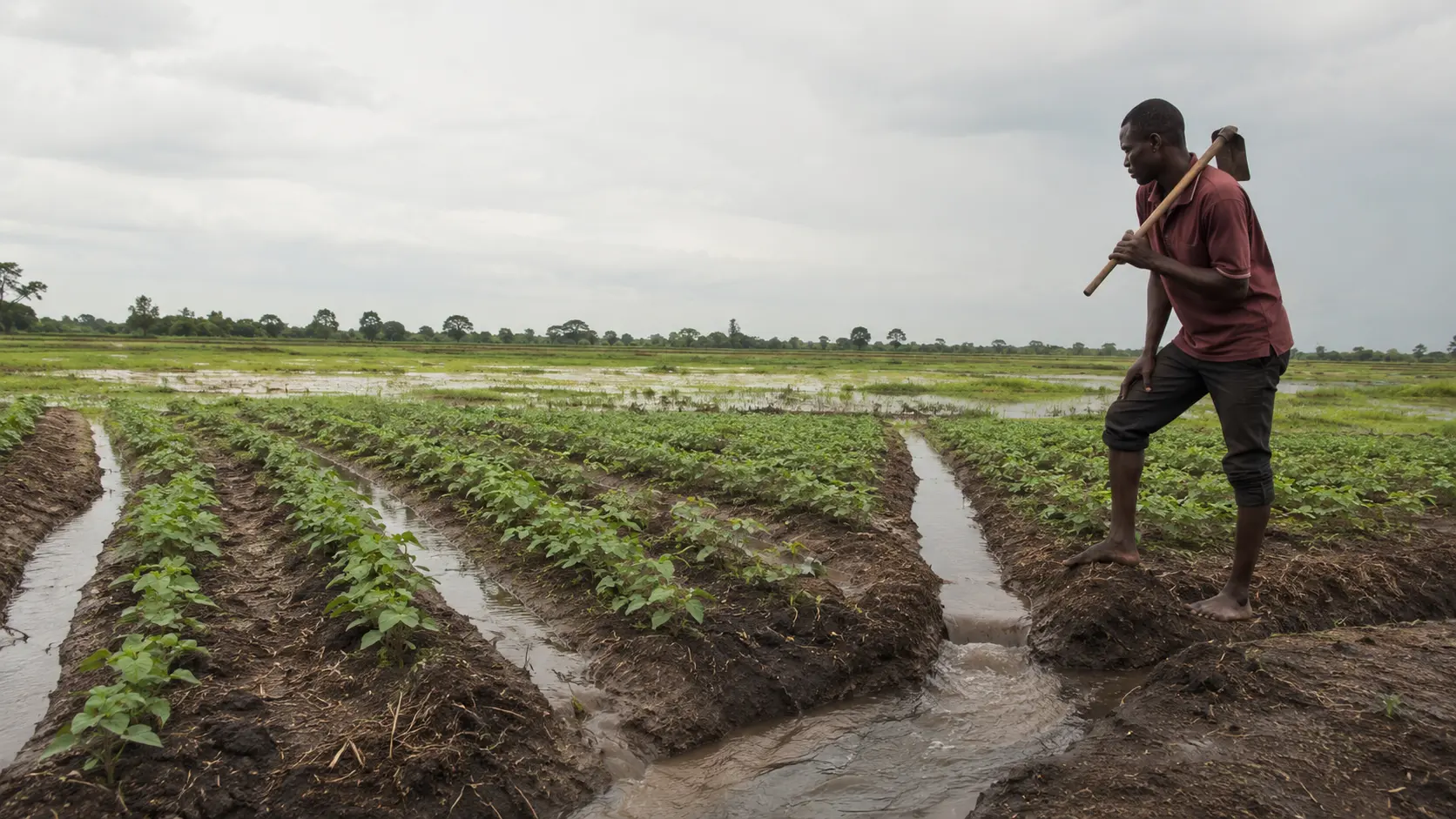
For the other side of the same problem, the flooding and waterlogging article referenced at the end owns excess water.
Step 2: list what you are already doing
Before adopting anything, list the practices already on your farm: rotation, any legume in the sequence, manure or compost use, planting in lines, trees on the farm, soil cover, water storage, any drainage.
You are very likely already doing several of the practices the Ugandan evidence shows farmers keep. Recognising them is the point: the framework's value is in strengthening what fits your system, not in adding something foreign to it.
Step 3: apply the three-objective test to each candidate practice
For each practice you are considering, answer three questions honestly and write the answers down.
Does it raise output or income, and at what cost? Be specific about the cost, including labour.
Does it make the farm better able to survive a bad season? This is the objective that matters most on most Ugandan farms.
Does it reduce emissions? For most smallholder practices this is a secondary consideration, and FAO's own hedge of "where possible" applies.
Then answer the question the policy summaries leave out: where do these pull against each other? Reducing tillage may build soil and increase weed pressure. Adding trees may build resilience and compete with the crop for light and water. A practice that raises output may increase input dependence, which reduces resilience. CGIAR's own working bar is that a practice qualifies if it delivers on at least two of the three, which is an explicit acceptance that one is often sacrificed.
Step 4: start with the practices that fit your system and cost little
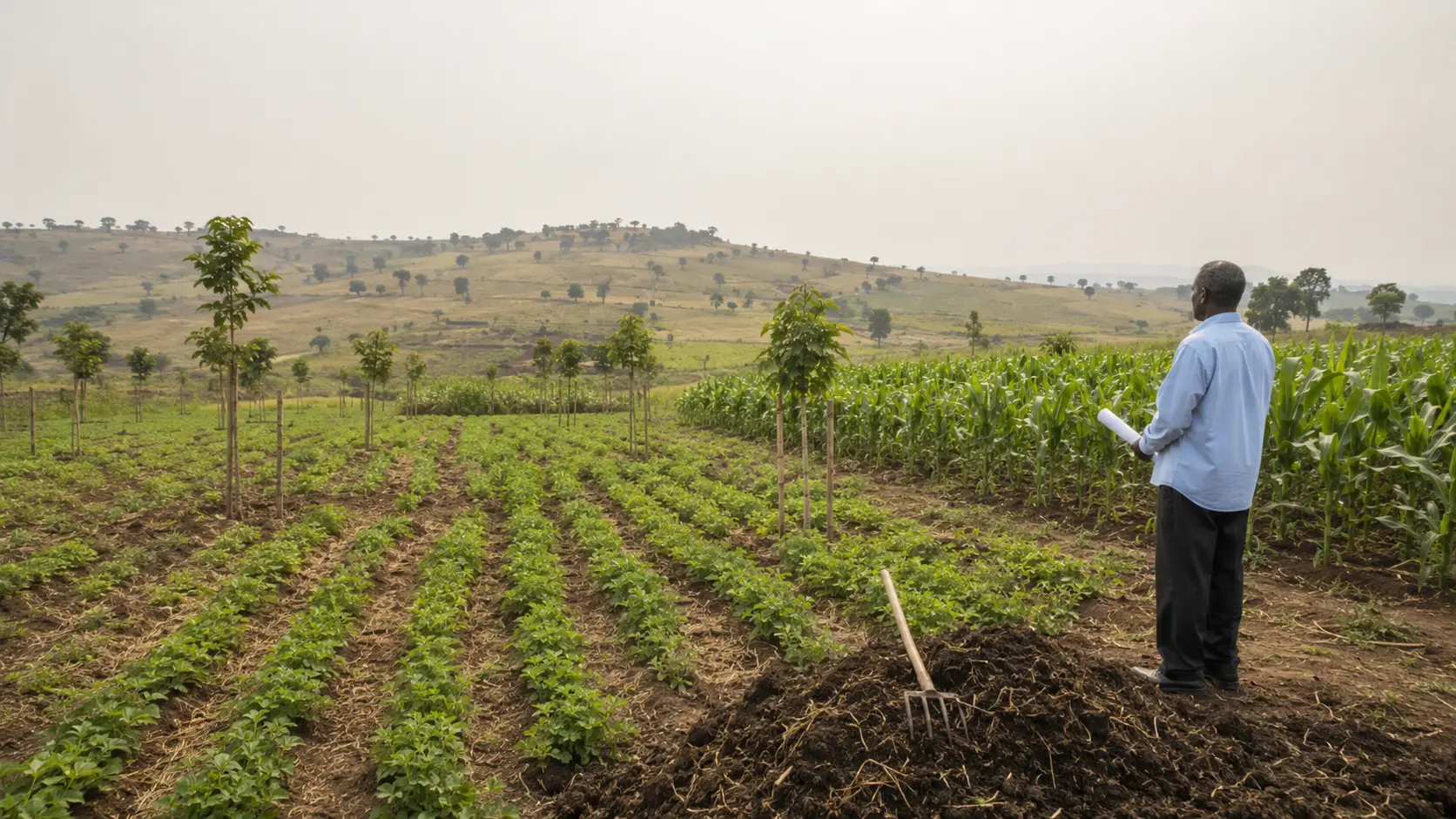
The Ugandan evidence is clear about which practices persist. Legumes in the rotation, manure and organic matter, trees on the farm, and planting in lines all showed continuity above 93 per cent in the cattle corridor study, and all four are cheap and integrate with ordinary agronomy.
Each is owned by a Falcon article that covers how to do it: the rotation and cover crop article, the composting and organic matter article, the published agroforestry article, and the maize article for spacing and planting in lines. This article does not repeat any of them.
Step 5: be honest about what you cannot sustain
The same study found that resource-constrained households focus on simpler, cost-effective options while resource-rich households maintain broader sets of practices. That is not a criticism of anybody. It is a planning fact.
If a practice requires an input, a service or a subsidy you will not reliably have, it will be abandoned, and the effort spent adopting it is wasted. The limited capital article referenced at the end deals with sequencing under constraint, and it applies here directly.
Step 6: test on your own farm and record it
Adopt on part of a field, not the whole farm. Compare against the rest. Record the difference. The article on reading agricultural research referenced at the end covers how to judge a claim and how to run a fair comparison.
Step 7: check what is actually available to you
Ask your district production office whether the national programme operates in your area, in your value chain, and what it provides. Ask what the extension service can support. The reliable advice article referenced at the end covers how to distinguish genuine support from a project that will end.
Step 8: review each season
Which practices are still in place a year later? That question, asked honestly each season, is a better measure of whether your climate-smart agriculture is real than any adoption count.
Decision framework: the practices, what they serve, and who owns them
| Practice | Productivity | Resilience | Emissions | Cost to sustain | Falcon article that owns it |
|---|---|---|---|---|---|
| Legumes in the rotation | Supports, via nitrogen and break effect | Strong, via diversification and soil | Modest, indirectly | Low. Highest continuity in the Ugandan study | Crop rotation and cover crop planning |
| Manure and organic matter | Supports, where soil constraint is organic matter | Strong, via water holding and structure | Modest | Low to moderate, mainly labour and transport | Composting and organic matter management |
| Trees on the farm | Mixed. Competes with crops for light and water | Strong, via shade, wind and diversification | The clearest of the practices here | Low once established, but slow to establish | Published agroforestry article |
| Planting in lines and correct spacing | Supports | Modest | Neutral | Low. Mainly planting labour and discipline | Maize production article |
| Soil cover and erosion control | Supports over time | Strong on slopes | Modest | Moderate, structure dependent | Soil erosion control on Ugandan slopes |
| Drainage, beds and ridges | Supports where water is the constraint | Strong where flooding is the risk | Neutral | Moderate to high, plus maintenance | Flooding and waterlogging |
| Water storage and irrigation | Strong where water is the binding constraint | Strong, if the water is genuinely there | Depends entirely on the energy source | High, and often deferred under capital constraint | On-farm water sources; published small-scale irrigation article |
| Drought triggers and response plan | Neutral directly | The strongest resilience action available | Neutral | Very low. A gauge and a written plan | Drought preparedness |
| Improved and shorter-duration varieties | Supports | Strong where season length is the risk | Neutral | Recurrent seed cost | Maize production; enterprise selection |
| Integrated pest management | Protects output | Modest | Reduces unnecessary chemical use | Low to moderate, mainly time | Integrated pest management |
The right-hand column is deliberate. Climate-smart agriculture is not a separate set of practices. It is a lens applied to practices that already have their own agronomy, and the agronomy is where the work is.
Field record: the adoption file
| Section | What it holds | Updated |
|---|---|---|
| Current practice list | What the farm already does, honestly listed | At the start and each season |
| Candidate practices | Practice, what it is expected to do against each of the three objectives, and the trade-off you identified | At each decision |
| Cost to sustain | What keeping this practice going requires each year, including labour and any purchased input | At each decision |
| Adoption record | Practice, where adopted, area, date started | At each adoption |
| Comparison record | What was left unchanged for comparison, and the observed difference | Each season |
| Continuity check | Which practices adopted in previous seasons are still in place, and which were abandoned and why | Each season |
| Programme contact | What was asked, of whom, on what date, and what was offered | At each contact |
| Policy document versions | Which version of which national document you relied on, and its date | When checked |
The continuity check is the row that matters. Adoption is easy to report and easy to overstate; continuity is the real measure, and the Ugandan study quoted above is valuable precisely because it measured it.
Cost categories
Falcon publishes no prices. No current Ugandan cost figure for any of these was verified, and the limited capital article referenced at the end explains why no start-up figure is published anywhere in this programme.
- Seed for legumes and cover crops in the rotation.
- Organic matter: production, transport and spreading labour.
- Tree seedlings and their establishment and protection.
- Planting labour for accurate line planting, which is higher than approximate planting.
- Erosion and drainage structures, and their maintenance.
- Water storage and any irrigation, which is the highest-cost item here.
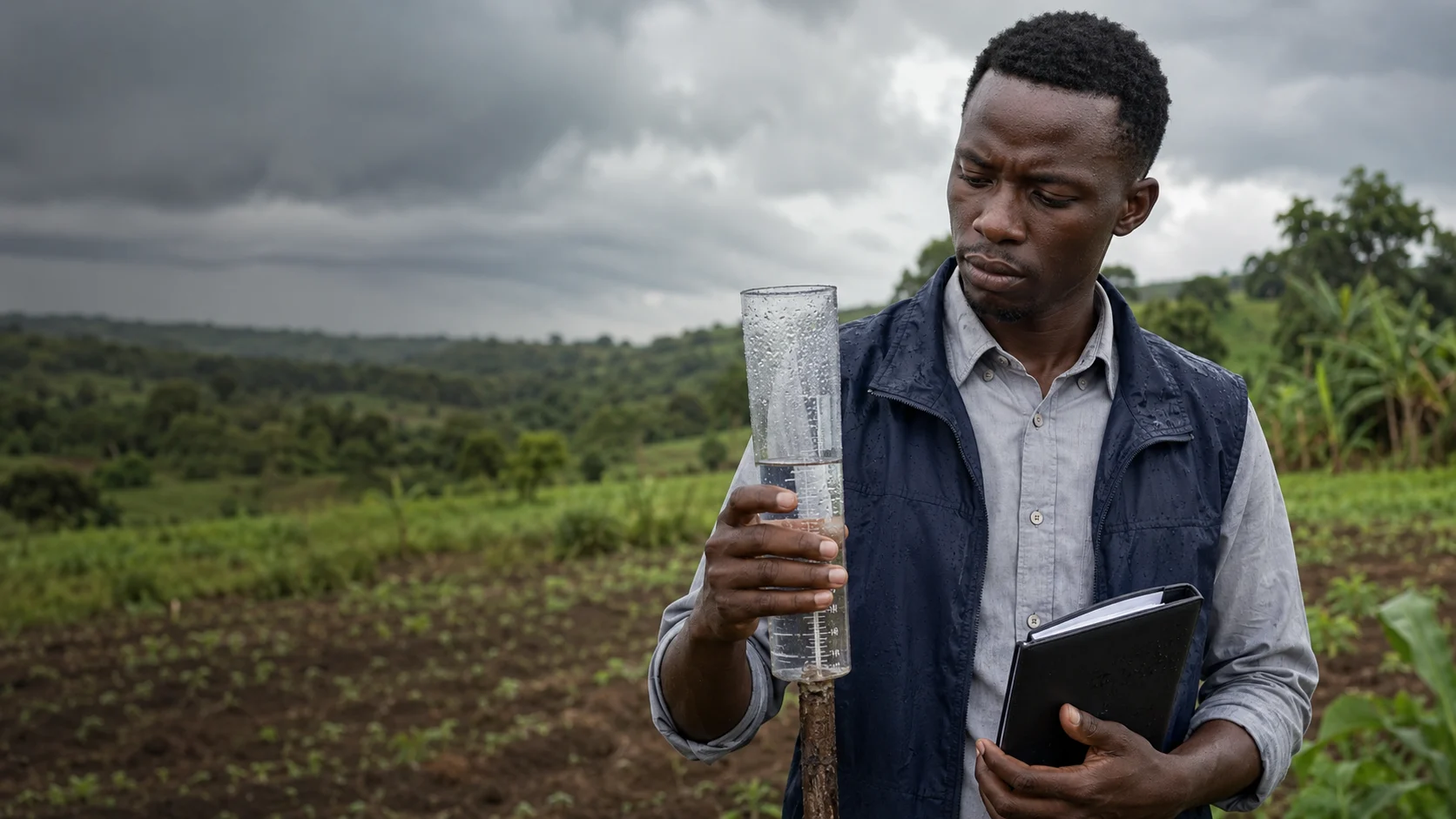
- A rain gauge and a record book, which are the cheapest items and support the highest-value practice.
- Time: the assessment, the comparison plots and the records.
Common mistakes
- Treating climate-smart agriculture as a fixed list of approved practices rather than as a test applied to practices.
- Assuming the three objectives reinforce each other, when CGIAR states that "often it is not possible to achieve all three."
- Dropping FAO's own hedge of "where possible" from the third objective, which changes what the framework claims.
- Reading a national target as a description of what has happened.
- Repeating a 2030 figure that the source document itself marks as an estimate, as though it were a plan already delivered.
- Quoting a project's total financing figure as though it were a farm-level result.
- Adopting a practice that requires an input or service you will not reliably have, which the Ugandan evidence predicts will be abandoned.
- Adopting across the whole farm at once, so that there is nothing to compare against.
- Measuring adoption rather than continuity, when continuity is what tells you whether the practice fits.
- Treating resilience as a practice rather than as a plan with triggers, which is what the drought preparedness article sets out.
- Assuming that because a practice is called climate-smart it must be good for your particular field.
- Relying on a policy document without checking whether a newer version exists, which is a live issue for both documents quoted in this article.
Warning signs and escalation points
| What you observe | What it means | What to do |
|---|---|---|
| A source presents the three CSA objectives as mutually reinforcing with no trade-off | It has dropped the framework's own caveat | Apply the three-objective test yourself and name the trade-off explicitly |
| A figure is quoted with a future year attached | It is a target or an estimate, not an achievement | Check the source document; the updated NDC marks its 2030 figures "(Est.)" |
| A programme's financing figure is used as evidence of impact | Money committed is not a result | Ask what is actually delivered in your area and value chain |
| A practice is promoted with no statement of what it costs to sustain | The cost is the adoption question | Cost it to sustain per year before adopting |
| You adopted a practice last season and it is no longer in place | It did not fit the farm system or the resources | Record why, and do not re-adopt the same way |
| A practice raises output but increases input dependence | Objective one is being met at the cost of objective two | Decide which matters more on your farm and record the decision |
| You are asked to adopt across the whole farm at once | There will be nothing to compare against | Adopt on part of a field first |
| A project offers support that ends on a fixed date | The practice must survive after the project | Ask what happens after; adopt only what you can sustain |
| Someone cites a Ugandan policy document without a date or version | Both key documents in this field may have newer versions | Ask which version, and check with MAAIF or the Ministry of Water and Environment |
| Your resilience plan consists of adopted practices and no triggers | Resilience is a plan, not a list | Go to the drought preparedness article and set triggers |
When this approach works and when it does not
It works when the framework is used as a test rather than as a label, when trade-offs are named rather than assumed away, and when adoption starts with practices that fit the existing farm system.
It works when continuity is measured rather than adoption, because continuity is what the Ugandan evidence shows separates real change from reported change.
It does not work as a source of farm-level instruction. National policy sets objectives; it does not tell you what to plant.
It does not work where the practice depends on support that will end. The Ugandan study's own finding is that continuity is highest where practices are embedded in the existing system and supported by complementary assets.
It is not a substitute for the agronomy of each practice, which is owned by the articles listed in the framework table, or for the drought and flooding planning that carries most of the resilience value.
A low-risk first step
Take one page and write two lists.
On the left, every practice already on your farm that fits the framework: any legume in your rotation, any manure or compost use, any tree on the farm, whether you plant in lines. Most farms are further along than they think.
On the right, one practice you are considering, with three lines under it: what it does for output, what it does for resilience, and what it costs to sustain each year. Then write one more line naming the trade-off, because there will be one.
That page, and the drought trigger sheet from the drought preparedness article, are worth more than any adoption programme.
Limitations and professional-support triggers
Get professional support in these situations.
- Any specific agronomic practice. The article that owns it, and your district production office or a qualified agronomist.
- Anything involving a programme's terms, obligations or repayment. Confirm in writing with the responsible authority before committing.
- Any question about current national policy or targets. MAAIF and the Ministry of Water and Environment, because the documents quoted here may have been superseded.
- Anything to do with carbon markets, offsets or climate finance. This article gives no guidance on those, and they are a legal and financial matter.
Four verification gaps in this article are disclosed rather than hidden.
First, the currency of both key Ugandan documents is unconfirmed. A 2025 successor to the 2018 sector adaptation plan appears to exist and was not opened, and Falcon did not establish whether a Nationally Determined Contribution has been submitted after September 2022.
Second, Uganda's climate-smart agriculture country programme for 2015 to 2025 could not be opened, so nothing from it is quoted.
Third, the adoption and continuity figures quoted are from two districts of the central cattle corridor, from data collected in July 2023, and are not national.
Fourth, no Ugandan quantification of the trade-offs between the three objectives was located. The trade-off statements quoted are from FAO and CGIAR, which are the framework's own custodians, and from wider literature, not from Ugandan field measurement.
Clear next actions
- Set your drought triggers first, using the drought preparedness article. That is the highest-value resilience action available and it costs almost nothing.
- List the practices already on your farm that fit the framework, before adopting anything new.
- For each candidate practice, write what it does for output, what it does for resilience, what it costs to sustain per year, and what the trade-off is.
- Start with the practices the Ugandan evidence shows persist: legumes in the rotation, organic matter, trees on the farm, planting in lines. Each has its own Falcon article.
- Adopt on part of a field and leave the rest unchanged for comparison.
- Ask your district production office whether the national programme operates in your area and value chain, and what it actually provides.
- Record continuity each season: which practices are still in place a year later, and why the others were dropped.
- When you meet a climate figure anywhere, run it through the statement-type table in this article before you accept what it appears to mean.
Author
Falcon Foundation Ltd editorial team. Falcon Foundation Ltd is a privately owned Ugandan agricultural company established in 2013, registered in Uganda and operating land in Uganda across greenhouse crops, poultry, sheep, goats and beekeeping. This article translates climate-smart agriculture policy language into a farm-level adoption decision. It is general information only. Every national figure in it is stated as a target, an estimate or a baseline, exactly as its source document states it, and no policy objective is described here as an achieved result. The two Ugandan documents quoted may have been superseded; confirm the current position with MAAIF or the Ministry of Water and Environment. This article gives no carbon market, offset or climate finance guidance, and it is not a substitute for your district production office or a qualified agronomist.