The direct answer
Drought preparedness is not a warning system. It is a set of trigger points you decide before the season, each with a response you have already agreed, so that when the trigger is reached the action happens immediately rather than after a meeting, an argument and three more dry weeks.
The reason this matters is in the nature of the hazard. The Food and Agriculture Organization describes it plainly: "Drought is a slow-onset natural hazard caused by prolonged rainfall deficits." Slow onset is what makes drought expensive. There is no single moment at which everyone agrees the drought has started, so the decisions that would have limited the loss, reducing planted area, changing variety, cutting stock numbers, buying water storage, all get postponed one week at a time until they are worthless.
A workable farm plan has four parts. First, know what forecast information exists in Uganda, who issues it and when. Second, decide in advance which observations on your own farm will count as triggers, using your own records rather than a borrowed number. Third, write the response for each trigger, before the season, with a named person and a date. Fourth, keep records, because your own farm's history is the only source of trigger levels that will ever actually fit your land.
This article publishes no universal rainfall figure, no soil moisture threshold and no dry-day count as a rule. Those numbers depend on your soil, your crop, your altitude and your rainfall pattern, and a number copied from elsewhere is worse than a number you measured.
Who this article is for
You farm in Uganda, on rainfall or on partial irrigation, with crops, livestock or both. You have been through at least one bad season and you do not want to repeat the way it was handled. You want to know what information is available before the season, what you should be watching during it, and what you should decide now rather than in the middle of it.
This is particularly for farms in the areas Ugandan official sources name as drought-prone, and for anyone holding livestock, where the decisions are hardest and the delay is most costly.
The problem this article solves
Three problems.
The slow-onset problem. Because drought arrives gradually, every response gets postponed. There is always a reason to wait one more week: the forecast said rain, the neighbours are waiting, the price is bad this week. By the time everyone agrees, the responses that were available at the start are gone.
The information problem. Farmers often do not know that Uganda issues a seasonal rainfall outlook before each season, who issues it, or that it carries explicit crop advisories. Nor do they know what a dry spell is, as distinct from a drought, or what the difference means for their crop.
The trigger problem. Even farms that watch the weather have no rule that converts a weather observation into an action. Watching without a trigger is worrying, not preparedness.
The decision you are making
You are deciding, before a season begins:
- Which observations you will treat as trigger points, and at what level.
- What response is already agreed at each trigger, and who does it.
- How much water you need for the dry period, where it will come from and whether it is in place before the season.
- For livestock: at what point you will reduce numbers, by how much, and which animals go first.
- What you will record this season so that next season's triggers are better than this season's.
You are not deciding whether there will be a drought. Nobody can decide that. You are deciding what happens if.
Uganda-specific context
The forecast information that exists, and who issues it
The Uganda National Meteorological Authority is established by the Uganda National Meteorological Authority Act, 2012. Section 3(1) provides that "There is established the Uganda National Meteorological Authority." Its functions under section 4 include, at paragraph (c), "to establish and maintain an effective national weather forecasting centre for short, medium, and long term applications using state-of-the-art technology and contemporary best practices", and at paragraph (d), "to apply meteorology to aviation, marine transport, water resources management, agriculture, health, national defence and security, disaster preparedness, and other developmental activities". Paragraph (h) covers monitoring the state of the atmosphere and disseminating "weather, climate and climate trends and their implications on socio-economic development", and paragraph (a) covers "systems for the rapid exchange of meteorological and related information".
Read those four paragraphs together and the position is clear: forecasting for agriculture and disaster preparedness is a statutory function, not a project.
The seasonal outlook is a real product and it carries farm advice. The seasonal climate outlook for the March to May 2025 season over Uganda, issued on 28 February 2025 under the Ministry of Water and Environment, stated that "Overall, during MAM 2025, Uganda is expected to receive near-normal to above-normal rainfall over most regions" and that "the peak rainfall is expected between mid-April and early May." Its advisory to crop farmers read: "Plant crops at the onset of rains and use high-yielding, improved varieties. Use a mix of long-maturing and short-duration crops to maximize yields. Apply good agronomic practices such as timely weeding, proper spacing, and thinning."
Three things to take from that document. It was issued before the season, not during it. It gave a rainfall expectation by region and a timing for the peak. And it gave an explicit crop advisory including the mix of long-maturing and short-duration varieties, which is a drought-risk decision.
Note carefully what a seasonal outlook is and is not. It is an expectation for a season across a region. It is not a prediction of what will fall on your field in a given week, and it should be used to shape decisions taken before planting, not to justify skipping the observations you make yourself.
Disaster coordination sits with the Office of the Prime Minister. The Department of Disaster Preparedness and Management states its objectives as, among others, to "Enhance the Country's capacity to contain and minimize the effects of disasters", to "Prevent, mitigate and prepare the country against disasters", and to "Maintain a national warehouse for food and non-food items and procure relief", with an output to "Coordinate timely response to disasters and provide food and non food relief to disaster victims".
MAAIF's stated functions include to "Control and manage epidemics and disasters, and support the control of sporadic and endemic diseases" and to "Establish sustainable systems to collect, process, maintain and disseminate agricultural statistics".
What Falcon did not find. Falcon searched for a standalone Ugandan national drought plan setting out declared phases and the actions attaching to them, and did not locate one. Do not assume that a national trigger framework exists that will tell you when to act. Your triggers are yours to set.
Falcon also could not verify UNMA's full current product list from UNMA's own live site during this research, because the site redirected and the destination pages were not accessible. The seasonal outlook above is verified as an actual issued product; whether ten-day bulletins or other regular products are currently issued was not verified, so ask your district production office what is currently available in your district rather than assuming.
Where drought risk falls in Uganda, according to Ugandan sources
Uganda's National Adaptation Programmes of Action, published in 2007, states that "The western, northern and northeastern districts are experiencing long droughts, which are becoming more frequent" and that "Uganda experienced seven droughts in a period of ten years (1991 to 2000)." It describes the cattle corridor as follows: "The Cattle Corridor, stretching from the northeast to the southwest is a fragile ecosystem, and depends on rainwater for human consumption and production."
The Uganda National Climate Change Policy of April 2015 states that "Droughts are on the rise in Uganda. The western, northern and north-eastern regions have been experiencing more frequent and longer-lasting droughts than have been seen historically", and that "The changing temperature patterns in Uganda have been linked with drought and consequent increases in cattle deaths in the cattle corridor."
At the launch of the National Risk and Vulnerability Atlas in February 2021, it was reported that drought mostly affects Karamoja and the Teso sub-region, West Nile and the cattle corridor areas.
Two cautions on this. The 2007 and 2015 documents are Ugandan government policy documents and their statements are quoted as such; the seven-droughts figure describes 1991 to 2000 and is not a current rate. And Falcon could not obtain an authoritative district-by-district definition of the cattle corridor from a Ugandan government source during this research, because the relevant government site did not respond. If you need to know whether your district is inside it, ask your district production office rather than relying on a map from a secondary source.
The scale of the loss
The World Bank Group and GFDRR disaster risk profile for Uganda, published in 2019, states that around 4.5 million people are affected by water scarcity each year on average, mainly in the southeast and northeastern regions of Uganda. It puts average annual agricultural income loss from drought at 20 million United States dollars, and the loss from a one-in-fifty-year drought at 150 million United States dollars.
Those are national aggregate figures from a 2019 modelled risk profile in United States dollars. They describe the size of the national problem. They tell you nothing about your farm, and no part of this article converts them into anything at farm level.
What happened in 2022, and why it is worth reading
Two independent early warning bodies documented the same season.
The FAO Global Information and Early Warning System country brief for Uganda, with a reference date of 5 October 2022, reported that "severe drought conditions affected more than 85 percent of the crop land in several central, eastern and northern districts", that "Harvesting of the 2022 first season crops was concluded in August with about a one-month delay and crop production is estimated at 30-50 percent below average", and that this was "the third consecutive season with a reduced output." For Karamoja it reported production forecast at 30 to 50 per cent below average, "leading to the fourth consecutive season with a reduced cereal production." On the rainfall itself it reported that "The onset of the April-September rainy season was delayed by up to three weeks" and that "Rains between May and July were below average and erratic."
FEWS NET, in its Uganda key message update for July 2022, reported that "Poor rainfall has resulted in below-average first season crop production", that "maize has wilted and dried up more extensively in June and July, leading to estimated losses of at least 30 percent", and gave price movements from January to June 2022: beans up 22 per cent in eastern Uganda, 32 to 47 per cent in northern Uganda and 20 to 31 per cent in western Uganda, with maize grain retail prices up 30 to 47 per cent across the eastern, northern and western regions.
The lesson in those two documents is the sequence, and it is the sequence your plan has to survive. Delayed onset, then below-average and erratic rain, then crop loss, then price rises, then a second and third and fourth consecutive reduced season. A single bad season is survivable on most farms. Consecutive reduced seasons are what break them, and preparedness means keeping the capacity to farm the next season, not only saving this one.
Uganda's 2007 NAPA describes the same pattern in an earlier event: "The prolonged and severe drought of 1999/2000 caused severe water shortage, leading to loss of animals, low production of milk, food insecurity, increased food prices and generally negative effects on the economy."
Dry spell and drought are not the same thing
The distinction matters because the responses differ.
The National Drought Mitigation Center at the University of Nebraska-Lincoln, a United States institution, defines the two forms most relevant here. Meteorological drought "is defined usually on the basis of the degree of dryness (in comparison to some 'normal' or average amount) and the duration of the dry period." Agricultural drought "links various characteristics of meteorological (or hydrological) drought to agricultural impacts, focusing on precipitation shortages, differences between actual and potential evapotranspiration, soil water deficits, reduced groundwater or reservoir levels, and so forth."
For dry spells, a peer-reviewed 2023 study of the IGAD region of eastern Africa, co-authored by staff of the regional climate centre and published in Scientific Reports, defines dry spells as sequences of days without rain at a 1 mm minimum threshold, and analyses dry spells exceeding 7, 14, 21 and 28 consecutive days at that threshold. Those bands are that study's analytical categories for a regional climate analysis. They are not a farm decision rule and this article does not present them as one. They are quoted because they show what a dry spell is measured as, and because counting consecutive days below 1 mm is something you can do yourself with a rain gauge.
At the operational monitoring level, FAO runs the Agricultural Stress Index System, described by FAO as "a global agricultural drought monitoring system developed and operated by FAO which enables to monitor agricultural areas affected by dry spells, or severe drought in extreme cases, using satellite data", with products "processed by FAO GIEWS every 10 days." The practical point for a farm is the cadence: agricultural drought is monitored in ten-day steps, and ten days is a sensible interval for your own review too.
Note that FAO's own phrasing distinguishes "dry spells" from "severe drought in extreme cases". The difference on a farm is this. A dry spell inside a season is a within-season problem: it damages the crop at whatever stage it hits, and the response is about protecting that crop. A drought is a multi-season water problem: the response is about reducing what you commit and protecting the capacity to farm next season.
Step by step: build the trigger and response plan
Do this before the season. It takes an afternoon the first time and much less thereafter.
Step 1: write down what you already know about your own farm
Before any forecast, write your own history. Which seasons in the last ten years were bad on your land, what happened, what you did, what it cost, and what you wish you had done earlier. If you have rainfall records, planting dates and yields, put them on the same page.
This is the single highest-value step and almost nobody does it. Your own history is the only evidence that is actually about your soil, your slope, your altitude and your water source.
Step 2: get the seasonal outlook and read the advisory, not just the headline
Obtain the seasonal outlook for the coming season through your district production office. Read what it says about your region, about the expected timing of the peak, and read the crop advisory in full. The March to May 2025 outlook quoted above shows the form: a regional expectation, a timing statement and an explicit advisory that included mixing long-maturing and short-duration varieties.
Treat the outlook as one input among several. It shapes decisions taken before planting. It does not replace what you see in your own field.
Step 3: set your own observation triggers
A trigger is an observation plus a level plus a response. Set the levels yourself from your own records and your own crop's needs. The categories worth having a trigger for are these.
- Onset. How late can the rains be before you change what you plant? The 2022 season saw onset delayed by up to three weeks according to FAO GIEWS, and that delay preceded the loss.
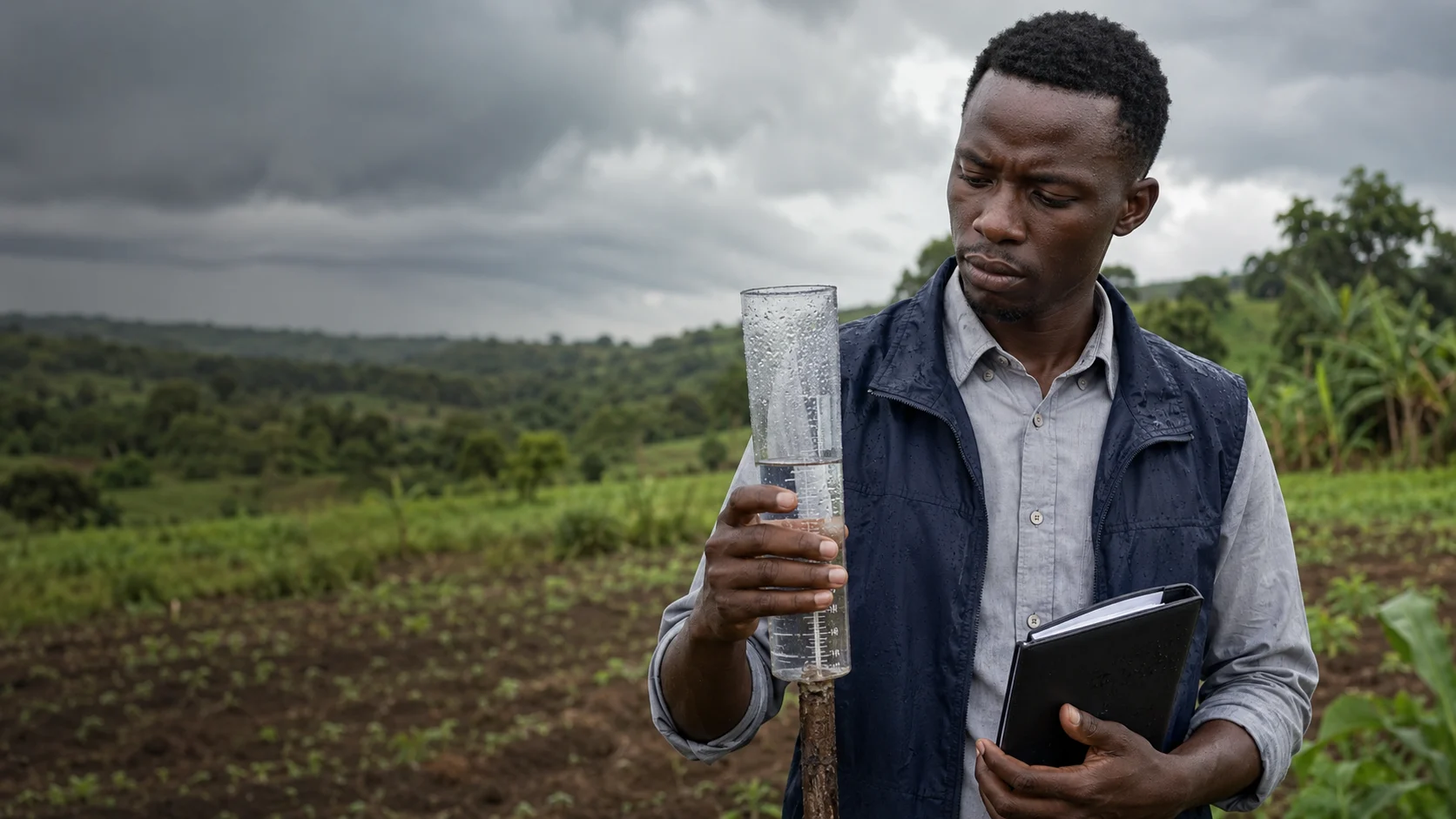
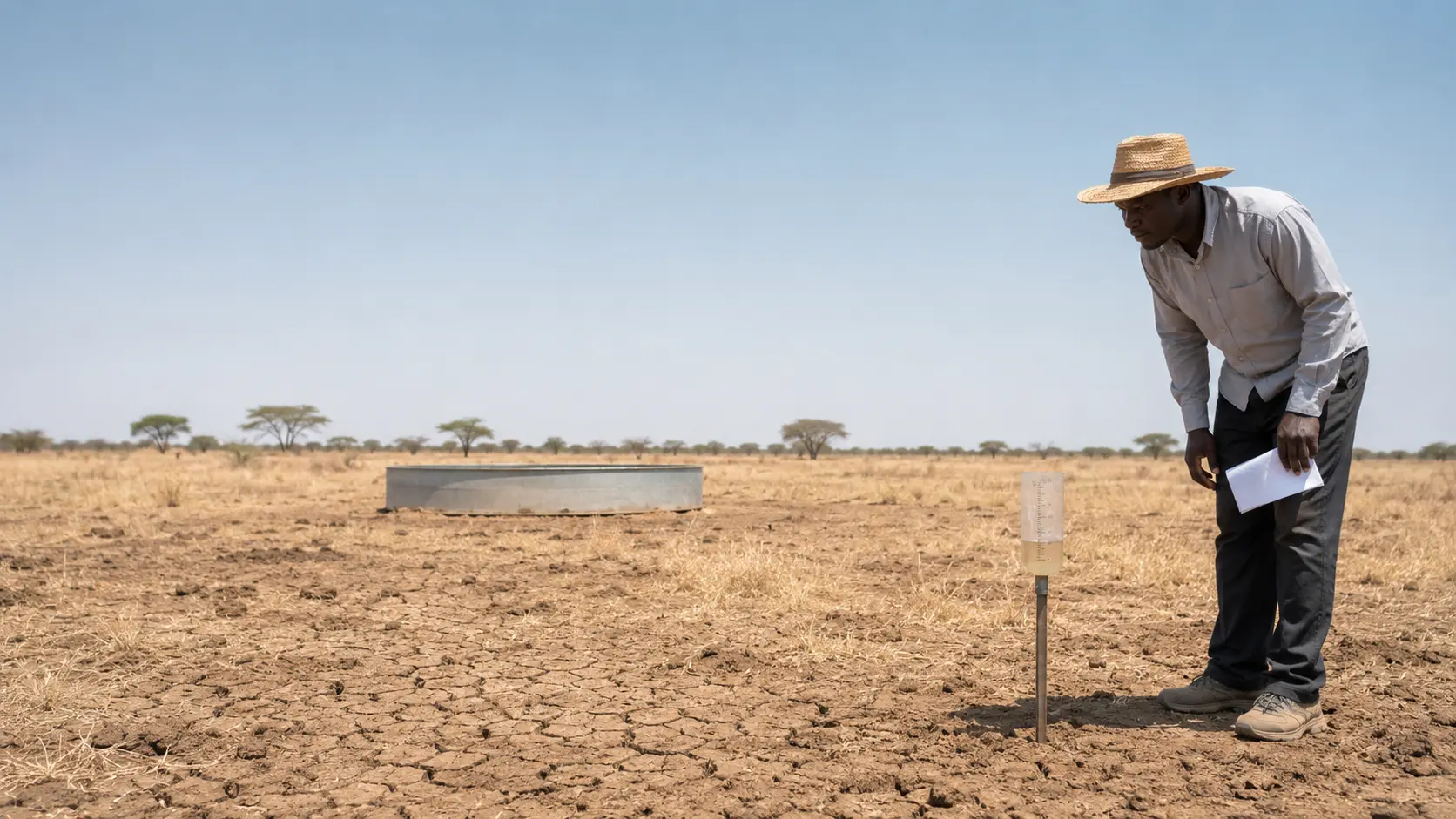
- Consecutive dry days during the season. Count days below 1 mm with a rain gauge. Decide in advance what count, at which crop stage, changes your plan.
- Crop stage at the time of the dry period. The same dry spell does different damage at establishment, at flowering and at grain filling. Your trigger should be stated as a combination of the dry count and the stage.
- Stored water level. For any tank, pond or reservoir, decide the level at which you stop one use and reserve the rest for another.
- Pasture and browse condition for livestock, described in terms you can judge consistently.
- Water source condition. A falling well or a receding surface source is a trigger in itself.
Write each trigger as one sentence: the observation, the level, the response, the person, the deadline. If it cannot be written in that form it is not a trigger.
Step 4: write the response at each trigger, before the season
A response decided in advance is a different thing from a response improvised under pressure. The response menu below is drawn from published guidance and from the structure of the problem, and you choose from it.
Step 5: check the water is actually in place before the season
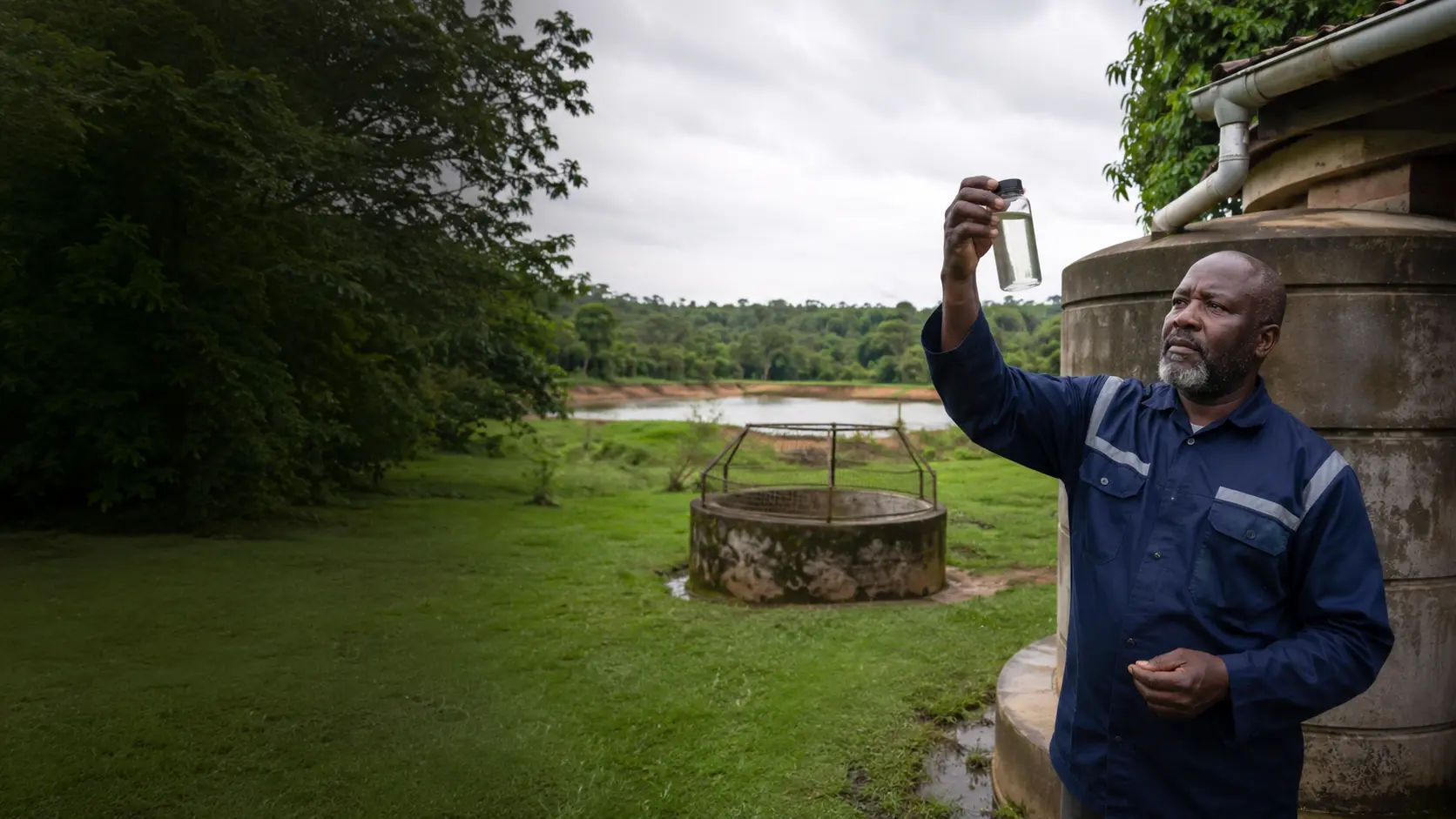
Storage that will be built during the drought will not be built. Any tank, pond, roof catchment or reservoir that is part of your plan must be in place, clean and full or filling before the dry period. The water source and storage articles referenced at the end deal with the choice and the structure; this article only insists on the timing.
Work out roughly how much water you need for the dry period, for people, for animals if you have them, and for any irrigated area, and compare that with what you can actually store. If the gap is large, that is a decision to take before planting, not during.
Step 6: decide the livestock reduction rule now
If you hold livestock, this is the decision that is postponed most and costs most. Decide in advance the trigger, the proportion, and the order in which animals go. See the livestock section below.
Step 7: set the review cadence
Review at a fixed interval through the season, and ten days is a defensible interval because it matches the cadence at which agricultural drought is monitored internationally. At each review, record the rainfall, the crop stage, the stored water level and whether any trigger has been reached. Fifteen minutes.
Step 8: record what happened and revise the triggers
After the season, write down which triggers were reached, what you did, whether it was early enough and what it cost. That is next season's plan.
The response menu, and where each response belongs in the season
The International Food Policy Research Institute's 2014 review of drought risk reduction strategies in East Africa and the Indo-Gangetic Plain of South Asia sets out farm-level adaptive actions by timing, for Africa south of the Sahara. Its categories, quoted, are these.
Before the season: "Selection of DT or HT varieties", meaning drought-tolerant or heat-tolerant varieties, and "Earlier maturing varieties".
During the season: "Changes in planting dates"; "Low-density planting"; "Intercropping"; "Delayed fertilizer use".
After the season: "Grazing on failed plots".
At household or village level: "Social & off-farm employment"; "Asset sales to purchase cereals"; "Migration".
On livestock it lists "Destocking, that is, reducing livestock numbers to ease pressure on vegetation and soil during drought", and notes that this is an action requiring government intervention in the settings reviewed.
Two observations on that list, both important.
First, it is a review of adaptive strategies in East Africa and South Asia, and the sequencing table is for Africa south of the Sahara. It is regional evidence, not Ugandan field trial evidence, and none of the entries carries a numeric threshold.
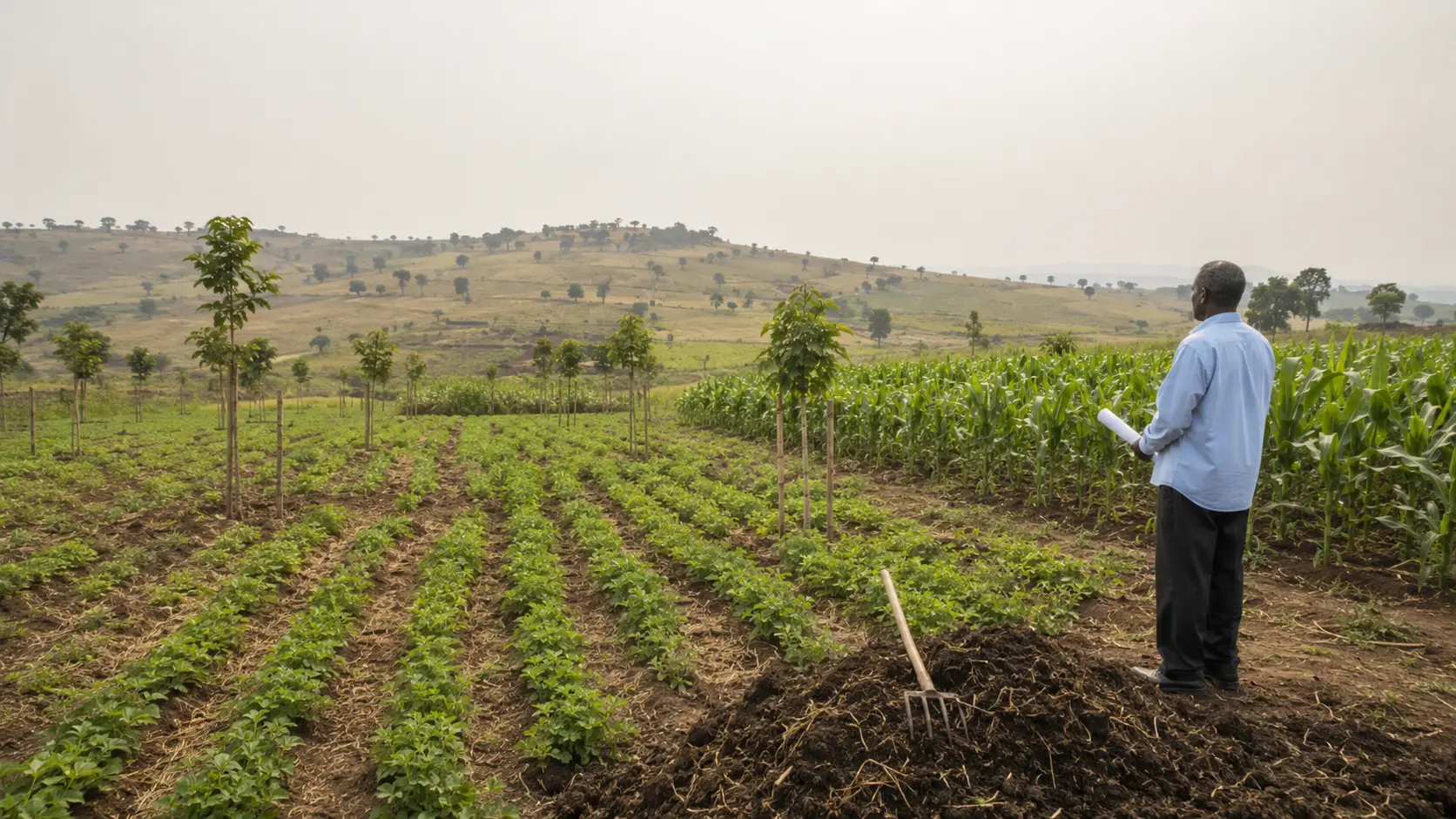
Second, look at where the actions sit. The powerful ones, variety choice and maturity length, are before the season. The during-season actions are mitigations of a problem already present. The reason to set triggers before planting is that the best responses are only available before planting.
Falcon looked for a published water rationing schedule and a supplementary feeding schedule for Ugandan farm conditions and found neither in the sources reviewed, so neither is given here.
Decision framework: the trigger table to fill in for your own farm
Fill this in before the season. The levels column is deliberately blank in this article, because a level copied from a website is not a trigger.
| Trigger point | Observation you will make | Level you set (from your own records) | Response already agreed | Who acts | By when |
|---|---|---|---|---|---|
| Seasonal outlook | Regional expectation and advisory obtained from the district production office | Read before planting decisions are finalised | Choose variety mix and planted area accordingly | Before planting | |
| Onset delay | Days between your normal onset and actual onset | Switch part of the area to shorter-duration varieties, or reduce planted area | At planting | ||
| Dry spell during establishment | Consecutive days below 1 mm on your gauge, at crop stage | Decide on gap filling, replanting or accepting the stand | Within the stage | ||
| Dry spell at flowering or grain filling | Consecutive days below 1 mm on your gauge, at crop stage | Prioritise any available water to this crop and stage; decide whether to abandon a weaker block | Within the stage | ||
| Stored water level | Depth or volume remaining in tank, pond or reservoir | Stop the lowest-priority use and reserve the remainder | On the day | ||
| Water source condition | Well level, surface source extent, flow | Reduce draw, prioritise domestic and livestock drinking water | On the day | ||
| Pasture and browse | Condition described consistently, same points each time | Move grazing, buy in feed if available, or trigger stock reduction | On the day | ||
| Livestock body condition and water access | Your own consistent scoring, and distance to water | First tranche of stock reduction | Within the week | ||
| Consecutive reduced seasons | Number of consecutive below-average seasons on your farm | Protect next season's capacity: seed, breeding stock, soil cover, debt position | Before the next season | ||
| Household food and cash | Your own stock position and cash runway | Off-farm income, staged asset decisions, seek advice early | Before it is forced |
The last two rows are the ones people leave out and they are the ones that decide whether the farm survives a run of seasons rather than a single season.
Livestock: the destocking decision
This is the hardest decision on the list and the one where delay is most expensive, because the value of an animal falls as its condition falls, and everyone in the district sells at the same time.
The published guidance available is about timing rather than numbers. FAO's manual on livestock-related interventions during emergencies makes the general point that "Some interventions are more appropriate at certain stages in the disaster cycle than others. For example, a restocking programme would logically be in the recovery, rather than the alert phase of a disaster." That manual refers the reader to a separate specialist handbook for the phase-by-phase intervention detail, and Falcon did not open that handbook, so no phase-by-phase destocking or feeding schedule is given here.
What this article does give is the structure of the decision, which you should settle before the season.
- Decide the trigger. Not "when it gets bad." A named observation at a named level: pasture condition, water access distance, stored feed remaining, or a count of consecutive dry days at your own level.
- Decide the proportion. What fraction of the herd or flock goes at the first trigger, and at the second.
- Decide the order. Which animals go first. Most farms will keep the breeding core and the best genetics longest, but that is your decision to make in advance, not mine to make for you.
- Decide the route. Where they will be sold, and to whom, before the market is flooded.
- Decide who decides. One named person, with authority to act at the trigger without a further discussion.
Ugandan official policy documents record what happens when this is left too late: the 2015 National Climate Change Policy links changing temperature patterns with drought and "consequent increases in cattle deaths in the cattle corridor", and the 2007 NAPA records that the 1999/2000 drought caused "loss of animals, low production of milk, food insecurity, increased food prices".
No price, no market figure and no destocking percentage is stated in this article, because none was verified for current Ugandan conditions. Get current prices from your own market and from your district production office, and note that the price you can get falls as the season worsens, which is itself an argument for an early trigger.
For any question about animal health, condition scoring or feeding, ask a qualified veterinary professional. This article gives no veterinary guidance.
Field record: the drought preparedness file
| Section | What it holds | Updated |
|---|---|---|
| Farm rainfall record | Date, rainfall in mm, gauge location | Daily during the season |
| Dry day count | Running count of consecutive days below 1 mm, reset on a wet day | Daily during the season |
| Crop stage log | Crop, field, planting date, stage reached, date | Weekly |
| Seasonal outlook file | The outlook obtained for each season, with the date it was issued and what you decided as a result | Each season |
| Trigger sheet | The filled-in trigger table, signed and dated before the season | Before each season |
| Trigger events log | Date a trigger was reached, what the observation was, what was done, by whom, on what date | On each event |
| Water record | Source, stored volume or depth, date, use priority in force | At each review |
| Livestock record | Numbers, condition assessment, water access, any reduction with date and reason | At each review |
| Season review | What was reached, what was done, whether it was early enough, what it cost, what changes next season | End of each season |
The trigger events log is the row that matters most over time. After three seasons it will tell you whether your triggers are set too late, which they almost always are the first time.
Cost categories
Falcon publishes no prices here. No current Ugandan price for any of these was verified, and an invented figure would be worse than none.
- A rain gauge, and something to write in. This is the cheapest item on the list and the one that makes the rest possible.
- Water storage, covered in the storage article referenced at the end.
- Any irrigation capability, covered in the irrigation articles referenced at the end.
- Seed of shorter-duration or drought-tolerant varieties, which is a before-the-season purchase.
- Feed and fodder conservation for livestock, including the storage to keep it.
- Labour for the review cadence, which is small but real.
- The cost of holding capacity in reserve: seed, breeding stock and cash kept back for the next season rather than committed to this one.
- Transport and market access for any stock reduction.
Common mistakes
- Waiting for someone to declare a drought. There is no verified Ugandan national trigger framework that will do that for you.
- Treating the seasonal outlook as a forecast for your field in a given week.
- Reading the outlook headline and skipping the advisory, which is where the actionable content is.
- Copying a rainfall threshold or a dry-day count from a website instead of setting a level from your own records.
- Having no rain gauge, so that "it has not rained for a while" is the only available observation.
- Setting a trigger without naming the response, the person and the deadline.
- Planning to build water storage during the dry season, when it will not get built.
- Leaving the destocking decision until the animals have lost condition and the whole district is selling.
- Committing everything to this season and keeping nothing back, when the documented Ugandan pattern is consecutive reduced seasons rather than one.
- Applying fertiliser on schedule into a failing crop rather than treating the timing as a decision.
- Planting the whole area to one maturity length, when the official seasonal advisory itself recommends a mix of long-maturing and short-duration crops.
- Not recording what happened, so that the same triggers are set too late again next year.
Warning signs and escalation points
| What you observe | What it means | What to do |
|---|---|---|
| The seasonal outlook indicates below-normal rainfall for your region | A before-the-season decision is available and will not be available later | Adjust variety mix and planted area before planting |
| Onset is later than your own normal by a margin you have set | The season is already shorter than the crop you planned | Move part of the area to shorter-duration varieties or reduce the area |
| A dry spell reaches your set count at establishment | The stand is at risk | Decide gap filling, replanting or acceptance now, not in two weeks |
| A dry spell reaches your set count at flowering or grain filling | The yield-forming stage is affected | Prioritise any available water; decide whether a weaker block is abandoned to protect a better one |
| Your stored water falls to the level you set | The reserve is being consumed faster than planned | Stop the lowest-priority use immediately, as pre-agreed |
| A water source is visibly receding | The supply assumption in your plan is failing | Reduce draw and prioritise drinking water for people and animals |
| Pasture or browse reaches your set condition | The livestock feed base is failing | Execute the pre-agreed first tranche of stock reduction |
| This is your second consecutive reduced season | The pattern documented in Uganda in 2022 was three and four consecutive reduced seasons | Shift the objective from saving this season to protecting next season's capacity |
| Prices for what you buy are rising sharply | Regional production has failed, not only yours | Expect the food and input cost position to worsen before it improves; act on your cash plan early |
| Household food or cash reserves are being drawn down | The farm decision has become a household decision | Seek advice early through your district production office, before choices are forced |
When this approach works and when it does not
It works when the triggers are set before the season, in writing, with levels drawn from your own records, with a named person and a deadline attached to each.
It does not work as a watching exercise. Observation without a pre-agreed response is worry, and it produces exactly the delay that makes drought expensive.
It does not work with borrowed thresholds. The whole design of this article is that you set your own levels, because soils, altitudes, crops and rainfall patterns differ across Uganda enough that a single national number would mislead more farms than it helped.
It does not overcome a genuine multi-season failure. The Ugandan record shows consecutive reduced seasons. Preparedness reduces the loss and preserves the ability to farm next season. It does not produce a crop where there is no water.
It is not a substitute for professional support on animal health, on debt, or on any decision that affects the household's food security.
A low-risk first step
Buy or make a rain gauge, put it where it will not be moved, and start recording daily rainfall with the date. Alongside it, keep one running number: consecutive days below 1 mm.
Then write your own farm's last ten seasons from memory on one page: which were bad, what happened, what you did. That page plus one season of gauge readings gives you the first real trigger levels you have ever had, and it costs almost nothing.
Limitations and professional-support triggers
Get professional support in these situations.
- Livestock health, condition assessment or feeding. A qualified veterinary professional. This article gives no veterinary guidance.
- Debt, restructuring or any borrowing decision made under drought pressure. Take advice before signing anything.
- Water abstraction from any surface or groundwater source, where permitting may apply. Your district and the Ministry of Water and Environment.
- Any household food security situation. Your district production office and local authorities, early rather than late.
- Designing or building water storage. The storage article referenced at the end, and competent local technical support.
Five verification gaps in this article are disclosed rather than hidden.
First, Falcon located no standalone Ugandan national drought plan with declared phases and attached actions.
Second, UNMA's current product list could not be verified from UNMA's own site during this research. The seasonal outlook is verified as an issued product; the existence and content of ten-day bulletins or other regular products was not verified. Ask your district production office what is currently issued.
Third, no authoritative district-level definition of the cattle corridor was obtained from a Ugandan government source, because the relevant government site did not respond.
Fourth, no phase-by-phase destocking or supplementary feeding schedule is given, because the FAO manual reviewed refers that detail to a separate specialist handbook that was not opened.
Fifth, no water rationing schedule for Ugandan farm conditions was located, so none is published.
Section and quotation references in this article are to the documents as read on the access date given in the sources list. Policy documents are revised, and the 2007 and 2015 documents quoted are policy statements of their time rather than current measurements.
Clear next actions
- Put up a rain gauge and start a daily record with the consecutive dry day count.
- Write your own farm's last ten seasons on one page: which were bad, what happened, what you did.
- Ask your district production office for the seasonal outlook for the coming season and for what other forecast products are currently issued in your district.
- Fill in the trigger table with your own levels, your own responses, a named person and a deadline for each row.
- Check that every piece of water storage in your plan is in place, clean and filling before the dry period, not planned for it.
- If you hold livestock, write the destocking rule now: trigger, proportion, order, route and who decides.
- Set a ten-day review cadence in the farm calendar and keep it, recording rainfall, crop stage, stored water and any trigger reached.
- At the end of the season, write the review and revise the trigger levels, because the first set is almost always too late.
Author
Falcon Foundation Ltd editorial team. Falcon Foundation Ltd is a privately owned Ugandan agricultural company established in 2013, registered in Uganda and operating land in Uganda across greenhouse crops, poultry, sheep, goats and beekeeping. This article sets out how to establish drought triggers and pre-agreed responses on a farm. It is general information only. It publishes no universal rainfall, soil moisture or dry-day threshold, because those depend on soil, crop, altitude and rainfall pattern and must be set from your own records. It is not veterinary, financial or legal advice, and it is not a substitute for your district production office, MAAIF, the Ministry of Water and Environment, or a qualified professional.