
A farm can be busy every season, and a farmer can still be unable to say whether growing coffee, keeping goats, or planting beans is the enterprise actually carrying the household. That gap between activity and understanding is a record-keeping gap, not a farming-skill gap, and it closes with a small, consistent set of written records and one standard analytical tool: the gross margin.
Direct Answer
A Ugandan farmer can understand enterprise performance with seven records kept per enterprise: production, labour, inputs, sales, losses, inventory and cash flow. These feed a gross margin calculation, Gross Margin = Total Output Value minus Total Variable Costs, showing what an enterprise contributes before fixed costs such as land, permanent labour or equipment depreciation are subtracted. Gross margin is not net profit, and cannot substitute for real market prices, professional accounting or tax advice. Starting with one enterprise's records for one season is lower-risk than attempting whole-farm bookkeeping immediately.
Who This Guide Is For
This guide is written for a Ugandan smallholder or emerging commercial farmer comparing how different plots, herds or crops are performing; a cooperative member or official who needs members to report farm data consistently; a farm manager overseeing several enterprises; an agricultural student learning standard farm-management method; and an investor or lender who needs to read and question a farm's existing records rather than take verbal claims at face value.
The Problem This Guide Solves
Without written records, a farmer relying on memory or general impression cannot reliably separate a genuinely well-performing enterprise from one that only feels successful because it involves less visible cash outlay, more household labour, or fewer recorded losses. Decisions such as expanding a plot, adding livestock, changing input suppliers, or dropping an enterprise are then made on incomplete information. This guide gives the minimum record set and the gross-margin method needed to make that comparison honestly, and is equally explicit about what the method cannot tell a farmer.
What You Will Be Able to Decide or Do
After working through this guide, a reader will be able to set up seven basic record categories for a farm enterprise, calculate its gross margin using their own real figures, explain why gross margin is not net profit, recognise data-quality problems that would make a calculation unreliable, and identify when to bring in an accountant, extension officer or cooperative bookkeeper rather than relying on this framework alone.
The Minimum Records a Ugandan Farm Needs
Farm-management extension guidance identifies a consistent core set of physical and financial records that a farm needs to understand its own enterprises, regardless of scale (FAO, Farm Management Tools, Module 4). The following seven categories are the practical minimum for a Ugandan farm enterprise, whether that enterprise is a plot of a single crop, a coffee garden, a poultry unit or a small dairy herd.
Production records
What was planted or stocked, when, on what area or with what number of animals, and what was harvested or produced, in local units (bags, kilograms, litres, bunches, head). This is the physical backbone of every other calculation; without it, output value cannot be estimated.
Labour records
Who worked on the enterprise, on what task, for how long, and whether they were paid or unpaid household or family labour. This distinction matters for the non-cash-cost discussion below, because unpaid labour is a real input even when no cash changes hands.
Input records
What was bought or used (seed, planting material, feed, fertiliser, veterinary products, fuel, hired equipment time), the quantity, the date, and the amount actually paid. Recording date and supplier also supports traceability if an input performs poorly.
Sales records
What was sold, to whom, on what date, at what quantity and price actually received. Keep this as close to the point of sale as possible (a receipt book, a dated notebook entry, a mobile-money note), because recollection after the fact is a common source of error.
Loss and wastage records
What was lost to pests, disease, spoilage, theft, poor storage or post-harvest handling, and an estimated quantity. Losses are frequently the least-recorded category on smallholder farms, yet they directly reduce output value and can reveal a handling problem worth fixing.
Inventory records
What is currently held in store (harvested produce not yet sold, unused inputs, livestock on hand), updated periodically. Inventory records prevent double-counting or under-counting output.
Cash flow records
Money in and money out, by date, across the whole farm. FAO's guidance groups sales, purchases and borrowed money under cash flow because liquidity, meeting an immediate payment, is distinct from an enterprise's underlying profitability: a farm can be short of cash in a season where its gross margin is still positive.
The Gross-Margin Formula, Explained Before Any Example
Before any numbers appear in this guide, the concept and formula are set out in full, because the single most common error in gross-margin communication is presenting a worked example before the reader understands what the figure does and does not mean.
Gross margin is a standard farm-management calculation used to compare how much an enterprise contributes to a farm before shared or fixed costs are taken into account. The formula, as defined in FAO farm-management extension guidance, is:
Gross Margin = Value of Production (Total Output Value) minus Variable Costs
Total Output Value is the value of everything the enterprise produced in the period, whether sold, stored, or consumed at home, valued at the price it could reasonably fetch. Variable Costs rise and fall with the size of the enterprise, for example seed, feed, fertiliser, veterinary treatment and hired casual labour tied directly to that enterprise, as defined in gross-margin budgeting guidance from the New South Wales Department of Primary Industries and Regional Development.
How gross margin differs from net profit
Gross margin deliberately excludes fixed or overhead costs, defined in the same NSW guidance as costs that must be met "regardless of enterprise size", such as land rent or the imputed cost of owned land, permanent staff wages, loan interest, and depreciation of buildings and equipment shared across the farm. FAO's guidance is explicit that farm profit requires a further step: Profit = Total Gross Margin of All Enterprises minus Total Fixed Costs. A gross margin figure, however carefully calculated, is therefore not profit, and describing it as profit is an avoidable source of confusion. On a smallholding with very few fixed costs, gross margin may sit close to overall farm profit, but that closeness is a feature of the farm's cost structure, not a property of the formula itself, and should never be assumed without checking what fixed costs the farm actually carries.
An Illustrative, Clearly Fictional Worked Structure
The figures in this section are entirely fictional and for illustration only. They are not real Ugandan prices, yields, labour rates or profits, and must never be used for a real farm decision. They exist only to show how the seven record categories above feed into the gross-margin formula in the correct order.
| Line | What it represents | Illustrative fictional value (NOT a real Uganda figure) |
|---|---|---|
| A | Quantity produced (from production records) | 100 fictional units |
| B | Price per unit actually received or reasonably valued (from sales/inventory records) | 1 fictional currency unit per unit |
| C | Total Output Value (A x B) | 100 fictional currency units |
| D | Variable input costs (from input records) | 40 fictional currency units |
| E | Variable hired-labour costs tied to this enterprise (from labour records) | 20 fictional currency units |
| F | Total Variable Costs (D + E) | 60 fictional currency units |
| G | Gross Margin (C minus F) | 40 fictional currency units |
This structure is intentionally sparse. A real farmer should replace every value with figures taken directly from their own dated records, never with a number seen in an article, an advert, or a neighbour's estimate. Because real Ugandan prices, yields, labour rates and costs vary by crop, district, season, market channel and input quality, and this article has no access to a verified, current, farm-specific dataset, no real figure is presented anywhere in this guide. A reader who prefers to avoid numbers entirely can use the blank template in the Records and Template Tables section below and fill in only their own verified figures.
Non-Cash Costs and Why They Matter for Honest Interpretation
Many Ugandan farm households supply their own labour and use their own land without any cash changing hands, and it is tempting to treat these as free. Farm-management practice treats this as a distortion risk: if unpaid family labour and owned land are left out entirely, an enterprise can look more profitable than it really is, because a genuine input, the farmer's own time and the opportunity to use that land for something else, has simply not been counted. FAO's guidance on net farm family income addresses this by distinguishing gross margin (before fixed costs) from a farm profit measure that also accounts for the cost of family labour used to generate it. Even without a full imputed-cost calculation, recording how many hours of unpaid labour and how much owned land each enterprise used, alongside the cash figures, keeps that reality visible rather than hidden inside a favourable-looking gross margin.
Data-Quality Practices
A gross-margin figure is only as reliable as the records behind it. Practices that improve data quality include: recording figures on the day of the transaction rather than from memory later; using one notebook, ledger or spreadsheet per enterprise rather than scattered scraps of paper; keeping receipts, delivery notes or mobile-money records as backup evidence; recording quantities in consistent units throughout a season; keeping each enterprise's records separate rather than mixed together; and having a second person check totals periodically. None of these practices are unique to Uganda, but they matter more where formal accounting support is limited and a single misremembered figure can go uncorrected for a whole season.
What a Gross Margin Figure Can and Cannot Tell You
If the underlying records are accurate, a gross margin figure can show, with reasonable confidence, which enterprise contributes more per unit of land, animal or effort before fixed costs, whether that contribution is rising or falling season to season, and whether a change in practice (a new input, a different variety, a changed feeding regime) coincided with a change in that contribution.
A gross margin figure cannot, on its own, show whether the whole farm is profitable (fixed costs are not yet subtracted), whether the farm has enough cash to meet an upcoming payment (a separate cash flow question), whether an enterprise is worth the household's unpaid time if that time is not separately recorded, what would happen if prices or yields changed next season, or whether one season's figure is representative of a normal year. Treating a single gross margin figure as a guarantee of future results, or as equivalent to overall business profit, is an avoidable misreading of the method.
Record and Template Tables
The following are deliberately blank or placeholder templates. A farmer, cooperative or student should copy the structure and enter only their own verified figures.
Table 1: Enterprise production and sales record (template)
| Date | Enterprise | Activity (planted/harvested/sold) | Quantity | Unit | Price received (if sold) | Notes |
|---|---|---|---|---|---|---|
| [Enter date] | [Enter enterprise name] | [Enter activity] | [Enter value] | [Enter unit] | [Enter value or "not sold"] | [Enter note] |
Table 2: Input and labour record (template)
| Date | Enterprise | Input or labour type | Quantity/hours | Paid or unpaid | Cost (if paid) | Supplier/worker |
|---|---|---|---|---|---|---|
| [Enter date] | [Enter enterprise name] | [Enter input or task] | [Enter value] | [Enter Paid/Unpaid] | [Enter value or "n/a"] | [Enter name] |
Table 3: Losses and inventory record (template)
| Date | Enterprise | Item | Quantity lost/held | Cause of loss (if applicable) | Notes |
|---|---|---|---|---|---|
| [Enter date] | [Enter enterprise name] | [Enter item] | [Enter value] | [Enter cause or "n/a"] | [Enter note] |
Table 4: Gross-margin working sheet (template)
| Line | Description | Your figure |
|---|---|---|
| A | Total quantity produced this period | [Enter your value] |
| B | Average price received or reasonable value per unit | [Enter your value] |
| C | Total Output Value (A x B) | [Enter your value] |
| D | Total variable input costs | [Enter your value] |
| E | Total variable labour costs tied to this enterprise | [Enter your value] |
| F | Total Variable Costs (D + E) | [Enter your value] |
| G | Gross Margin (C minus F) | [Enter your value] |
Warning Signs of Poor Record-Keeping
A farm's record-keeping is likely unreliable if: figures for the same enterprise appear in more than one notebook with different totals; sales are recalled from memory weeks later; losses are never written down; inputs used are estimated rather than measured; two or more enterprises' records are mixed together; there is no distinction between paid and unpaid labour; or sale proceeds are not distinguished from borrowed or gifted cash. Any of these is a signal to fix the record system before drawing conclusions from a gross margin built on it.
Common Mistakes
Common mistakes include: treating gross margin as net profit or take-home income; leaving unpaid family labour and owned land out of the calculation entirely rather than at least recording them; comparing a good season's gross margin for one enterprise against a poor season's figure for another as if conditions were equal; using a single season's figure to justify a multi-year decision such as permanently converting land to a new enterprise; and using invented or remembered "typical" prices instead of the farm's own recorded sale prices.
When the Framework Is Useful, and Its Limits
The gross-margin method is useful for comparing enterprises within the same farm over the same period, for tracking whether a change in practice coincides with a change in an enterprise's contribution, and for giving a cooperative, extension officer or lender a structured, checkable basis for discussion rather than a verbal impression. Its limits: it says nothing about whole-farm profit until fixed costs are subtracted, it depends entirely on the accuracy of the underlying records, it does not account for risk, price volatility or an unseen bad season, and it is not a substitute for professional accounting, tax filing or credit-risk assessment.
Cost Categories Without Invented Prices
Rather than presenting invented Ugandan cost figures, the categories a farmer should record and eventually price, using their own verified figures, are: variable costs such as planting material or breeding stock, fertiliser, feed, veterinary or crop-protection inputs, enterprise-tied casual labour, and fuel or hired machinery time used by the enterprise; and fixed costs such as permanent or shared farm labour, land rent or the imputed value of owned land, depreciation of shared equipment and structures, and loan interest. Post-harvest handling, storage and marketing costs tied to a specific enterprise's output should also be recorded. Which category a cost belongs in depends on how the farm is organised, and a farmer or cooperative bookkeeper who is unsure should ask an extension officer or accountant rather than guess.
Questions to Ask a Cooperative, Accountant or Extension Officer
A farmer, cooperative member or student should be prepared to ask: which costs are variable and which are fixed for their specific enterprise mix; how to value produce consumed at home rather than sold; how to value their own or their family's unpaid labour; what records a cooperative or buyer requires, and in what format; whether independently verifiable local or seasonal price benchmarks exist; and, where credit or investment is involved, what level of record detail a lender or investor will expect (a question closely related to Falcon's separate guide on agricultural investment due diligence).
A Low-Risk Pilot: Start With One Enterprise
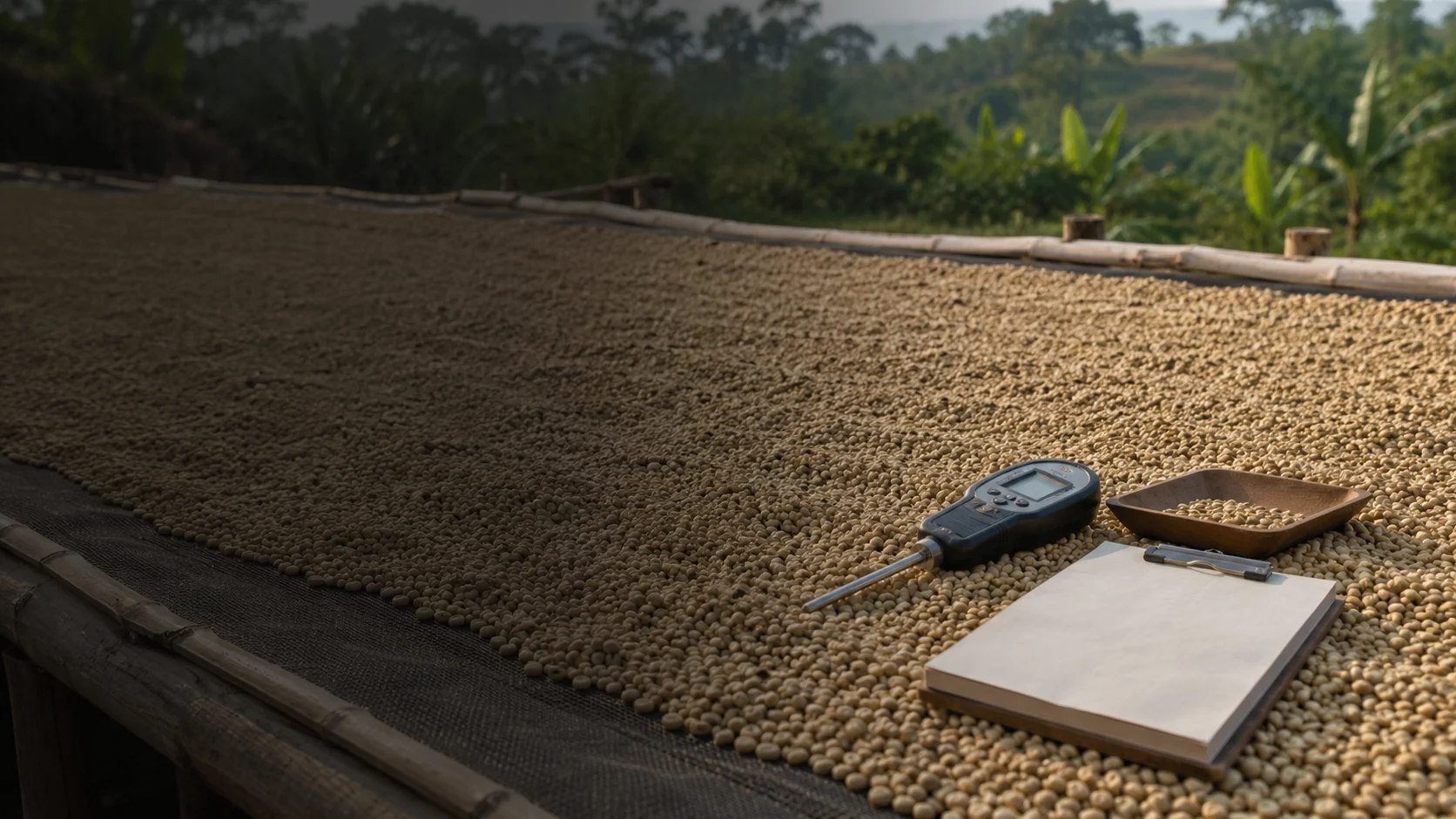
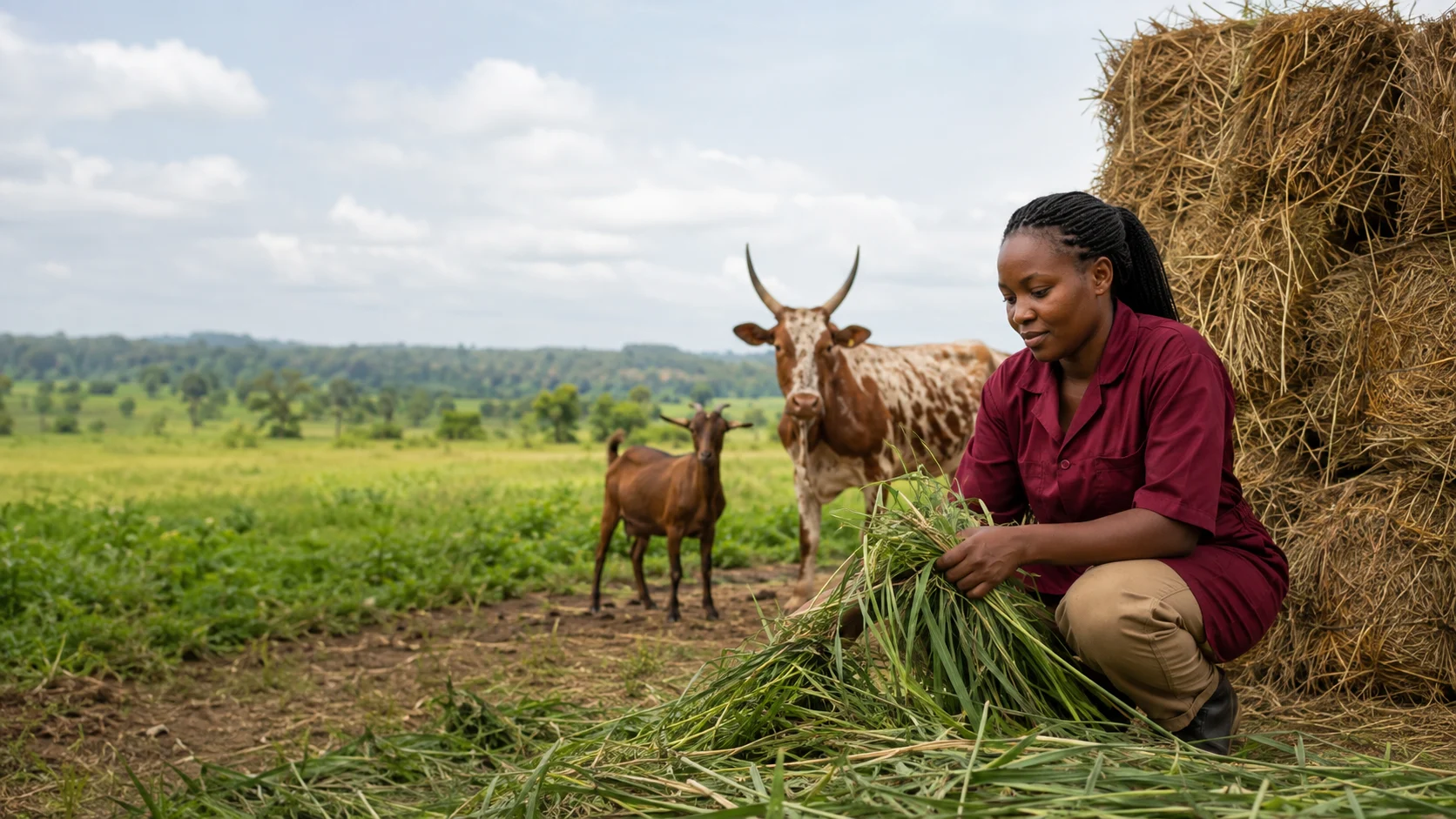
Rather than recording every enterprise on a farm at once, a lower-risk approach is to choose one enterprise, one plot, one crop, one herd, for one full season, and keep all seven record categories for it alone. This limits the workload while the habit is built, makes errors easier to spot and correct, and produces one real, farm-specific gross-margin calculation that can be checked with a cooperative bookkeeper, extension officer or accountant before the approach is extended farm-wide. A coffee grower piloting this may find it useful to align enterprise records with lot-level quality and drying records; a livestock keeper may find it useful to align feeding records with a seasonal fodder plan, both covered in Falcon's related guides below.
Next Actions
A reader ready to act should: choose one enterprise to pilot this season; set up the seven record categories using a notebook, ledger or simple spreadsheet; record entries on the day they happen rather than from memory; complete the gross-margin working sheet at season end using only that enterprise's own figures; discuss the result with a cooperative bookkeeper, extension officer or accountant before drawing conclusions; and only then decide whether to extend the system to further enterprises.
Limitations, Risks and When to Seek Professional Support
This guide explains a standard farm-management method and a minimum record set; it does not provide real Ugandan prices, yields, labour rates or profit figures, and none should be inferred from any example here. Gross margin, correctly calculated, still excludes fixed and overhead costs and is not equivalent to net profit or to cash available to the household. Farm-level costs and prices in Uganda vary by district, season, market channel, input quality and individual farm circumstances, and change over time, so figures must be verified locally and kept current by the farmer, not sourced from an article. This guide is not tax, accounting, credit, investment or legal advice. Seek a qualified accountant or bookkeeper for tax and formal accounting matters, MAAIF extension services or a district agricultural officer for production guidance, a cooperative's finance officer for cooperative reporting requirements, and a licensed financial adviser before any borrowing, investment or major asset decision. Where a farm has several enterprises, hired permanent staff, loans, or cooperative reporting obligations, professional support should be sought before relying on a self-calculated gross margin for a significant decision.