The direct answer
Two different sets of rules can apply to the same bag of produce, and confusing them is the most expensive mistake in this subject.
The first set is Ugandan. Agricultural chemicals must be registered before they may be imported or sold, under the Agricultural Chemicals (Control) Act, Chapter 35. Standards are set and enforced through the Uganda National Bureau of Standards under the Uganda National Bureau of Standards Act, Chapter 327. Plant health certification for export runs through MAAIF. These apply to you as a producer in Uganda regardless of where the produce ends up.
The second set belongs to whoever buys it. If your produce is destined for the European Union, European Union law applies at the border, not Ugandan law. If it is destined for a processor or a supermarket, that buyer's own specification applies, and buyer specifications are frequently stricter than any national requirement.
A maximum residue limit is not a safety threshold in the way most people assume. FAO's pesticide registration toolkit defines it as the maximum concentration of a pesticide residue legally permitted in or on food commodities and animal feeds. It is a legal ceiling derived from approved use, and it is the number a laboratory tests against. A consignment can be rejected for exceeding an MRL even where no health effect would follow, because the exceedance itself shows the product was not used as approved for that market.
One number matters more than almost any other for European Union destinations. Regulation (EC) No 396/2005, at Article 18(1), sets a default maximum residue level of 0.01 mg/kg where no specific MRL has been set for that pesticide and product combination. That is a very low figure and, in practice, it means that a pesticide with no EU-set limit for your crop is effectively not usable on produce going there.
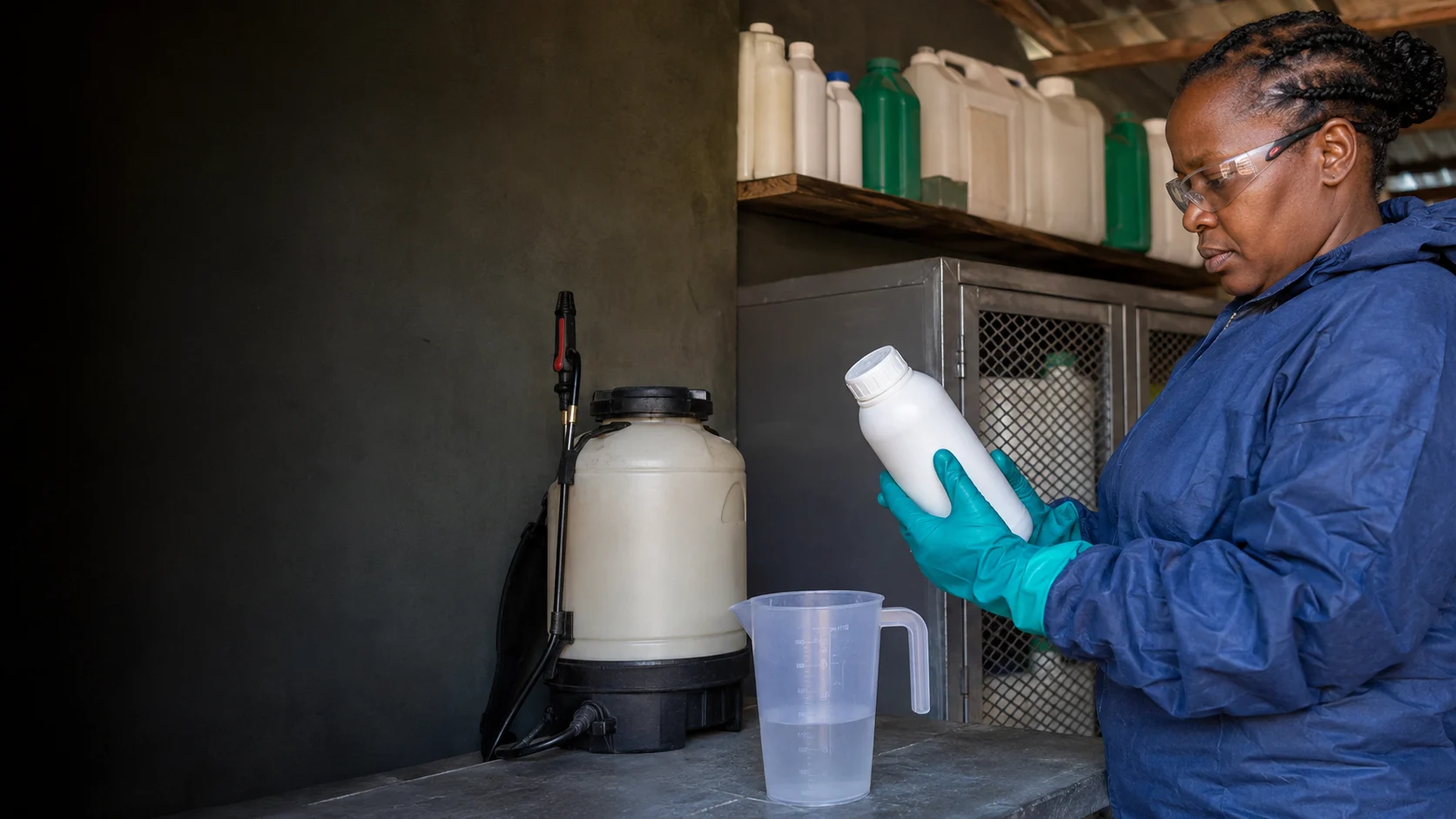
This article publishes no dose rate, recommends no product, recommends no routine spraying, and states no product's Ugandan registration status. Everything about how a chemical is selected, mixed, applied, and about protective equipment, re-entry intervals, pre-harvest intervals, storage and disposal, belongs to Falcon's published safe pesticide use article, and this article routes there rather than repeating any of it.
Who this article is for
You produce for sale in Uganda, or you supply a processor, an aggregator, an exporter or a formal buyer, or you export. You have heard of MRLs, aflatoxin limits and EU checks and you want to know which of these actually applies to what you grow, where the rule is written down, and what date it carries.
The problem this article solves
The which-rule problem. Producers are told to comply, without being told which requirement, from which authority, in which document, applies to their crop and destination.
The date problem. Residue and food safety requirements change. A limit quoted without a date and a source is not usable, because you cannot tell whether it is current. This article dates everything and links to the text.
The conflation problem. Phytosanitary requirements, which are about pests and plant health, are constantly confused with residue requirements, which are about chemical concentrations. A consignment stopped for a live insect and a consignment stopped for a residue exceedance are two entirely different failures with different remedies. The section below keeps them separate.
The buyer problem. Many producers assume that meeting the national requirement is sufficient. It frequently is not, because the buyer's specification is the operative standard.
The decision you are making
- Which market or buyer is this crop actually for?
- Which requirements therefore bind it, from which authority, in which document, at what date?
- What must be controlled on the farm to meet them, and what routes to the safe pesticide use article?
- What must be recorded, and for how long?
- Who do you ask when you cannot establish a requirement?
You are not deciding whether a product is safe or registered. Those are determinations for MAAIF and for the product's label, and this article makes neither.
Uganda-specific context
The Ugandan requirements that apply to you as a producer
Agricultural chemicals must be registered. The Agricultural Chemicals (Control) Act, Chapter 35, defines agricultural chemicals broadly. Its registration provision at section 3(1) prohibits importing into or selling in Uganda any agricultural chemical unless it is registered, packed and labelled in accordance with the regulations and conforms to prescribed standards.
MAAIF publishes a register of agricultural chemicals registered under that Act. The version Falcon located is dated 6 October 2021, and no newer version was located during this research. That matters directly here: if you cannot establish from a current authoritative source that a product is registered for use on your crop in Uganda, do not treat it as registered. Confirm with MAAIF's Department of Crop Inspection and Certification, and treat the label as the legal instruction for any registered product.
This article names no product as registered in Uganda and states no registration status. That determination belongs to MAAIF, on the current register.
Standards. The Uganda National Bureau of Standards Act, Chapter 327, establishes the national standards body and its functions in relation to standards and their enforcement. Product standards, including those covering contaminants in food, are set and enforced through it. Where you need a specific numeric standard for a specific product, obtain the current edition of the relevant standard from UNBS. Falcon does not reproduce numeric standard values whose current edition it could not confirm, and the aflatoxin discussion below explains where that limit bites.
Plant health certification. Export consignments of plants and plant products require phytosanitary certification, administered by MAAIF, and Uganda operates electronic phytosanitary certification. A phytosanitary certificate concerns plant health, meaning pests and diseases. It is not a residue certificate and it does not certify chemical residues. Confusing the two is one of the errors that ends in a rejected consignment.
Codex. Uganda participates in the Codex system, and a Ugandan Codex contact point coordinates that participation. Codex standards, including its pesticide residue limits, are international reference standards. They become binding when a country adopts them into its own law, or when a buyer's contract requires them. Codex itself is a reference framework, not a directly binding law in Uganda, and the Codex pesticide residues database is the place to look up a Codex limit for a given pesticide and commodity combination.
The destination-market requirements, which are a different thing entirely
For the European Union, the governing instrument is Regulation (EC) No 396/2005 on maximum residue levels of pesticides in or on food and feed of plant and animal origin. Article 3 provides the definition of a maximum residue level, and Article 18(1) sets the default of 0.01 mg/kg where no specific MRL applies to that pesticide and product.
Read the practical consequence carefully. If a pesticide has no EU-set MRL for your crop, the applicable ceiling is that very low default. This is why a product that is entirely lawful to use in Uganda can still produce a consignment that fails at the European border. Lawful use in Uganda and admissibility into a destination market are two separate questions, and the second one is the buyer's and the exporter's problem to answer before the crop is grown, not after it is harvested.
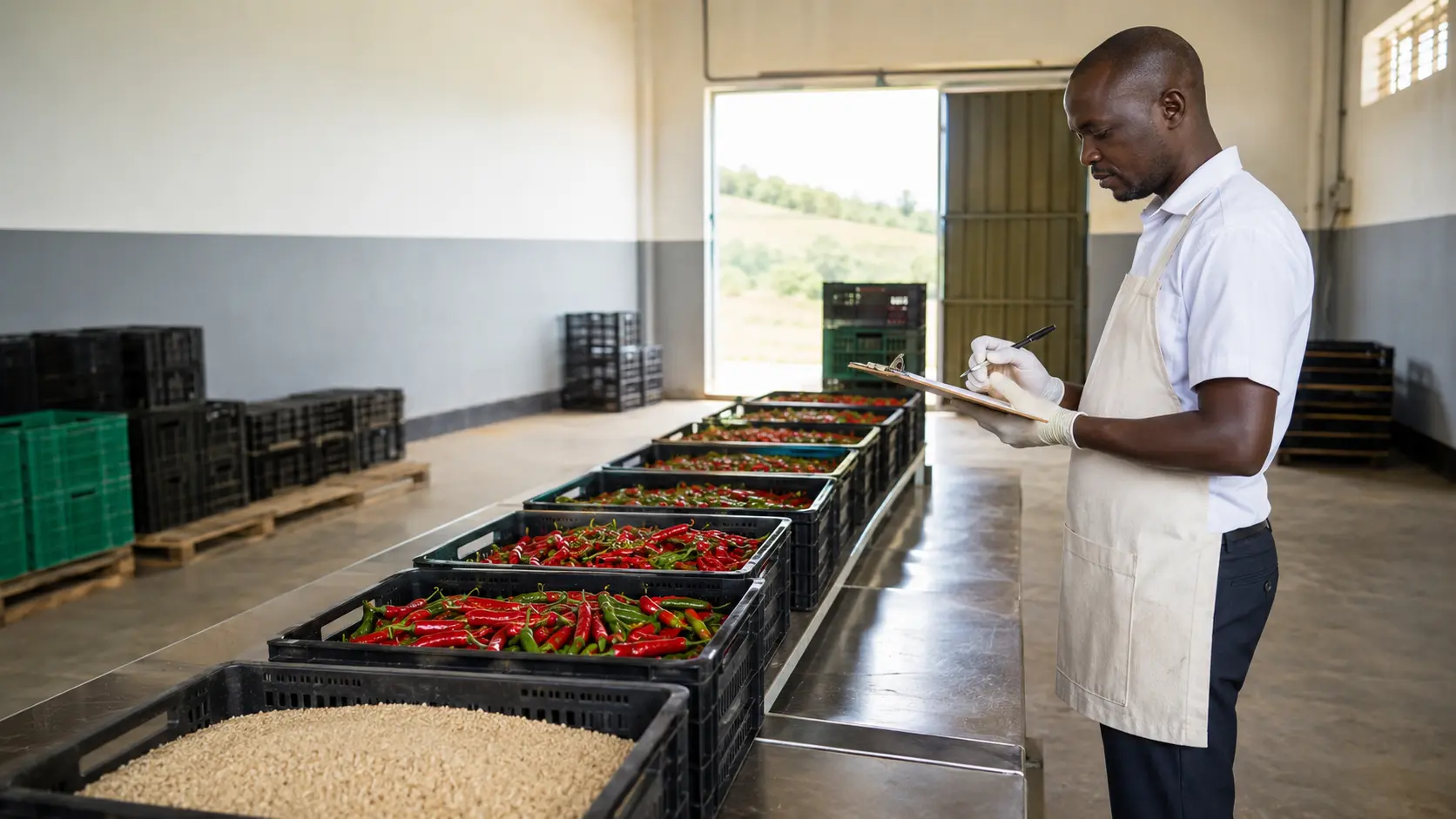
The European Union also applies increased checks to specified products from specified countries. Commission Implementing Regulation (EU) 2026/194 of 28 January 2026 sets out those lists. In that regulation, Annex I includes, at row 24, Uganda, Capsicum peppers other than sweet, with the hazard given as pesticide residues and a frequency of identity and physical checks of 50 per cent. Annex II includes, at row 15, Uganda, sesamum seeds, with the hazard given as Salmonella and a frequency of 30 per cent.
Both of those are dated to a regulation of 28 January 2026 and both are legally binding at the European border, not in Uganda. These lists are revised periodically. If you produce or trade either of those products for the European market, obtain the current version of that regulation before you rely on the frequencies above, because a later amendment may have changed the product, the hazard or the frequency.
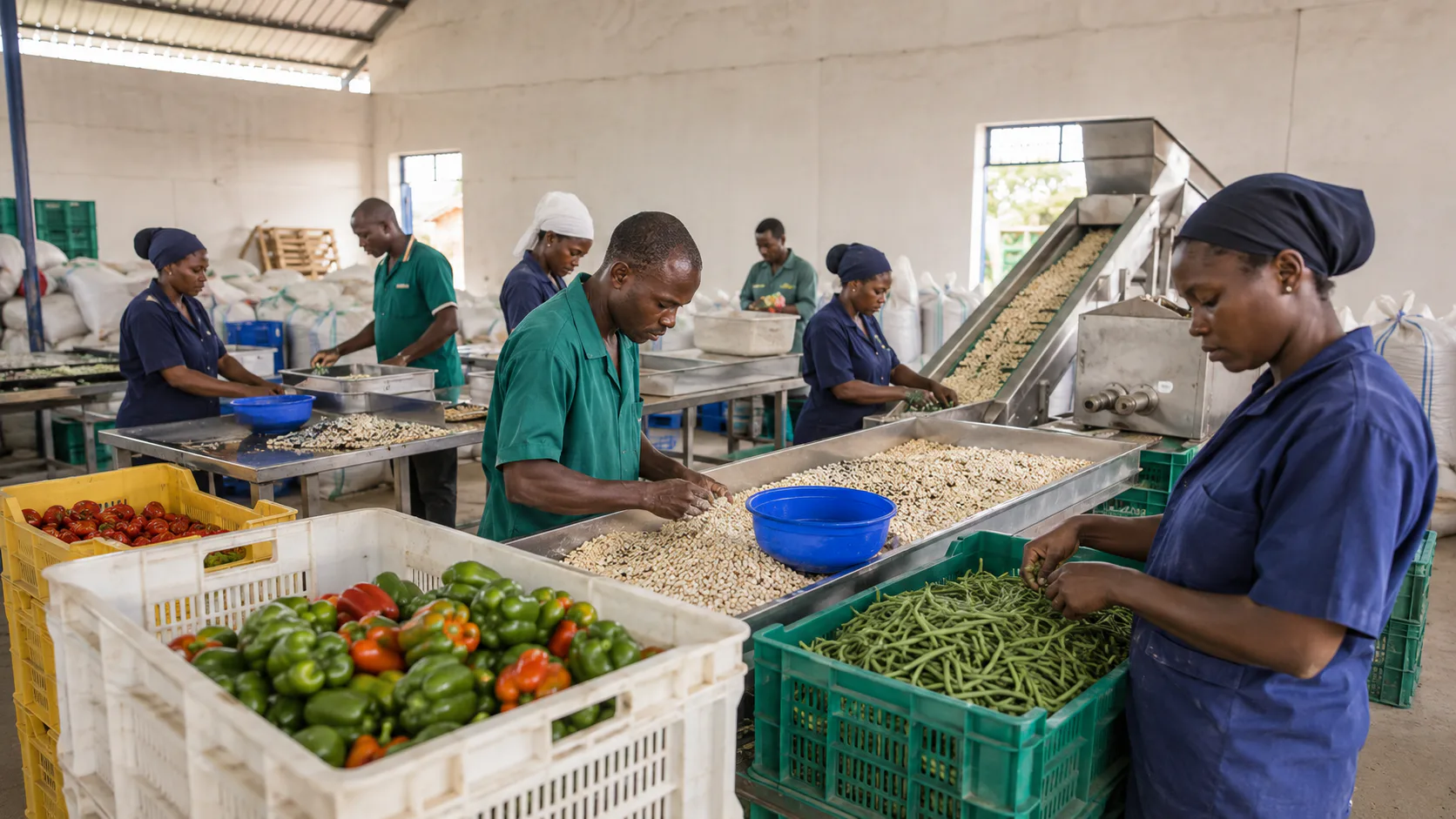
Note also what those two entries tell you about the nature of the requirements. One is a chemical residue hazard and one is a microbiological hazard. They require completely different controls on the farm, and no single practice addresses both.
For any other buyer, the buyer's specification is the requirement. A supermarket, a processor or a certification scheme may impose limits stricter than any national law, may prohibit specific active ingredients outright regardless of registration status, and may require records you are not otherwise obliged to keep. Get the specification in writing before planting.
Pre-harvest intervals, and where that guidance lives
A pre-harvest interval is the minimum period that must elapse between the last application of a pesticide and harvest. It exists so that residues decline to within the permitted limit by the time the crop is harvested. Regulatory definitions of the concept exist in several jurisdictions, and the Canadian regulator's formulation is a clear statement of the same concept in a national context.
The pre-harvest interval for any specific product on any specific crop is on that product's label, and the label is the legal instruction. Falcon's published safe pesticide use article owns the whole subject of applying a pesticide, including observing pre-harvest intervals and re-entry intervals and keeping spray records. This article gives no interval for any product, and no dose rate for any product, and directs you there.
What the evidence says about Ugandan produce, and what it does not
Two categories of evidence exist and they must not be merged.
Residue evidence. A 2022 Ugandan study published in Environmental Health Insights examined "A total of 160 samples of fruit and vegetables collected from farms, markets, streets, restaurants and homes" in the Kampala metropolitan area and reported that "Multiple pesticide residues were detected in majority of the samples (95.6%)." Note precisely what that says: residues were detected. Detection is not the same as exceedance, and that paper does not report a count of samples exceeding maximum residue limits.
A separate exploratory study published by Wageningen University and Research as report 3303 in November 2023, sampling on 13 December 2022 across six markets in Kampala, Jinja, Mbale, Tororo, Kabale and Kisoro, analysed 60 samples, being 20 each of tomato, cabbage and green pepper. It reported European Union maximum residue level exceedances in several of those samples, across tomato and green pepper in particular. Falcon does not reproduce the active ingredient names from that report here, because it could not verify the current Ugandan registration status of those substances from an authoritative source, and naming a substance without that verification would imply a status this article is not in a position to state.
Those two studies together establish that residues are commonly detectable in sampled Ugandan produce and that European Union maximum residue levels have been exceeded in sampled Ugandan market produce. They do not establish a rate for Ugandan produce generally, and this article makes no such claim. Both are market and supply chain samples from specific places on specific dates, not a national survey.
Phytosanitary evidence, which is not residue evidence. A completed project under the Standards and Trade Development Facility, titled "Enhancing the capacity of Uganda's fruit and vegetable sector to comply with EU Phytosanitary requirements", records that at the outset "the EU intercepted more than 80% of fresh fruit and vegetable exports from Uganda because they contained harmful organisms, including false codling moth and fruit flies, in capsicum and bitter gourd", and that subsequently "Capsicum interceptions decreased by more than 90%, from 72 in 2018 to three in 2022."
Those are phytosanitary interceptions, concerning pests and plant health. They are not residue exceedances. They are quoted here for two reasons. First, to make the distinction visible, because phytosanitary interception data is frequently cited in discussions of residues where it does not belong. Second, because the improvement they record is real and instructive: a specific plant health problem, addressed with specific field and packhouse controls, produced a measurable fall in interceptions over four years. Note that capsicum from Uganda nevertheless remains on the current European increased-check list, but for pesticide residues rather than for pests, which is precisely the point of this section.
The practical lesson from both together is that a Ugandan consignment can fail on either axis, and the controls that prevent the two failures are different: field hygiene, sorting and plant health inspection on one side; chemical selection, application discipline and pre-harvest intervals on the other.
Aflatoxin, and the honest limit on what this article states
Aflatoxin is a contaminant of stored grains and nuts and it is the food safety issue with the widest reach in Ugandan agriculture, because it affects domestic staple crops and not only export consignments.
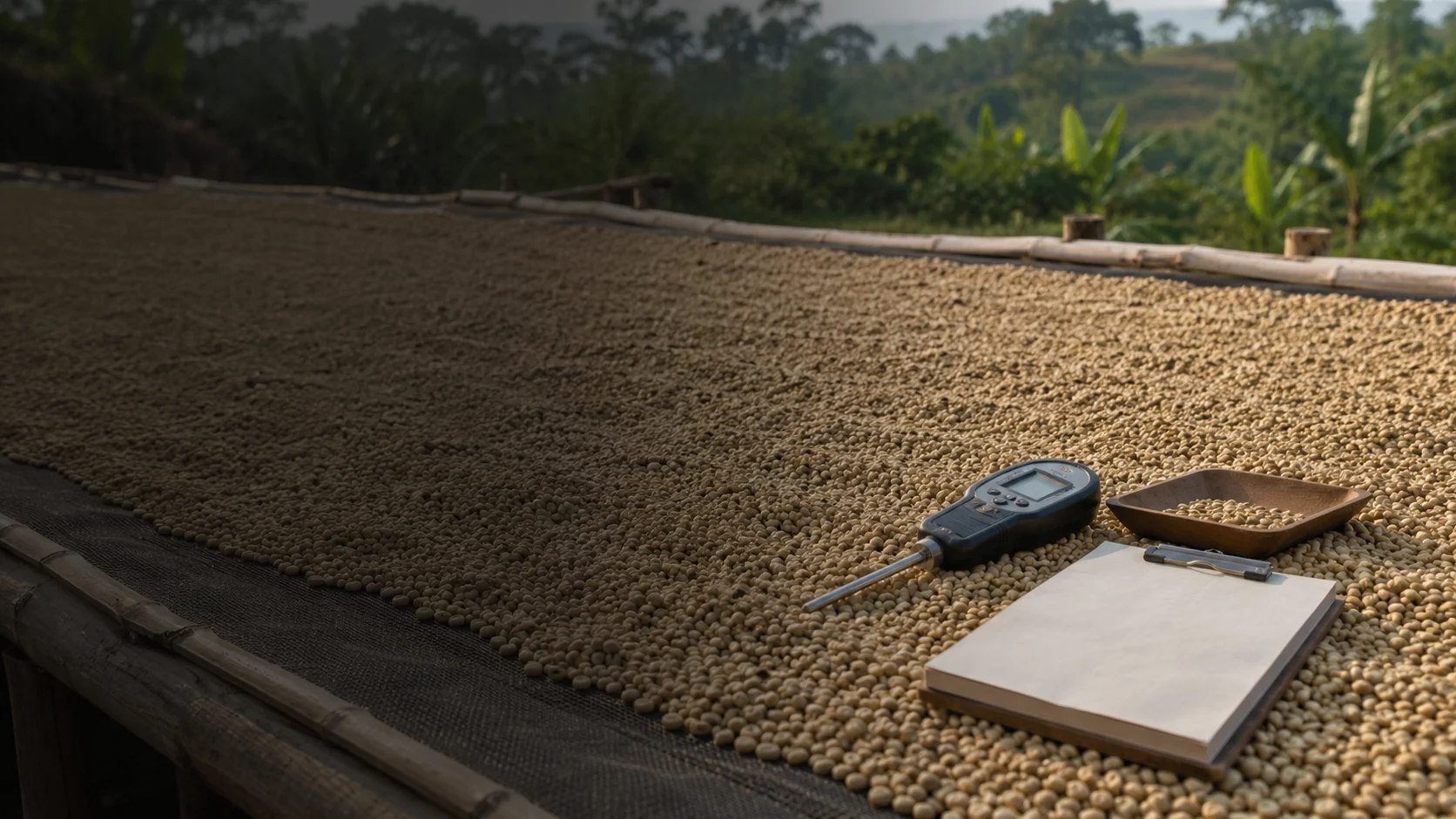
The East African regional standard for maize grain includes numeric limits for total aflatoxin and for aflatoxin B1. Falcon located those limits in the edition it reviewed but could not confirm that the edition it reviewed is the current one. Because a numeric contaminant limit quoted from a superseded edition of a standard is worse than no number at all, this article publishes no aflatoxin figure.
Obtain the current edition of the applicable standard from UNBS, and if you are supplying a buyer, obtain their specification as well, because buyer limits for aflatoxin are frequently stricter than the standard.
For the practical control side, drying, moisture management, sorting and storage are owned entirely by Falcon's published maize post-harvest and aflatoxin article, and that is where the farm actions live. This article covers only the standards question.
Step by step: establish which requirements bind your crop
Step 1: name the destination before you plant
Not the crop, the destination. Domestic open market, domestic formal buyer or processor, regional export, or a specific overseas market. The requirements diverge sharply, and almost every decision below follows from this one.
If the destination changes after planting, the requirements change with it, and some of them cannot be met retrospectively. A pre-harvest interval that has already elapsed incorrectly cannot be repaired.
Step 2: get the buyer's written specification
If there is a buyer, ask for the specification in writing: contaminant limits, prohibited active ingredients, record requirements, testing arrangements and who pays for testing. A verbal assurance is not a specification.
Step 3: establish the Ugandan requirements that apply to you regardless
Confirm with MAAIF's Department of Crop Inspection and Certification that any agricultural chemical you intend to use is currently registered for that use, noting that the register version Falcon located is dated 6 October 2021 and a newer version may exist.
Obtain the current edition of any UNBS standard applicable to your product.
If you are exporting plants or plant products, establish the phytosanitary certification requirement with MAAIF, remembering that phytosanitary certification is about plant health and not residues.
Step 4: establish the destination-market requirements separately
For the European Union, that means the maximum residue levels regulation, including the Article 18(1) default of 0.01 mg/kg where no specific limit applies, and the current version of the increased-checks regulation if your product and country combination appears in it.
For any other market, identify the equivalent instruments through the buyer, the exporter, or the relevant Ugandan trade support body.
Write down, for each requirement: the authority, the instrument, the provision, the value if any, and the date of the version you consulted. A requirement without those five fields is not usable.
Step 5: decide the crop protection approach against the binding requirement
This is where the requirement becomes a farm decision, and it is the step that must happen before planting.
Start from the pest management decision, which is owned by the integrated pest management article referenced at the end. A pest problem that is prevented, avoided or managed without a chemical creates no residue at all, which is the only entirely reliable way to meet a residue limit.
Where a chemical intervention is genuinely justified by that decision process, everything about it, including whether the product's pre-harvest interval and the market's requirements can both be met, belongs to the published safe pesticide use article. This article recommends no product, publishes no rate, and does not recommend routine spraying. Applying on a calendar rather than on a decision is exactly what produces residue failures.
For biological products, note that being biological does not automatically mean being exempt from registration, residue or market requirements, and it does not automatically mean effective. The biological control and biopesticides article referenced at the end sets out what is and is not established.
Step 6: control the microbiological and contamination side too
Residues are only one hazard class. The European entry for sesamum seeds quoted above is a Salmonella entry, not a residue entry.
That side is about water quality, manure handling and timing, worker hygiene, harvest and handling hygiene, drying surfaces, and storage. Where a field has been flooded, the flooding article referenced at the end sets out why floodwater is a contamination question and routes it to the authorities.
Step 7: record everything, and keep the records
Records are how compliance is demonstrated. What was applied, when, to which field, by whom, at what interval before harvest, and what the produce was tested for if anything. The spray record specification belongs to the published safe pesticide use article; the field record below covers the requirement side.
Step 8: re-check the requirements each season
Residue limits, increased-check lists and standards editions all change. A requirement verified two seasons ago is a starting point for a question, not an answer.
Decision framework: Ugandan requirement or destination requirement
| Question | Ugandan requirement | Destination-market requirement | Where to establish it |
|---|---|---|---|
| May this chemical be sold and used here? | Yes. Registration under the Agricultural Chemicals (Control) Act, Chapter 35, section 3(1) | No. Registration in Uganda says nothing about admissibility elsewhere | MAAIF, Department of Crop Inspection and Certification, on the current register |
| What residue level is permitted in my produce? | Determined by the applicable Ugandan standard or adopted limit | Yes, and this is usually the binding one for export. For the EU, Regulation (EC) No 396/2005, with the Article 18(1) default of 0.01 mg/kg where no specific MRL exists | UNBS for the Ugandan side; the destination's legal text and your buyer for the other |
| How long before harvest must I stop applying? | The product label, which is the legal instruction | The destination's limit determines whether the label interval is sufficient for that market | The label, and the published safe pesticide use article |
| Does my consignment need a phytosanitary certificate? | Yes, for export of plants and plant products | The importing country's plant health requirements drive it | MAAIF |
| Is my consignment subject to increased border checks? | Not a Ugandan concept | Yes. For the EU, Commission Implementing Regulation (EU) 2026/194 of 28 January 2026 lists product and country combinations with check frequencies | The current version of that regulation, and your exporter |
| What contaminant limits apply to stored grain? | The applicable UNBS or adopted regional standard, current edition | The destination's limit, and very often a stricter buyer limit | UNBS, and the buyer's written specification |
| What records must I keep? | Those required by the applicable Ugandan requirements | Whatever the buyer or scheme specifies, which is usually more | The specification, in writing, before planting |
The single rule that follows from this table: the binding requirement is the strictest one that applies to your consignment, and it is usually not the Ugandan one.
Field record: the compliance file
| Section | What it holds | Updated |
|---|---|---|
| Destination record | Crop, field, intended destination or buyer, and the date that was decided | Before planting, and on any change |
| Buyer specification | The written specification, its date, and who provided it | On receipt and on each revision |
| Requirement register | For each requirement: authority, instrument, provision, value if any, and the date of the version consulted | Each season, and whenever a requirement is checked |
| Registration checks | Product enquired about, who at MAAIF confirmed the position, and on what date | Before any purchase |
| Application records | Owned by the published safe pesticide use article; cross-reference the record here | On each application |
| Pre-harvest interval record | Last application date, the interval on the label, the earliest permitted harvest date, actual harvest date | On each crop |
| Hygiene and contamination controls | Water source used, manure application dates, harvest and drying surfaces, any flooding event | Continuously |
| Testing record | What was tested, by which laboratory, on what date, against which limit, and the result | On each test |
| Consignment record | Consignment reference, destination, certificates obtained, dates | On each consignment |
| Incident record | Any rejection, query or non-conformance, what caused it, and what changed afterwards | On each event |
The requirement register row is the core of this article. Five fields per requirement, and the date field is the one that gets skipped and the one that matters most.
Cost categories
Falcon publishes no prices. No current Ugandan laboratory fee, certification fee or testing cost was verified, and an invented figure would be worse than none.
- Laboratory testing, where a buyer or market requires it, and the cost of retesting.
- Certification and inspection fees, including phytosanitary certification.
- Certification scheme fees where a buyer requires a scheme.
- Record keeping time, which is small but real.
- The cost of any alternative pest management approach adopted to avoid a residue risk, covered by the integrated pest management article.
- The cost of a rejected consignment, which is the reason for everything above and which is not only the value of the produce.
- Training for the people who apply chemicals, covered by the published safe pesticide use article.
- Drying and storage capacity adequate to control contamination, covered by the published post-harvest article.
Common mistakes
- Assuming that because a product is legal in Uganda its residues are admissible in a destination market. Those are separate questions.
- Not knowing that where no specific EU MRL exists, the Article 18(1) default of 0.01 mg/kg applies.
- Quoting a residue or contaminant limit without its instrument and its date, so nobody can tell whether it is current.
- Confusing a phytosanitary certificate with a residue clearance. One is about pests, the other about chemicals.
- Citing phytosanitary interception data as evidence about residues.
- Deciding the destination after the crop is grown, when some requirements cannot be met retrospectively.
- Accepting a verbal buyer specification instead of a written one.
- Spraying on a calendar rather than on a decision, which is the most direct route to a residue exceedance.
- Treating a biological product as automatically exempt from registration, residue or market requirements.
- Assuming a product is registered because it is on sale, when the register version located is dated 6 October 2021 and the position must be confirmed with MAAIF.
- Relying on a standard whose current edition has not been confirmed.
- Ignoring the microbiological side, when one of the two current EU increased-check entries for Uganda is a Salmonella entry.
- Keeping no application records, so that compliance cannot be demonstrated even where it was achieved.
- Checking requirements once and assuming they persist, when the instruments are revised.
Warning signs and escalation points
| What you observe | What it means | What to do |
|---|---|---|
| You cannot name the destination or buyer for a crop already planted | The binding requirements are unknown and some cannot now be met | Establish the destination immediately and check what remains achievable |
| A requirement has been given to you with no instrument and no date | It is unusable and may be out of date | Ask for the instrument, the provision and the version date |
| A supplier says a product is fine for export | Suppliers do not determine market admissibility | Verify against the destination's own legal text and your buyer's specification |
| A product's Ugandan registration cannot be confirmed | The register version located is dated 6 October 2021 and may not be current | Confirm with MAAIF's Department of Crop Inspection and Certification before purchase |
| Your crop or country appears on a destination's increased-check list | Consignments face a stated frequency of identity and physical checks | Obtain the current version of that regulation and work through your exporter |
| A pesticide has no MRL set for your crop in the destination market | For the EU this means the very low default applies | Treat the product as unusable for that market and go back to the pest management decision |
| Harvest is due before the label's pre-harvest interval has elapsed | The consignment is at risk and the interval cannot be shortened | Do not harvest that block for that market; take advice, and see the published safe pesticide use article |
| A field has been flooded before harvest | This is a contamination question, not only an agronomic one | See the flooding article and ask MAAIF, UNBS and your buyer before harvesting or selling |
| A consignment is rejected or queried | Determine whether it was residue, contaminant or phytosanitary, because the remedies differ | Get the stated reason in writing; take advice; record it |
| A buyer's specification is stricter than the national requirement | The buyer's specification is the operative standard | Comply with the strictest applicable requirement, not the national one |
When this approach works and when it does not
It works when the destination is decided before planting, when the requirements are written down with their instruments and dates, and when the crop protection decision is made against those requirements rather than against habit.
It works when residues are avoided at source. The most reliable way to meet a residue limit is not to create the residue, which is why the pest management decision article comes before any chemical decision.
It does not work retrospectively. A pre-harvest interval that was not observed cannot be repaired, and a residue already in the crop cannot be removed by paperwork.
It does not work if requirements are checked once and assumed to persist. Every instrument quoted in this article carries a date for exactly that reason.
It is not legal advice, and it is not a compliance certification. Falcon certifies nothing, states no product's registration status, and gives no advice on contracts or rejected consignments.
A low-risk first step
Take one crop you intend to grow next season and fill in five fields for each requirement you believe applies: the authority, the instrument, the provision, the value if there is one, and the date of the version you consulted.
You will very likely find that you cannot complete the date field for at least one of them. That gap is the most useful output of the exercise, and it costs one afternoon and two phone calls, one to MAAIF and one to your buyer.
Limitations and professional-support triggers
Get professional support in these situations.
- Confirming whether a product is currently registered in Uganda for a specific use. MAAIF, Department of Crop Inspection and Certification. This article confirms nothing.
- Obtaining the current edition of any standard. UNBS.
- Establishing a destination market's current requirements. The destination's own legal text, your exporter, and Ugandan trade support bodies.
- Anything to do with applying a chemical, including intervals, equipment and records. The published safe pesticide use article, and a qualified adviser.
- A rejected or queried consignment. Get the stated reason in writing and take professional advice, including legal advice where a contract is involved.
Five verification gaps in this article are disclosed rather than hidden.
First, the MAAIF register of agricultural chemicals located is dated 6 October 2021 and no newer version was located. No product's registration status is stated here.
Second, no aflatoxin numeric limit is published, because the current edition of the applicable standard could not be confirmed. Obtain it from UNBS.
Third, the increased-check entries quoted are from a regulation dated 28 January 2026 and those lists are revised. Obtain the current version before relying on them.
Fourth, the Ugandan residue research quoted establishes detection and exceedance in specific samples, from specific places, on specific dates. It does not establish a rate for Ugandan produce generally, and no such rate is claimed. Active ingredient names appearing in one of those reports are deliberately not reproduced here, because their current Ugandan registration status could not be verified.
Fifth, the interception data quoted is phytosanitary and not residue-based, and it is included specifically so that it is not misread as residue evidence. The same crop appears on the current European increased-check list for a residue hazard, which is a separate matter with separate controls.
Every legally binding requirement quoted in this article carries its instrument and its date, and every one of them should be re-checked against the current text before it is relied on for a consignment.
Clear next actions
- Decide and record the destination or buyer for each crop before planting.
- Get the buyer's specification in writing, with a date.
- Build the requirement register: authority, instrument, provision, value, and version date, for every requirement you believe applies.
- Confirm with MAAIF's Department of Crop Inspection and Certification the registration position for any chemical you intend to use, and treat the label as the legal instruction.
- Obtain the current edition of any applicable UNBS standard, including any contaminant limit for stored grain.
- If you supply the European market, obtain the current maximum residue levels position for your crop and the current increased-check regulation.
- Make the crop protection decision against those requirements before planting, starting from the integrated pest management article, and route every chemical handling question to the published safe pesticide use article.
- Set up the compliance file, including the pre-harvest interval record, and re-check every requirement at the start of each season.
Author
Falcon Foundation Ltd editorial team. Falcon Foundation Ltd is a privately owned Ugandan agricultural company established in 2013, registered in Uganda and operating land in Uganda across greenhouse crops, poultry, sheep, goats and beekeeping. This article sets out which food safety and residue requirements bind Ugandan produce and where each comes from. It publishes no pesticide dose rate, recommends no product, recommends no routine spraying and states no product's Ugandan registration status. All chemical handling, including pre-harvest and re-entry intervals, is covered in the company's published safe pesticide use article. Every legally binding requirement stated here carries its instrument and its date and should be re-checked against the current text. This is general information only. It is not legal advice and it is not a compliance certification. Confirm your position with MAAIF, UNBS, your buyer and, where a contract is involved, a Ugandan lawyer.