The direct answer
Most disease does not walk onto a Ugandan farm on its own legs. It arrives on boots, tyres, hands, tools, feed sacks, borrowed equipment and animals brought in without a holding period.
Biosecurity is the set of rules that controls those routes. It is not a building and it is not a product. It is four decisions, written down and applied every day:
- Who may come onto the farm, and past which line.
- What vehicles may enter, and how far.
- What happens to tools and equipment that move between farms or between groups of animals.
- What happens to any animal, plant or material arriving from outside, before it joins the rest.
There is also a legal element that most farm-level advice leaves out. Uganda's Animal Diseases Act places a duty on a person in possession or charge of an animal affected with disease, or suspected of being affected, to notify an administrative officer, a veterinary officer or an inspecting officer as soon as possible. Reporting is not optional, and it is not something you decide after treating.
This article covers whole-farm entry control. House-level detail for poultry is covered in Falcon's published poultry biosecurity article and is not repeated here. This article gives no treatment advice and names no medicine.
Practical summary
- Draw the farm on paper and mark one entry point.
- Decide the line past which outside footwear and vehicles do not go.
- Put a visitor record at that line and use it every time.
- Put a functioning boot cleaning and disinfection point at that line.
- Hold every new animal separately for a stated period before mixing.
- Keep tools for each group of animals separate, and clean anything borrowed before and after.
- Record everything that comes in and everything that leaves.
- Know your district veterinary contact before you need it, and report suspected disease without delay.
How things actually get in
Before rules, understand routes. Peer-reviewed and institutional work on biosecurity in East African livestock systems consistently identifies the same practical pathways, and they are the ones a farm can act on.
People. Anyone who has been on another farm, in a market, at a slaughter point or at a veterinary facility carries material on footwear, clothing and hands. This includes you.
Vehicles. Tyres and wheel arches carry soil and manure from wherever the vehicle last was. Feed delivery, produce collection and buyers' vehicles reach further into most farms than any visitor.
New animals. Animals bought at market or from another farm may be incubating disease with no visible sign on the day of purchase. This is the single highest-risk routine event on most mixed farms.
Tools and equipment. Shared or borrowed equipment, unwashed after use, moves disease between farms and between groups on the same farm.
Feed, bedding and packaging. Sacks, crates and pallets that have been elsewhere arrive with whatever was there.
Planting material and soil. For crops, the same logic applies. MAAIF operates a "robust post-entry quarantine regime to handle dangerous pests, diseases and weeds", established at various border posts, precisely because material moves problems.
Water and boundaries. Shared watering points, drainage from neighbouring land, and unfenced boundaries that allow contact between your animals and others are routes you do not control directly.
The legal position, stated accurately
Three provisions of the Animal Diseases Act matter to farm-level practice.
Reporting. Section 2 provides that "Any person having in his or her possession or charge any animal affected with disease or suspected of being affected with disease shall as soon as possible ... notify an administrative officer or veterinary officer or inspecting officer."
Read the words "or suspected of being affected". The duty is triggered by suspicion, not by diagnosis. A farmer who waits for certainty before reporting has already missed the point at which the duty arose.
Movement control. Section 18(1) provides that in an area to which the relevant provisions apply, "no stock or carcass shall be moved in or from any such area without the written permission of the commissioner of livestock and entomology or the veterinary officer or inspecting officer in charge of the area."
Practically: when movement restrictions are in force in your area, moving animals or carcasses without written permission is unlawful, whatever the commercial pressure to sell.
Examination and quarantine powers. Section 8 provides that "Any veterinary officer may at any time require any animal to be examined, inoculated, sprayed, dipped, washed or otherwise disinfected or to undergo a period of quarantine if he or she considers the same to be necessary in order to prevent the spread of disease."
The Act defines "disease" by naming a specific list. That list includes cattle plague (rinderpest), anthrax, pleuropneumonia, trypanosomiasis, tuberculosis, foot and mouth disease, rabies, sheep pox, sheep scab, goat scab, goat pox, glanders, farcy, mange in horses, mules and donkeys, dourine, ulcerative lymphangitis, epizootic lymphangitis and blackquarter. The statutory list is longer than the entries reproduced here and should be read in full in the Act itself, alongside any subsequent amendment or subsidiary rules, because the definition determines the scope of the duty.
Practical consequence. Foot and mouth disease is named in the Act's definition. It is also the disease most commonly behind district-level movement restrictions in Uganda. A farm plan that assumes animals can always be sold and moved on demand is a plan that has not accounted for the law.
Setting the farm up
The one-entry rule
Draw the farm. Mark every way in that a person or vehicle currently uses, including the gap in the hedge everybody uses because it is shorter. Close all but one.
This is the cheapest and most effective single measure available, and it is usually resisted because it is inconvenient. It only works if it applies to the owner as well.
The clean line
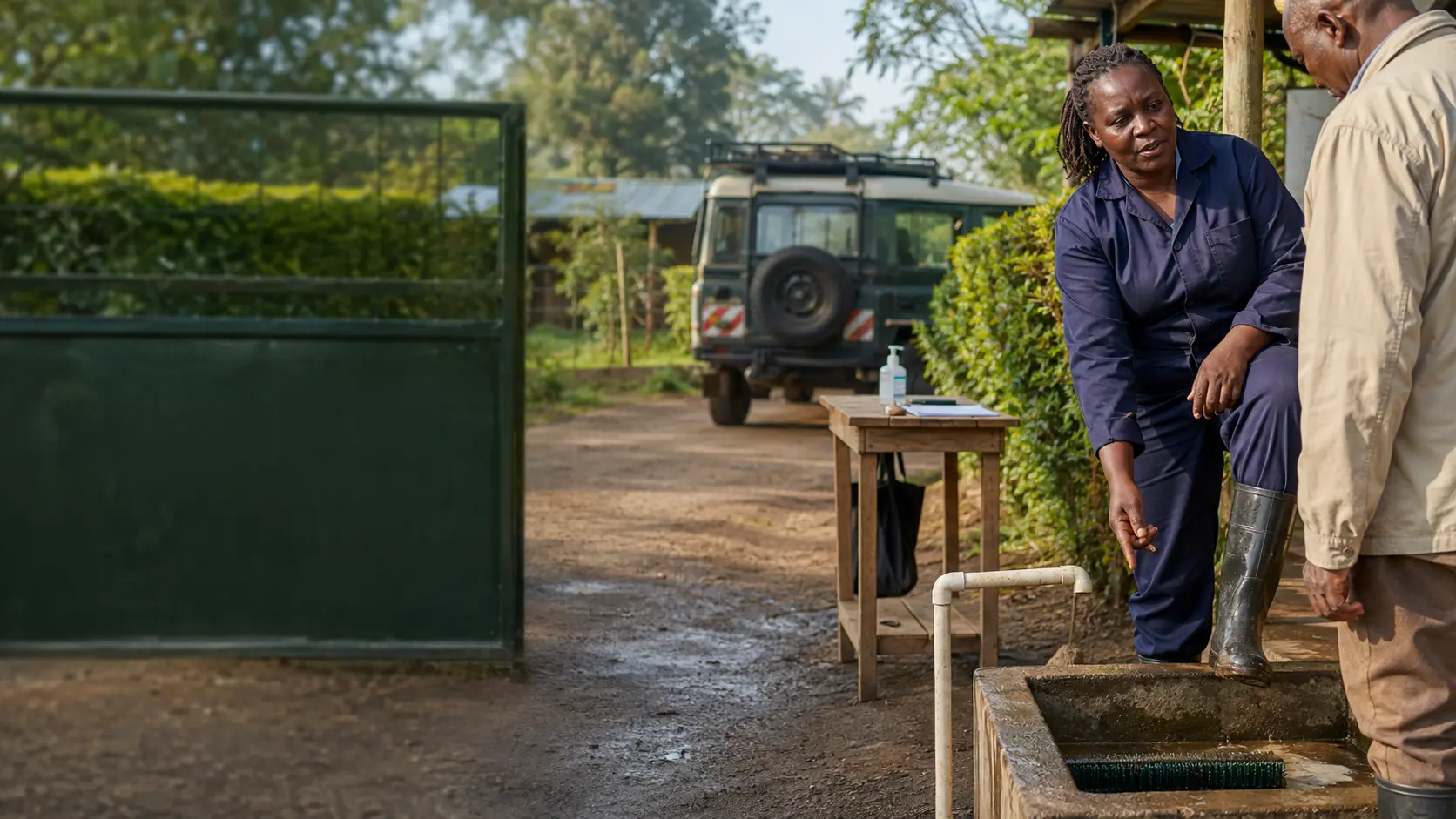
Inside the entry point, mark a line past which outside footwear does not go. It can be a painted line, a bench, a doorway or a change of surface. It must be unmistakable.
On the outside of the line: visitor parking, deliveries, the visitor record, the boot cleaning point. On the inside: farm footwear, animal housing, feed stores, growing crops.
The line is a decision, not a construction project. A well-observed painted line does more than a badly maintained concrete structure.
The boot point that actually works
A disinfection point fails for predictable reasons. Address them in this order.
- Remove organic matter first. Disinfectant does not work through caked mud and manure. A brush and water come before any dip.
- Keep the solution fresh. A dip that has not been changed for weeks is a container of contaminated liquid. Set a written change interval and record each change.
- Keep it usable. Under shelter so rain does not dilute it, at the entry point, with a brush that stays there and a place to stand.
- Provide the alternative. Where farm boots can be provided for visitors, that is more reliable than cleaning the boots they arrived in.
Follow the label directions for whatever disinfectant you use. This article names no product and states no concentration.
The visitor record
A simple book at the entry, filled in every time by every person who is not resident on the farm.
| Date | Time in | Name | Organisation or reason | Last farm or market visited, and when | Vehicle registration | Footwear: farm boots issued, or cleaned | Areas visited | Time out |
|---|
The fifth column is the one that matters and the one that gets left blank. A buyer who was at a livestock market that morning is a different risk from a neighbour who came from home, and you cannot make that judgement without asking.
The record also has a second use. If a problem appears, the book tells you who was on the farm in the preceding weeks and where they had been. Without it you are guessing.
Vehicles
Set a parking area outside the clean line and keep it there. Where a vehicle must enter, make it a farm vehicle rather than a visiting one wherever possible. Deliveries are handled at the line, not at the store, unless there is no alternative.
Where you cannot avoid an outside vehicle entering, at minimum keep it to a defined route that does not pass animal housing or feed stores, and record it in the visitor book with its registration.
New arrivals: the holding period
This is the highest-value rule on a mixed farm and the one most often skipped because the new animals look healthy.
Hold new animals separately from the existing group. Separately means a different airspace where practical, a different pen at minimum, with its own tools, its own feed and water containers, and its own footwear or a strict order of work.
Work the resident group first and the new arrivals last, every day. Disease travels with the person, and the order of work is a free control.
Observe daily and write it down. Temperature where you are equipped and trained to take it, appetite, dung, gait, breathing, discharge, and anything unusual.
Length of the holding period. This article does not state a number of days, because the appropriate period depends on the species, the diseases of concern and their incubation periods, and it is a veterinary judgement. Ask your district veterinary officer or a veterinary surgeon for the period appropriate to the species and to the diseases of concern in your area, and write the answer into your farm rules. A period agreed with a veterinarian and applied consistently is worth far more than a number copied from an article written for another country.
Buy with information. Where possible, know where the animal came from, what was in that herd or flock, what treatments or vaccinations were given and when, and whether any restriction is in force in the area of origin. An animal bought with no history is an animal bought with unknown risk.
Tools, equipment and shared items
Colour-code by group. Separate tools for separate groups of animals, and separate tools for the holding area, marked so that a tired person at the end of the day cannot get it wrong.
Clean before and after borrowing. Equipment that leaves your farm comes back from somewhere. Equipment that arrives came from somewhere. Both directions matter.
Treat feed and bedding as a route. Store off the ground, keep it dry, keep it closed to rodents and birds, and do not reuse sacks or crates that have been on other farms.
For crops, apply the same discipline. Pruning tools, harvest knives and machetes move plant disease efficiently between fields and between farms. Clean tools between blocks where a disease is present, and do not move soil on implements from an affected block to a clean one. This connects directly to the scouting and action discipline in Falcon's integrated pest management article.
Decision framework: what to do when something looks wrong
| Situation | First action | Then | Do not |
|---|---|---|---|
| One animal off feed or dull, no other signs | Isolate it. Record the signs and the date | Observe closely; seek veterinary advice if it does not resolve or others follow | Do not move it off the farm; do not medicate speculatively |
| Several animals showing the same signs at once | Stop movement on and off the farm. Isolate the affected group | Notify a veterinary officer without delay; the statutory duty is triggered by suspicion | Do not sell affected or in-contact animals; do not wait for a diagnosis before reporting |
| Sudden death without explanation | Do not open or move the carcass. Restrict access to the area | Notify a veterinary officer immediately | Do not butcher, sell or dispose of it before advice; some named diseases are dangerous to people |
| Signs consistent with a disease named in the Act | Report first | Follow the officer's instructions on examination, treatment, disinfection or quarantine | Do not move stock or carcasses if restrictions are in force |
| Movement restrictions declared in your area | Check what is permitted, in writing | Plan feed and cash flow for the period; adjust your sale plan | Do not move stock or carcasses without written permission |
| A visitor arrives having been at a market that morning | Apply the entry rules; issue farm boots or clean footwear at the line | Record it in the book, including where they came from | Do not waive the rule because the visitor is important |
| A crop block shows a disease you can identify | Work clean blocks first, affected blocks last; clean tools after | Follow the scouting and action rules in FF-110; seek identification if uncertain | Do not move soil or plant material from the affected block to clean ground |
Field record: the four sheets
Keep these four together. They take minutes a week and they are the difference between managing risk and describing it afterwards.
1. Visitor and vehicle record. As set out above, at the entry point.
2. Stock movement record.
| Date | In or out | Species and number | Identification | From or to, with location | Reason | Any permit or documentation reference | Holding area used | Released to main group on |
|---|
3. Holding area observation sheet.
| Date | Group | Days held | Appetite | Dung | Gait and breathing | Any discharge | Anything unusual | Signed |
|---|
4. Disinfection and maintenance log.
| Date | Point | Action, for example solution changed or brush replaced | By whom |
|---|
Search evidence for this article
In Google Keyword Planner with the location set to Uganda, the exact term farm biosecurity returned an average monthly search band of 10 to 100. The related term foot and mouth disease uganda was queried in Keyword Planner with Uganda targeting and returned no data for that exact term; volume is unavailable rather than zero, and no figure has been substituted. The related term newcastle disease in chickens returned 10 to 100. Bands are reproduced exactly as returned and none has been converted into a single number.
A Uganda-geolocated Google search for farm biosecurity uganda returned a peer-reviewed article on biosecurity measures and health performance, an international livestock research institute item on improving biosecurity to reduce antimicrobial use in poultry, and a Makerere University dissertation on biosecurity implementation on broiler farms among the leading results. Two further results in the observed set concerned a species excluded from Falcon content under a permanent content rule; they were recorded in Falcon's research log but are not reproduced here. The result set carried videos, short videos and images.
The gap is consistent across everything observed. The leading Uganda results are species-specific, and most are academic assessments of how well a sector complies rather than instructions a mixed farm can follow. Nothing in the observed set gives a mixed Ugandan farm a whole-farm entry rule, a visitor record and a written procedure. That is what this article provides.
Uganda-specific importance
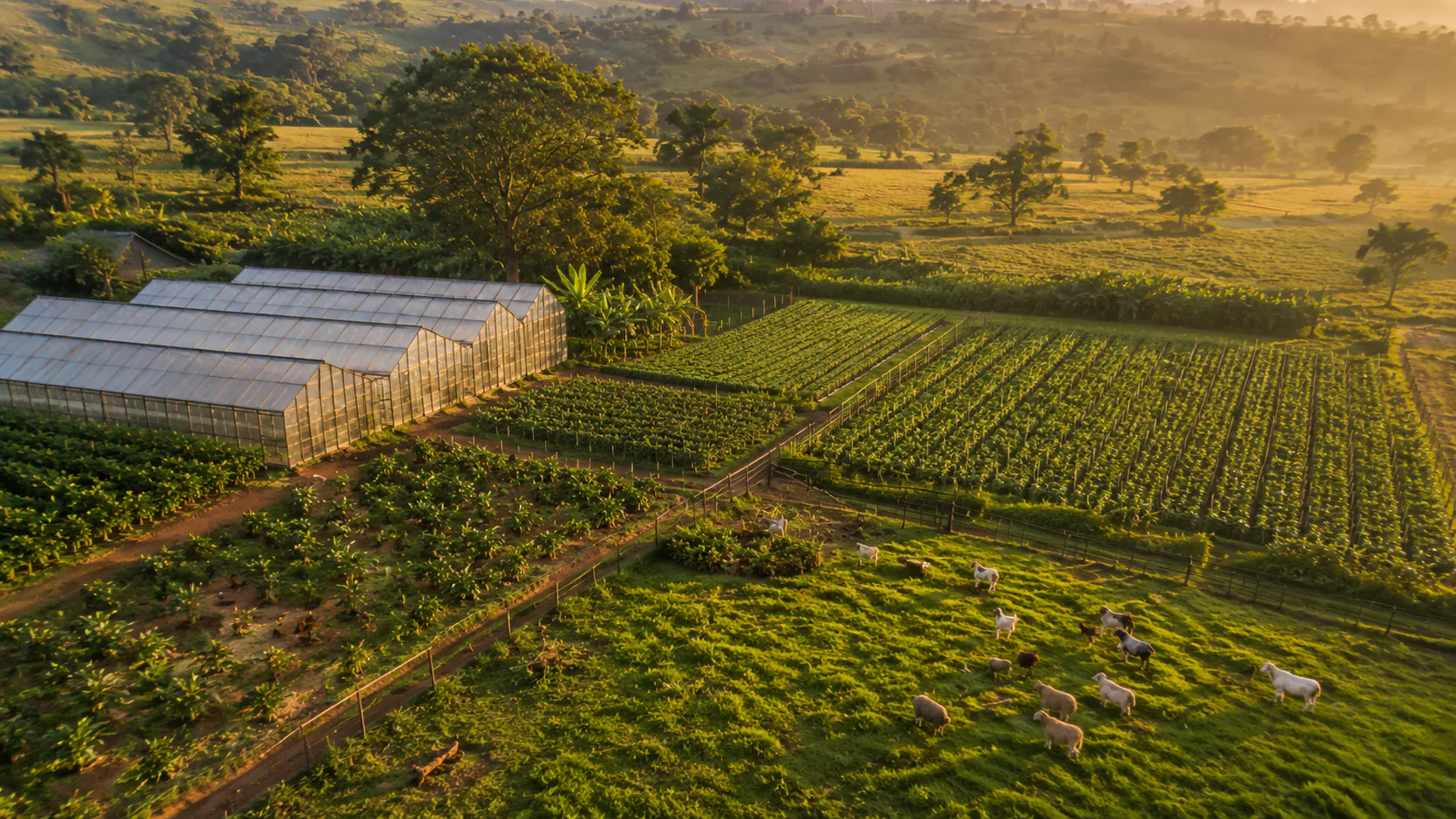
Mixed farming is the norm, and it multiplies routes. A farm running crops and more than one kind of livestock on one site has more groups, more tools, more visitors and more movements than a single-enterprise unit. Every additional group is another boundary that entry control has to hold.
Movement restrictions are a real commercial risk. The Animal Diseases Act's movement provisions mean that a farm's ability to sell can be suspended by a decision made outside the farm gate. Farms that plan for continuous sales, and only for continuous sales, meet that risk without a reserve.
Institutional surveillance exists and depends on farm-level reporting. MAAIF conducts field and laboratory investigations of outbreaks, monitors outbreaks and prevalence, conducts surveillance and disseminates epidemiological data, and reinforces the capacity of its laboratory technicians to handle diagnosis. That system only sees what is reported to it. Prompt reporting is both a legal duty and the mechanism that protects other farms, including yours, from the next outbreak.
Free control is undervalued. The measures in this article cost almost nothing except discipline. A single entry point, a clean line, a book at the gate, an order of work and a holding period require no purchase. They are the highest-return measures available to a Ugandan farm precisely because they are unpaid.
Limitations and common mistakes
Limitations. This article covers entry control. It does not give treatment, medication or vaccination advice, names no product, and states no dose, concentration or interval. It does not state a holding or isolation period, because that is a species-specific and disease-specific veterinary judgement and no verified Ugandan figure was obtained. It does not reproduce the full statutory list of diseases and says so. It does not describe how any district administers restrictions in practice, and it does not repeat the house-level poultry detail covered in Falcon's published poultry biosecurity article.
Common mistakes.
- Rules the owner does not follow. Every entry rule fails the moment it is applied selectively.
- A dip nobody changes. Untreated organic matter and stale solution mean the disinfection point is decoration.
- Skipping the holding period because the animals look healthy. Incubating disease looks like health.
- Working new arrivals first. The order of work is a free control and reversing it undoes the holding area.
- Not recording where visitors came from. Without that column the book cannot be used to trace anything.
- Treating first and reporting later. The statutory duty is triggered by suspicion, not by diagnosis.
- Moving or selling animals during restrictions. Section 18(1) requires written permission; commercial pressure is not an exception.
- Opening or moving a carcass after unexplained death. Some diseases named in the Act are dangerous to people. Restrict access and get advice.
- Sharing tools between groups. Colour-coding costs a tin of paint.
- Assuming crops are outside biosecurity. Tools, soil and planting material move plant disease exactly as boots move animal disease.
When to bring in a professional
- A veterinary officer or veterinary surgeon, immediately, on any suspicion of a disease named in the Act, on any unexplained death, and on any cluster of animals showing the same signs. Report first, treat second.
- Your district veterinary officer, to set the holding period appropriate to your species and your area, and to confirm whether any restriction is in force before you plan a sale.
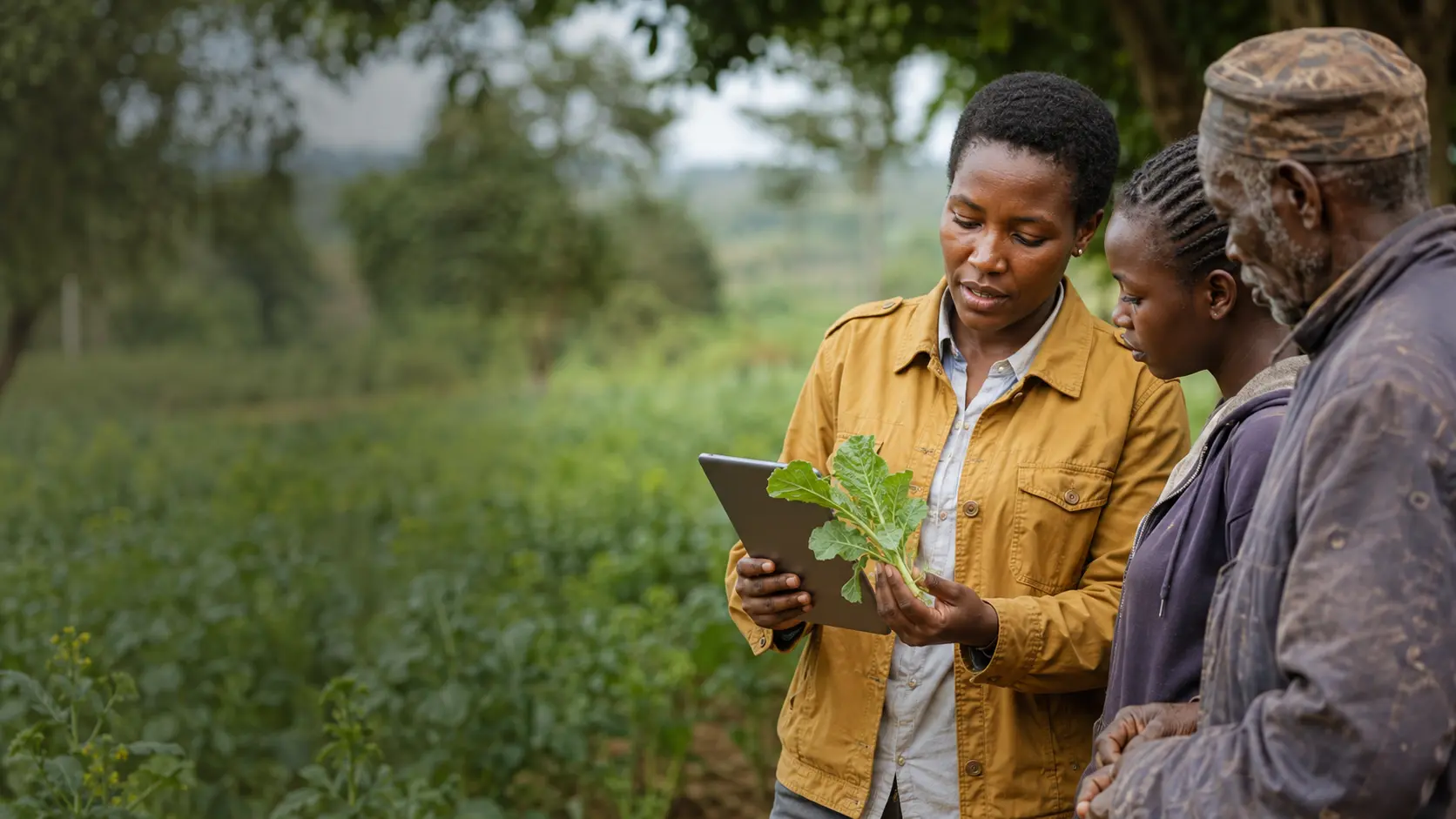
- Your sub-county or district production office, for plant disease identification and for referral to laboratory diagnosis.
- An advocate registered in Uganda, if a restriction, a condemnation or a movement decision affects a contract you have signed.